

Sanghvi Crane

2026 Best ACB Breaker Types for Global Buyers?

Choosing the right ACB Breaker in 2026 requires more than comparing rated current and purchase price. Global buyers must examine protection performance, installation conditions, certifications, and long-term service support. A breaker selected for a 400 V factory may not suit a 690 V process line, even when both systems use similar frames.

This guide introduces the main ACB types for international projects, including fixed and drawout designs, electronic trip units, generator protection models, and intelligent breakers with communication functions. It considers practical details such as short-circuit ratings, neutral protection, 50 or 60 Hz operation, busbar spacing, and control voltage. During commissioning, technicians often discover that accessory compatibility matters as much as the breaker body. A remote closing coil or undervoltage release can delay a project when it was not confirmed early.

Standards and evidence should guide every decision. Buyers should review IEC 60947-2 compliance, relevant local requirements, routine test records, type-test reports, and the manufacturer’s technical documentation. For North American projects, applicable product standards and certification marks require separate verification. No guide gets every site right. Actual fault levels, ambient temperature, altitude, enclosure design, and maintenance capability can change the best choice. Some specifications also look impressive but lack clear testing evidence. Careful buyers should request complete datasheets, installation drawings, warranty terms, spare-part availability, and technical support before issuing a purchase order. This approach supports safer selection, clearer engineering review, and more reliable operation across diverse markets.
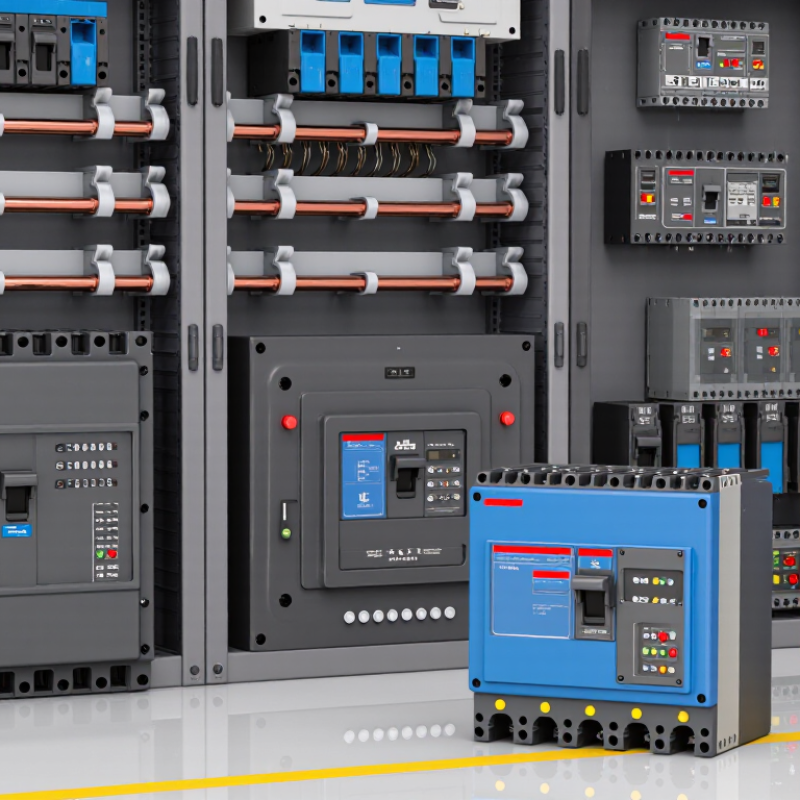
2026 Best ACB Breaker Types for Global Buyers?

What Is an ACB Breaker and How Does It Protect Electrical Systems?

An air circuit breaker, or ACB, is a low-voltage protective device for high-current distribution systems. It interrupts fault current through air, not oil or enclosed gas. When current rises dangerously, its trip unit commands the contacts to open. An arc then forms between those contacts. The arc chamber stretches, cools, and divides it until current stops. This process protects busbars, cables, generators, and connected equipment from severe thermal and mechanical damage.

In practical projects, ACB protection depends on more than interrupting capacity. Engineers check rated current, short-circuit breaking capacity, voltage, frequency, and coordination settings. Long-time, short-time, instantaneous, and ground-fault functions address different fault conditions. Electronic trip units can provide adjustable thresholds and event records. A fixed ACB suits stable installations, while a drawout version simplifies inspection and replacement. Field inspections often reveal poorly coordinated settings. The breaker worked, but the system still failed operationally.

Global buyers should verify IEC 60947-2 compliance, test documentation, temperature derating, spare parts, and service support. Installation quality matters. Loose terminations create heat before protection responds. Correctly sized conductors and routine secondary-injection testing improve confidence. However, no ACB can compensate for weak design or neglected maintenance. Even experienced teams can overlook coordination during upgrades. That mistake deserves careful review.

Which ACB Breaker Types Will Global Buyers Find in 2026?

In 2026, global buyers will find two main ACB breaker arrangements: fixed and draw-out.
Fixed ACBs suit stable installations where compactness and lower cost matter. Draw-out ACBs allow safer inspection, testing, and replacement without removing the entire enclosure. They are common in hospitals, factories, data centers, and large commercial buildings.

Buyers will also see manual, motor-operated, and electronically controlled ACB types. Electronic trip units can provide adjustable overload, short-circuit, instantaneous, and earth-fault protection. Some models support communication networks for remote status checks and energy monitoring.
However, advanced communication is not always useful. It depends on the site system, maintenance skills, and available training. Not every smart feature pays back.

Pole configuration will remain important. Three-pole ACBs usually serve three-phase systems, while four-pole versions can switch the neutral when the installation requires it. Frame size, rated current, breaking capacity, ambient temperature, and installation altitude need careful review.

During commissioning, technicians often discover that a selected rating ignores cable heating or future load growth. That mistake is avoidable, but it still happens.

Global buyers should request routine test records, protection settings, temperature-rise data, and compliance evidence against relevant international standards. Local electrical conditions may require a different choice.

How Do ACB Ratings, Features, and Applications Compare?

For global buyers, ACB comparison begins with ratings, not product appearance. Common frames range from 630 A to 6,300 A, while interrupting capacities often span 42 kA to 100 kA. These figures are not interchangeable. IEC 60947-2 requires verification of performance under defined voltage, current, and short-circuit conditions. A 4,000 A ACB may suit a data-center main board, but its breaking capacity must match the site’s calculated fault level.

The IEA Electricity 2024 report forecasts global electricity demand to grow by about 3.4% annually through 2026. That growth increases pressure on dependable low-voltage distribution. Selective coordination, adjustable long-time and short-time protection, and ground-fault functions can reduce unnecessary shutdowns. Draw-out construction also helps maintenance teams isolate and inspect breakers faster. Digital trip units add event records, thermal monitoring, and communication options. Useful, but not magic.

Applications change the priority. Industrial plants often need high short-circuit withstand and motor-starting coordination. Hospitals and data centers may value fast transfer, redundancy, and remote status signals. Commercial buildings usually need compact installation and practical service access. UL 489 and IEC testing routes are not identical, so certificates should match the destination market. I have seen specifications focus heavily on rated current while ignoring altitude, ambient temperature, and cable derating. That mistake is expensive. The better comparison includes tested assemblies, local grid data, maintenance skill, and future load growth. A clean catalog table cannot replace an engineer’s fault study.

What Standards and Certifications Should International Buyers Check?

2026 Best ACB Breaker Types for Global Buyers?

For international buyers, an ACB’s certificate matters as much as its interrupting rating. IEC 60947-2 is the main reference for low-voltage air circuit breakers. North American projects may require UL 1066, ANSI C37.13, and ANSI C37.50. China-bound equipment commonly needs GB/T 14048.2 compliance and, where applicable, CCC approval. Do not treat CE marking as a universal safety certificate. It is usually a manufacturer’s conformity declaration. Ask for the declaration, complete type-test report, and test laboratory accreditation under ISO/IEC 17025.

The IEA Electricity 2024 report expects global electricity demand to grow by an average 3.3% annually through 2026. More distribution capacity will increase pressure on protection equipment. Buyers should compare fixed and draw-out ACBs carefully. Draw-out designs simplify maintenance and isolation. Electronic trip units offer adjustable long-time, short-time, instantaneous, and ground-fault protection. Check Icu, Ics, Icw, rated voltage, frequency, neutral protection, and temperature derating. A certificate may cover one frame size only. That detail is often missed.

Tips: Request certificates for the exact frame, trip unit, poles, and accessories. Verify report numbers with the issuing body. Confirm local grid requirements before ordering. Factory routine-test records are useful, but they do not replace type testing. A certificate alone can mislead. I would also review enclosure spacing and service conditions, because real installations rarely match laboratory conditions perfectly.

2026 Best ACB Breaker Types for Global Buyers? – What Standards and Certifications Should International Buyers Check?

ACB Type / Configuration Typical Application Key Technical Characteristics Main Selection Advantages Important Limitations / Checks Relevant Standards to Verify Documents and Certifications to Request
Fixed-Type ACB Main incoming feeders, generators, transformers and distribution boards where the breaker is not frequently removed. Permanently connected power circuit breaker; commonly available in 3-pole or 4-pole configurations with adjustable electronic protection. Lower purchase cost, simpler construction and fewer mechanical interlocking requirements than withdrawable designs. Maintenance usually requires isolation and shutdown; confirm short-circuit rating, terminal arrangement, insulation voltage and enclosure compatibility. IEC 60947-1; IEC 60947-2; IEC 61439 when installed in a low-voltage switchboard; applicable national adoption such as EN 60947-2 or GB/T 14048.2. Declaration of conformity, type-test report, routine-test report, installation manual, wiring diagram, protection-setting guide and evidence of test-laboratory competence.
Withdrawable / Drawout ACB Critical facilities, data centers, industrial plants and switchboards requiring rapid inspection, testing or replacement. Breaker can be moved between connected, test and disconnected positions; normally includes shutters, position indicators and mechanical interlocks. Improves maintainability and enables functional testing with the main power circuit isolated from the busbars. Higher cost and larger installation depth; verify racking mechanism, position interlocks, busbar alignment, auxiliary contacts and compatibility with the complete assembly. IEC 60947-2; IEC 61439; applicable national and regional adoptions; assembly verification requirements must be considered in addition to breaker tests. Mechanical endurance data, interlock test results, assembly short-circuit verification, dimensional drawings, replacement procedure and complete switchboard type/design verification records.
3-Pole ACB Three-phase systems where the neutral does not need to be switched or protected by the ACB. Switches and protects the three phase conductors; neutral treatment is determined by the system earthing and distribution arrangement. Compact and generally economical for balanced three-phase industrial loads. Not automatically suitable where neutral isolation, neutral overcurrent protection or four-wire transfer switching is required. IEC 60947-2; local electrical installation rules; IEC 60364 may apply to the installation design, depending on the destination market. Pole configuration, neutral-system compatibility, insulation coordination data, wiring diagrams and protective-device coordination study.
4-Pole ACB Four-wire systems, generator applications, transfer systems and installations requiring neutral isolation. Switches the three phases and neutral; neutral pole may be fixed, switched early or switched simultaneously according to the design. Supports controlled neutral disconnection and can reduce unwanted circulating currents in certain transfer and parallel-source arrangements. Neutral-pole rating and switching sequence must match the earthing, generator and transfer-system design; do not assume the neutral pole has identical protection. IEC 60947-2; IEC 60947-6-1 where transfer-switching equipment is involved; applicable installation and generator standards. Neutral-pole data, switching-sequence documentation, transfer-system test records, wiring diagrams and coordination calculations.
Electronic-Trip ACB Modern distribution systems requiring adjustable long-time, short-time, instantaneous and ground-fault protection. Microprocessor-based trip unit with adjustable protection curves, event indication and, on some models, measurement and communications. Improves selectivity, coordination and monitoring flexibility compared with fixed thermal-magnetic protection. Requires correct settings, control power evaluation, sensor configuration and cybersecurity/communications review where networking is used. IEC 60947-2; IEC 60947-1; IEC 61557-12 may be relevant to power-monitoring functions, but it does not replace the breaker standard. Protection characteristic curves, calibration records, electromagnetic-compatibility test evidence, firmware information, communication protocol data and setting software documentation.
Manual / Direct-Operating ACB Basic distribution applications where remote operation, automatic closing or supervisory control is not required. Manual charging and operation, with optional shunt trip or undervoltage-release accessories depending on the design. Simple operation, reduced auxiliary-circuit complexity and easier maintenance. May not satisfy automatic transfer, remote emergency shutdown or supervisory-control requirements; verify operating-force and access requirements. IEC 60947-2; IEC 60947-1; local machinery, emergency-power or installation requirements where applicable. Operating mechanism test report, accessory list, control-circuit voltage range, endurance data and safety instructions.
Motorized / Electrically Operated ACB Automatic transfer systems, remote-controlled substations, process plants and critical-power applications. Motor charging, closing coil, shunt trip and undervoltage-release functions; may support remote status and control. Enables automation, remote operation and integration with supervisory systems. Requires reliable auxiliary power and control logic; verify fail-safe behavior, interlocking, closing time, coil duty and emergency manual operation. IEC 60947-2; IEC 60947-6-1 for transfer-switching equipment where applicable; IEC 61439 for the completed assembly. Control-circuit test records, operating-time data, sequence-of-operation test, auxiliary-contact ratings, wiring diagrams and functional safety documentation where required.
International Buyer Verification Checklist
  • Confirm the rated operational voltage, rated insulation voltage, frequency, continuous current, service short-circuit rating and ultimate short-circuit rating for the actual installation.
  • Check that the test report identifies the exact frame size, pole configuration, trip unit, accessories and product construction being purchased.
  • For IEC markets, request evidence of conformity with IEC 60947-2 and verify whether the complete switchboard has been assessed under IEC 61439.
  • For North American projects, confirm the project specification: low-voltage power circuit breakers are commonly evaluated under UL 1066 and applicable ANSI/IEEE requirements, while UL 489 generally applies to molded-case circuit breakers rather than ACBs.
  • For China-bound products, check the applicable GB/T adoption and whether China Compulsory Certification or another regulatory conformity route applies to the specific product and application.
  • For the European Economic Area, verify applicable CE-marking obligations, the EU Declaration of Conformity and the relevant product, EMC and low-voltage requirements; CE marking is a conformity declaration, not an independent product-quality certification.
  • For the United Kingdom, verify UKCA requirements where applicable and confirm whether the importer, distributor or manufacturer must retain technical documentation.
  • Prefer reports issued by laboratories accredited to ISO/IEC 17025 and check certificate scope, report date, product identification and any limitations or conditions of acceptance.

Note: Ratings, certifications and legal marking requirements depend on the destination country, installation category and exact product configuration. The applicable national authority, project specification and latest edition of each standard should be confirmed before purchase.

How Can Buyers Select Reliable ACB Suppliers and Control Total Costs?

For global buyers, selecting a reliable ACB supplier requires more than comparing rated current and purchase price. Define the system conditions clearly: voltage, frequency, short-circuit level, installation altitude, and operating temperature. Choose fixed or draw-out construction according to maintenance access and shutdown requirements. A draw-out ACB may cost more, but it can reduce replacement time in a busy facility.

Ask suppliers for current test reports, routine inspection records, product traceability, and clear protection settings. Compliance with IEC 60947-2 is important, but documents should match the exact model and rating. Review the electronic trip unit carefully. Adjustable long-time, short-time, instantaneous, and ground-fault functions should suit the coordination study. Request sample data before approving a large order. Small details matter.

Total cost includes transport, duties, commissioning, spare trip units, testing tools, and technician training. Check lead times for replacement parts, not only the breaker itself. A low quotation can hide expensive delays.

I have seen procurement teams overlook installation labor and panel modifications. That mistake weakens the original price comparison. Suppliers should explain warranty limits, service response, and failure procedures in writing. Some technical claims may still need independent verification. A factory audit or third-party inspection can reveal packaging weaknesses, incomplete labeling, or inconsistent assembly quality before shipment.

Scroll to Top