China Best CNC Turning Machining Services?
Choosing China’s best Cnc Turning Machining services requires more than comparing hourly prices. It demands evidence, process knowledge, and careful communication. Cnc Turning Machining suppliers can produce shafts, bushings, threaded components, and precision fittings for industries ranging from automation to medical equipment. However, a polished website does not prove consistent capability.
Experienced buyers usually examine machine types, material control, tolerance records, and inspection methods. A reliable supplier should explain how it manages stainless steel, aluminum, brass, and engineering plastics. It should also provide practical details about spindle capacity, live tooling, surface finishes, and achievable tolerances. Ask for sample inspection reports. Check whether measurements come from calibrated equipment, such as micrometers, height gauges, or coordinate measuring machines. Small details matter.
Communication matters too. A clear drawing review can prevent an expensive mistake before cutting begins. Suppliers with ISO 9001 certification may offer stronger process control, but certification alone is not enough. Confirm its scope and current validity. Request production samples when the component affects safety or assembly performance. During real projects, even capable workshops can miss a plating note or misunderstand a datum. That is why written approvals and revision control remain essential.
China offers broad manufacturing capacity and competitive production costs. Yet “best” depends on your material, tolerances, order volume, delivery expectations, and quality risks. Some suppliers excel at prototypes but struggle with repeat batches. Others handle large volumes well but provide limited engineering feedback. A thoughtful evaluation may take longer. It usually costs less than correcting hundreds of poorly fitting parts.
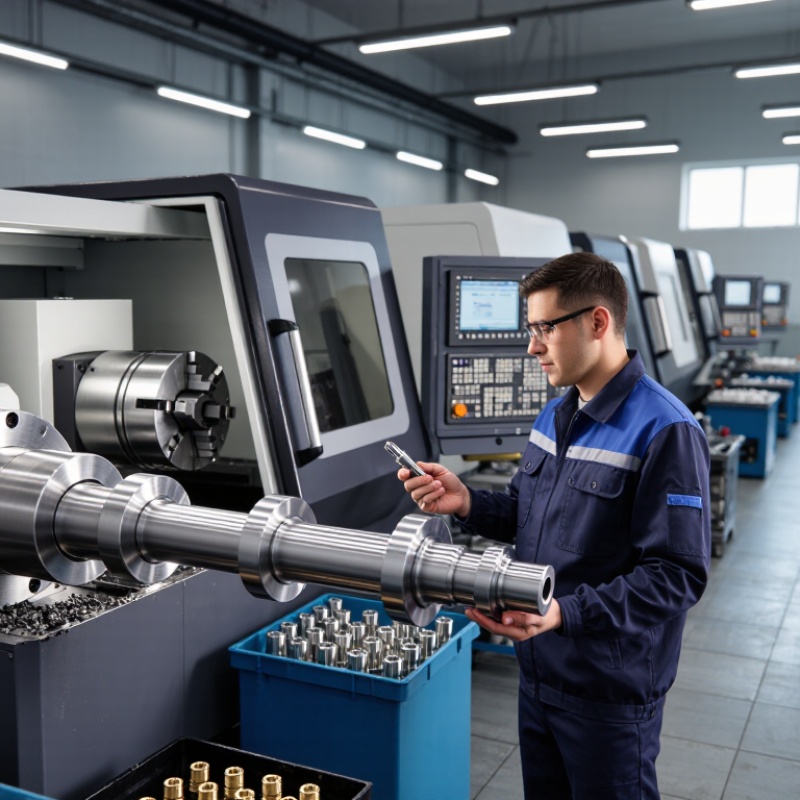
What Defines the Best CNC Turning Machining Services in China
What Defines the Best CNC Turning Machining Services in China
China’s best CNC turning machining services are defined by controlled results, not impressive equipment lists. Capability begins with process evidence. A reliable supplier should show inspection records, material certificates, tool-life controls, and traceable batch numbers. Critical parts may require coordinate measuring machines, surface testing, and documented first-article approval. These details matter when a shaft must fit within a tight bearing seat, not merely look smooth.
The China Machine Tool Industry Association reported 431.3 billion yuan in industry operating income in 2023, down 1.8% year on year. This pressure makes process efficiency important, but low prices should not replace technical judgment. The International Federation of Robotics reported 276,288 industrial robot installations in China during 2023, representing 51% of global installations. Strong automation can improve repeatability, yet skilled engineers still manage difficult materials, unstable cutting conditions, and drawing changes. No supplier is perfect. Even a clean audit can miss weak communication.
Tips: Request a trial batch before mass production. Check actual tolerances, burr control, packaging, and delivery records. Ask how deviations are handled. A short, honest answer is often more useful than a polished presentation.
Source references: CMTBA 2023 Industry Statistics; International Federation of Robotics, World Robotics 2024.
Key CNC Turning Capabilities and Manufacturing Technologies
China’s CNC turning sector supports both prototype work and repeat production. The strongest suppliers combine practical shop experience with controlled manufacturing systems.
CNC lathes produce shafts, bushings, threaded parts, flanges, and other rotational components. They work with aluminum, stainless steel, brass, titanium, and engineering plastics.
Core capabilities include facing, boring, grooving, threading, drilling, knurling, and precision chamfering.
Live tooling can add cross-holes and milled flats without repeated setups. Y-axis turning centers handle more complex features. Bar feeders improve consistency during longer production runs. Swiss-type machining suits small diameters and detailed medical or electronic components. These technologies reduce handling, but they do not remove setup risks.
Quality depends on more than machine specifications.
Experienced technicians review drawings, tool access, datum locations, and material behavior before cutting. Coordinate measuring machines, optical systems, thread gauges, and in-process probes verify critical dimensions.
A first-article report should connect measured results with the drawing requirements. Surface roughness, concentricity, burr control, and heat treatment also deserve attention.
No process is perfect. Thin walls may distort, and long shafts can vibrate. Even a clear drawing can hide manufacturing problems. Trial runs, tool-life records, and honest corrective feedback make the process more reliable.
Step-by-Step CNC Turning Service Process in China
China Best CNC Turning Machining Services?
A reliable CNC turning service starts with a clear technical drawing. Engineers review dimensions, tolerances, thread details, material, and surface requirements. They may suggest a simpler design for better tool access. This review prevents expensive misunderstandings later. I have found that unclear datums often cause delays. Small details matter.
After approval, the workshop selects suitable bar stock and prepares the CNC program. Operators check tool paths through simulation before machining. The first sample is turned, measured, and compared with the drawing. Inspectors use calipers, micrometers, and coordinate equipment when needed. Production continues only after the sample passes inspection. Every batch should include dimensional records and material documentation. The process is not flawless. Human checks still matter.
Tips: Share a 3D model and a marked drawing together. State critical dimensions clearly. Ask about tolerances, lead time, packaging, and inspection reports before ordering. Confirm how rejected parts are handled. Request photos of the first piece, but do not rely on photos alone. A practical supplier explains limitations instead of promising perfection. Surface marks, tool wear, or minor burrs may still appear, so acceptance standards should be agreed upon in writing.
Quality Standards and Inspection Methods for CNC Turned Parts
Reliable CNC turning begins with a clear drawing, not a fast quotation. Quality teams should confirm material grade, heat treatment, tolerances, surface finish, and thread specifications before production. Common references include ISO 2768, ISO 286, and drawing-based GD&T requirements. These standards help define acceptable variation, but the customer’s drawing remains the controlling document.
During production, inspectors check dimensions with calibrated micrometers, vernier calipers, thread gauges, and bore gauges. Critical diameters often receive CMM inspection, especially when concentricity or true position affects assembly. Surface roughness is measured with a portable tester instead of judged by touch. That small difference matters. Inspectors should also verify chamfers, burr removal, tool marks, and visible damage under suitable lighting.
A dependable process includes material certificates, first-article inspection, in-process checks, and final reports linked to part numbers. Sampling can reduce cost, but it should not replace full inspection for safety-critical or tightly toleranced features. Traceable calibration records support reliable results. One weakness remains: even a neat inspection report can miss a functional problem. A turned shaft may pass diameter checks but bind after assembly. Practical fit testing and customer feedback should therefore influence future control plans. The process is never perfectly finished.
China Best CNC Turning Machining Services? Quality Standards and Inspection Methods for CNC Turned Parts
Measurement resolution should match the tolerance and feature being inspected. A digital caliper commonly provides 0.01 mm resolution, while an outside micrometer can provide 0.001 mm resolution. A coordinate measuring machine (CMM) is typically used for complex geometry, datums, and profile verification. Surface roughness testers report Ra values in micrometres (µm), and optical comparators are useful for checking profiles, chamfers, radii, and threads without contacting the part.
The examples reflect commonly used inspection instruments and measurement units in CNC turned-part quality control. Acceptance requirements should be defined by the engineering drawing, GD&T requirements, ISO 286 limits and fits, ISO 1101 geometrical tolerances, ISO 21920 surface texture specifications, and the applicable inspection plan.