

7 Best Modbus Converters for Industrial Automation?
Industrial automation rarely fails because of one dramatic fault. More often, a PLC, sensor, or drive quietly loses communication after a protocol mismatch. A reliable Modbus Converter can prevent that small problem from becoming an expensive production delay. This guide examines seven strong converter options for modern industrial networks. It considers Modbus RTU, Modbus ASCII, and Modbus TCP compatibility. It also reviews serial interfaces, Ethernet performance, isolation, power requirements, and installation limits.
The comparison focuses on details engineers can verify before purchase. These include baud-rate support, connector quality, configuration methods, diagnostic indicators, and protection against electrical noise. In commissioning environments, a clear status LED can save valuable troubleshooting time beside a crowded control cabinet. A converter should also fit the actual site conditions. Temperature, cable distance, grounding, and network traffic can change its performance. Small details matter.
The term “best” is not universal. A low-cost device may suit a clean laboratory network but struggle near variable-frequency drives. An industrial-grade model may offer stronger isolation, yet exceed a small project’s budget. Product documentation and field testing remain essential. Some specifications look impressive on paper. Real installations can be less forgiving. The seven choices below are evaluated through practical engineering criteria, manufacturer information, and common deployment needs. Readers should still confirm firmware behavior, certifications, and local electrical requirements before installation. That final check is easy to skip, but it can prevent avoidable rework.
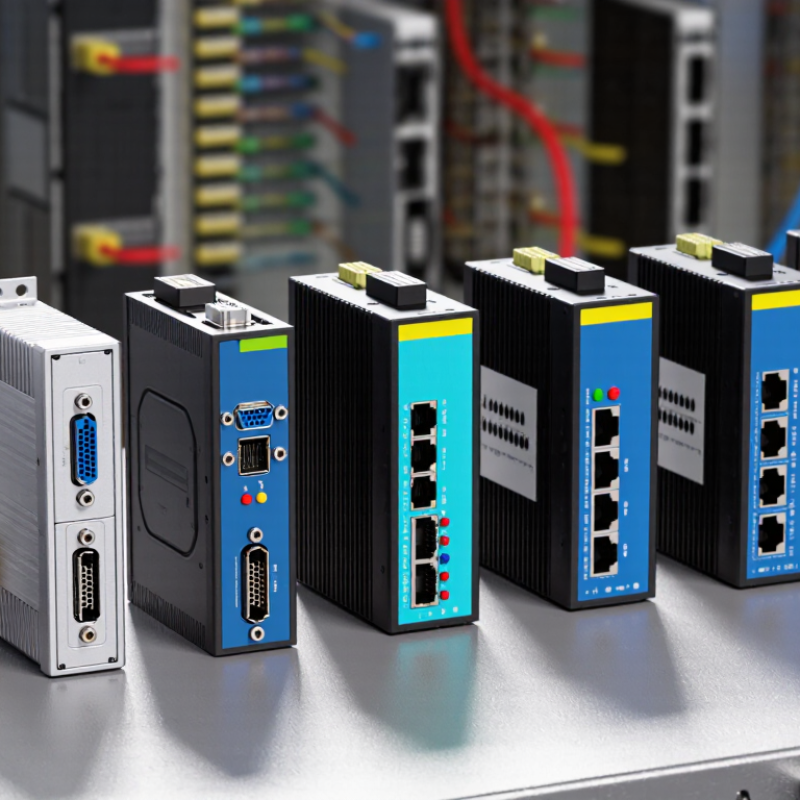
Modbus Fundamentals: TCP Port 502, RTU Frames, and Gateway Functions
7 Best Modbus Converters for Industrial Automation?
Modbus TCP normally listens on port 502. A controller sends an Ethernet packet containing an MBAP header and a Modbus PDU. The header carries a transaction identifier, protocol identifier, length, and unit identifier. The PDU contains the function code and register data. Port 502 is simple, but network security still matters. Restrict access with firewalls and segmented control networks.
Modbus RTU travels through serial lines, commonly RS-485. Its frame includes a slave address, function code, data, and CRC check. Silent timing is critical. A gap of about 3.5 character times marks the frame boundary. It is quiet. Noise is not. In practical commissioning, I check cable polarity, termination, baud rate, parity, and device addresses before replacing hardware. One overlooked parity setting can resemble a failed converter.
A gateway connects TCP clients with RTU instruments. It translates the transport format while preserving request meaning. Good gateways manage unit IDs, serial timing, response timeouts, retries, and exception codes. Some also support register mapping, which helps when older devices use inconsistent addressing. However, mapping can hide a configuration mistake. I have seen a register shifted by one position, producing believable but incorrect temperatures. Packet captures, register tests, and recorded field values provide stronger evidence than a green status light. Gateway selection should match traffic volume, serial loading, isolation needs, and recovery behavior after a cable interruption.
7 Best Modbus Converters for Industrial Automation
Modbus Fundamentals: TCP Port 502, RTU Frames, and Gateway Functions
| Rank | Converter Type | Best Application | Protocol Conversion | Physical Interface | Key Modbus Functions | Important Technical Details | Selection Consideration |
|---|---|---|---|---|---|---|---|
| 1 | Modbus RTU-to-TCP Gateway | Legacy device integration | Modbus RTU ↔ Modbus TCP | RS-485 on the serial side; Ethernet on the network side | Master-to-slave request forwarding, register mapping, exception-code forwarding, and serial parameter configuration | Modbus TCP normally uses TCP port 502. Modbus RTU uses binary frames with device address, function code, data, CRC, and a silent interval between frames. | Check the number of serial ports, supported slave devices, response-time handling, and whether simultaneous TCP clients are required. |
| 2 | Modbus TCP-to-RTU Gateway | SCADA and PLC access | Modbus TCP client requests ↔ Modbus RTU serial requests | 10/100 Ethernet; RS-485 or RS-232 serial port | MBAP-header processing, unit-identifier routing, function-code translation, and serial polling control | Modbus TCP replaces the RTU CRC with an MBAP header containing a transaction identifier, protocol identifier, length, and unit identifier. | Verify whether the gateway supports the required TCP client count, serial baud rate, parity, stop bits, and unit-ID range. |
| 3 | RS-485-to-USB Modbus Adapter | Engineering and maintenance | Computer application ↔ Modbus RTU | USB host connection; two-wire RS-485 transceiver | Transparent serial communication for reading coils, discrete inputs, input registers, and holding registers | RS-485 commonly uses a balanced two-wire bus and supports multidrop communication. USB adapters generally require an operating-system serial driver. | Use a galvanically isolated version where ground-potential differences, long cable runs, or electrical noise may damage the computer or disturb communication. |
| 4 | Modbus RTU Repeater and Isolator | Long or noisy RS-485 networks | Modbus RTU segment ↔ Modbus RTU segment | Isolated RS-485 ports, usually with screw-terminal connections | Signal regeneration, electrical isolation, bus-segment extension, and noise reduction | It does not translate Modbus data into TCP; it regenerates the serial signal and preserves the RTU frame format and timing requirements. | Check isolation voltage, automatic direction control, termination requirements, biasing, maximum segment length, and device-count limits. |
| 5 | Modbus TCP-to-TCP Router or Bridge | Separated Ethernet networks | Modbus TCP network ↔ Modbus TCP network | Dual Ethernet ports or routed Ethernet interfaces | TCP connection forwarding, subnet separation, unit-ID routing, access control, and network segmentation | Both sides use Modbus TCP messaging and normally communicate through TCP port 502; no RTU CRC conversion is required. | Evaluate routing rules, firewall behavior, simultaneous connections, network redundancy, and cybersecurity controls for industrial Ethernet. |
| 6 | Modbus RTU-to-RS-232 Converter | Single-device serial connection | RS-485 Modbus RTU ↔ RS-232 serial communication | RS-485 on one side; point-to-point RS-232 on the other | Transparent byte forwarding, baud-rate matching, parity configuration, and direction control | RS-232 is intended for point-to-point links, while RS-485 is designed for multidrop buses. The converter changes the electrical interface, not the Modbus application protocol. | Choose this type when a legacy controller has an RS-232 port and the field device uses Modbus RTU over RS-485. |
| 7 | Multi-Serial Modbus Gateway | Large mixed-device installations | Multiple Modbus RTU or ASCII channels ↔ Modbus TCP | Several isolated RS-485, RS-232, or RS-422 ports; Ethernet uplink | Independent serial settings, channel-to-unit routing, polling management, register mapping, diagnostics, and TCP server operation | Modbus ASCII uses ASCII characters and an LRC check, whereas Modbus RTU uses binary data and CRC. Each serial channel can require different communication parameters. | Confirm per-port isolation, maximum concurrent connections, routing flexibility, diagnostic counters, and the gateway's maximum register or transaction capacity. |