What is a Boom Crane? Understanding Its Types, Uses, and Benefits
A boom crane is an essential piece of equipment in various industries, enabling the efficient lifting and moving of heavy materials. With its distinctive structure and functionality, the boom crane has become a cornerstone in construction sites, warehouses, and manufacturing facilities. Understanding the different types of boom cranes, their uses, and the benefits they offer is crucial for operators and companies looking to enhance their lifting capabilities.
The versatility of boom cranes allows them to adapt to various tasks, from vertical lifts to reaching distant objects. Their designs can vary significantly, accommodating specific needs and environments. This introduction to boom cranes will explore how they function, the advantages they provide in operational efficiency, and their impact on workplace safety. By familiarizing ourselves with the different categories of boom cranes—such as telescoping, articulating, and fixed—one can better appreciate their significance in streamlining heavy lifting processes and minimizing labor costs.
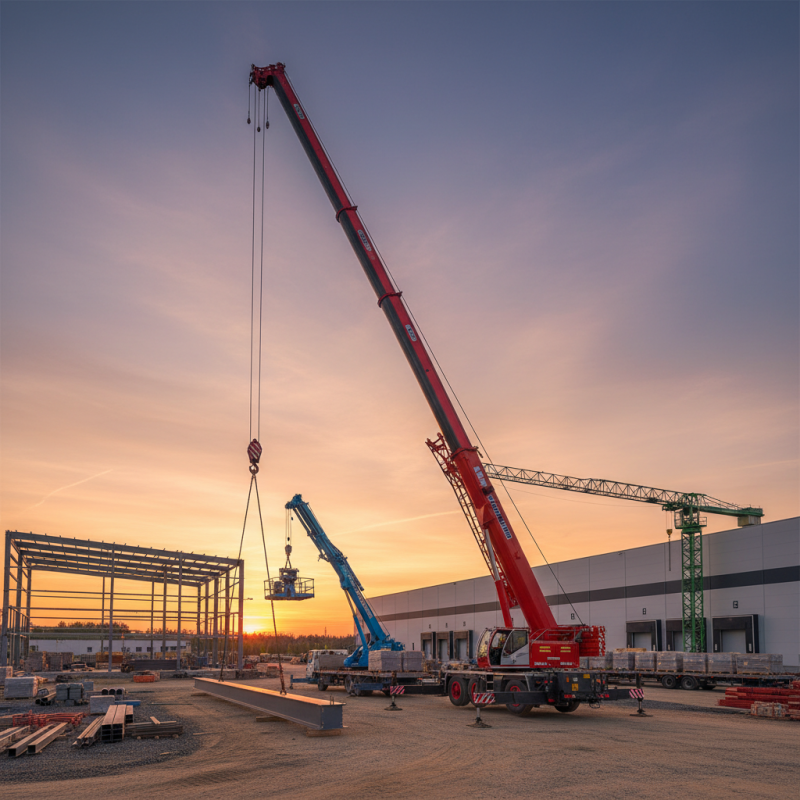
What is a Boom Crane? A Comprehensive Overview
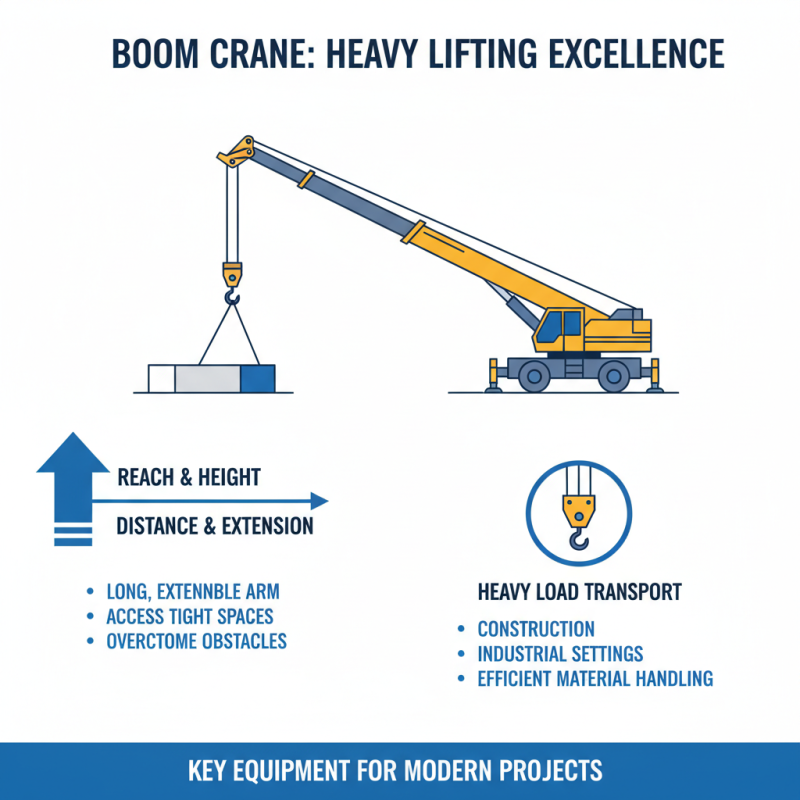
A boom crane is a specialized piece of equipment widely used in construction and industrial settings for lifting and moving heavy loads. Characterized by its long, extendable arm, or boom, this crane can reach significant heights and distances, allowing for efficient transportation of materials. The design of a boom crane enables it to perform tasks where standard cranes might struggle, such as navigating tight spaces or reaching over obstacles.
There are several types of boom cranes, each designed for specific applications. For example, truck-mounted boom cranes provide mobility and can easily travel to different job sites, while stationary or tower boom cranes are typically found in fixed positions for long-term projects. Each type comes with its own set of advantages, like increased lifting capacity or enhanced maneuverability, making them essential for various tasks ranging from construction to maintenance.
Utilizing a boom crane not only improves operational efficiency but also enhances safety on job sites. With features such as remote controls and advanced stability mechanisms, operators can lift and position heavy items with precision, minimizing the risk of accidents. The versatility of boom cranes allows them to adapt to different environments, making them an invaluable asset in modern construction and industrial practices.
Types of Boom Cranes and Their Distinct Features
Boom cranes are versatile pieces of equipment widely used in construction, manufacturing, and transportation. They come in various types, each designed to meet specific operational needs and environmental conditions. The most common types of boom cranes include telescopic boom cranes, articulating boom cranes, and lattice boom cranes.
Telescopic boom cranes feature a straight, extendable arm, allowing them to reach significant heights and distances, making them ideal for tasks requiring vertical lifting and horizontal outreach. Articulating boom cranes, on the other hand, have jointed arms that enable them to navigate around obstacles and position loads precisely in tight spaces, which is particularly useful in urban construction sites. Lattice boom cranes are characterized by their truss-like design, which provides outstanding strength and stability for heavy lifting over vast areas.
Each type of boom crane offers distinct advantages suited to different applications. For instance, telescopic boom cranes are often preferred when maximum reach is necessary, while articulating boom cranes excel in complex environments where maneuverability is a priority. Lattice boom cranes are commonly utilized for heavy duty projects due to their robust construction. Understanding the features and capabilities of these different boom crane types helps operators select the right equipment for their specific lifting tasks, ensuring efficiency and safety on the job site.
Common Uses of Boom Cranes Across Various Industries
Boom cranes are versatile lifting solutions utilized across multiple industries, including construction, manufacturing, and logistics. Their design allows for precise maneuverability, making them ideal for handling heavy loads in tight spaces. According to a report by Research and Markets, the global boom crane market is expected to grow at a CAGR of 5.4% between 2021 and 2026, highlighting their increasing importance in various sectors.
In construction, boom cranes are indispensable for elevating materials to high elevations, streamlining the building process. Their ability to extend and retract offers flexibility in utilizing small sites efficiently. In the manufacturing sector, these cranes assist in assembly lines by facilitating the transport of heavy components, which enhances productivity. Furthermore, the logistics industry heavily relies on boom cranes for loading and unloading cargo, significantly reducing manual labor and minimizing the risk of workplace injuries.
Tips: When selecting a boom crane for your project, consider the lifting capacity versus the weight of the materials you'll be handling. It’s also crucial to ensure that operators are trained on safety protocols to maximize efficiency and minimize risks associated with crane operation. Regular maintenance checks can further extend the lifespan of the crane and ensure operational reliability across different applications.
Common Uses of Boom Cranes Across Various Industries
Key Benefits of Using Boom Cranes in Construction and Lifting
Boom cranes are essential tools in the construction and lifting industries, known for their versatility and efficiency. One of the key benefits of using boom cranes is their ability to reach significant heights and extend their reach horizontally, allowing for easy access to hard-to-reach areas. This capability is particularly beneficial on construction sites where space is limited and precision is crucial. Boom cranes not only enhance operational efficiency by minimizing the time spent on lifting operations but also ensure that tasks can be completed safely and effectively.
Additionally, boom cranes are designed to handle heavy loads, providing strength and stability on various job sites. Their robust structure allows construction crews to lift materials and equipment weighing several tons, reducing the manual labor needed and lowering the risk of workplace injuries. Moreover, the versatility of boom cranes makes them applicable in diverse scenarios, such as loading and unloading materials, erecting structures, and even in maintenance tasks.
**Tips:** When using a boom crane, always ensure that the area is clear of obstacles and that all personnel are aware of the operations. Regular maintenance checks are crucial for ensuring the stability and safety of the equipment before each use. Furthermore, proper training is essential for operators to maximize the potential of boom cranes while minimizing risks.
What is a Boom Crane? Understanding Its Types, Uses, and Benefits
| Type of Boom Crane |
Typical Uses |
Key Benefits |
Weight Capacity (Tons) |
| Telescopic Boom Crane |
Construction sites, pipelines, and infrastructure projects |
Versatility, extended reach, and ease of transport |
10 - 30 |
| Crawler Boom Crane |
Heavy lifting in rough terrain |
Stability, movement on uneven ground |
20 - 50 |
| Truck-Mounted Boom Crane |
Transporting goods, setting up equipment |
Mobility, quick setup time, and multi-functionality |
10 - 30 |
| Rough Terrain Boom Crane |
Construction in remote areas, loading and unloading |
High maneuverability and off-road capabilities |
20 - 40 |
| Articulating Boom Crane |
Maintenance, inspections, and tree trimming |
Flexibility to reach over obstacles and tight spaces |
10 - 25 |
Safety Considerations and Best Practices for Operating Boom Cranes
When operating boom cranes, safety considerations are paramount due to the potential hazards involved in lifting and moving heavy loads. According to the Occupational Safety and Health Administration (OSHA), the construction industry alone accounts for 20% of worker fatalities, with crane-related incidents being a significant contributor. Proper training and adherence to safety protocols can greatly reduce these risks. It is essential for operators to have a thorough understanding of their equipment, including load limits and the surrounding environment, to prevent accidents.
One of the best practices in operating boom cranes involves conducting a pre-operation inspection. According to industry surveys, up to 15% of crane accidents result from equipment failure, emphasizing the need for regular maintenance and checks. Operators should ensure that all safety devices are functional and that the crane is set up on stable ground. It is also advisable to implement a spotter system when maneuvering in tight spaces or near people to enhance situational awareness.
Tips: Always communicate clearly with your team and use hand signals or radios to avoid miscommunication. Furthermore, it is beneficial to stay updated with the latest industry safety guidelines and participate in refresher training programs annually to continuously improve safety practices. By prioritizing safety and following these best practices, operators can enhance workplace safety and efficiency in their operations.