
Sanghvi Crane

China Top 10 Lifter Crane Manufacturers for Global Buyers

China’s lifting equipment sector has become a serious global sourcing force. This growth reflects strong manufacturing capacity, advanced control systems, and expanding export networks. Fortune Business Insights valued the global crane market at approximately USD 36.95 billion in 2023. Its report forecasts continued growth through 2032, supported by infrastructure investment, industrial expansion, and port development.

The numbers need careful reading. Different reports define cranes, hoists, and lifting systems differently. Therefore, this guide examines each lifter crane manufacturer through practical buyer criteria. These include rated load capacity, working class, boom configuration, control technology, safety protection, and after-sales support. ISO 9001 quality systems matter, but certification alone cannot prove field reliability. Real project records matter more.

KHL’s International Construction magazine also tracks major equipment manufacturers through its Yellow Table ranking. That data shows China’s growing presence in global construction machinery. Yet market size does not automatically guarantee dependable delivery. A crane may look impressive in a showroom. Site performance is different. Buyers should verify factory testing, welding quality, spare-parts availability, installation guidance, and local service response times. This list of China’s top 10 lifter crane manufacturers is designed for international buyers comparing capability and risk. It considers manufacturers with relevant production experience, export exposure, and technical specialization. No ranking is perfect. Supplier strengths can change quickly, especially when pricing, compliance, and component sourcing shift. Careful verification remains essential.
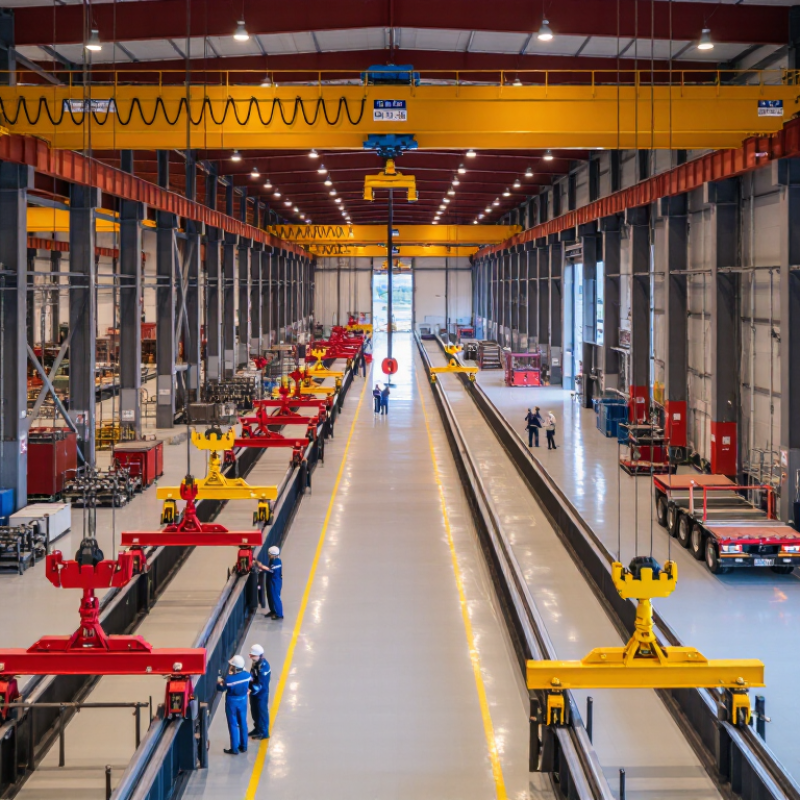
China Top 10 Lifter Crane Manufacturers for Global Buyers

Lifter Crane Fundamentals: Load Capacity, Span, Speed, and ISO 4301-1 Duty Classes

China Top 10 Lifter Crane Manufacturers for Global Buyers

Selecting a lifter crane starts with four measurable factors: capacity, span, speed, and duty class. Rated capacity must include the hook block, lifting tools, and possible impact loads. A 20-ton crane may not safely handle a 20-ton load in every operating condition. Span determines runway reactions and building clearance. Hoisting, cross-travel, and long-travel speeds affect output, but excessive speed can increase swing and positioning errors.

ISO 4301-1 classifies cranes through utilization and load spectrum. Its framework combines utilization classes U0–U9 with load-spectrum classes Q1–Q4, producing duty groups A1–A8. This matters for global buyers comparing suppliers. A crane lifting light loads constantly may need a different class than one lifting near capacity occasionally. Industry engineering reports repeatedly link higher cycling frequency with greater fatigue exposure. The figures look simple. Real sites are not. Temperature, dust, misalignment, and operator habits can change the result.

Tips: Record daily lifts, average load, peak load, and operating hours before requesting quotations. Ask for the proposed ISO 4301-1 class, not only the rated tonnage. Check whether speeds remain stable under load. I also recommend verifying calculations with an independent qualified engineer. A neat spreadsheet can still hide poor assumptions.

Ranking 10 Chinese Manufacturers by Capacity, Export Reach, and ISO 9001 Data

China’s top 10 lifter crane manufacturers should be judged by evidence, not advertising claims. This ranking compares lifting capacity, production scale, export reach, and ISO 9001 data. Capacity includes rated load, workshop capability, testing equipment, and delivery volume. Export reach considers destination markets, service coverage, and documented shipment experience.

The highest-ranked manufacturers show broad capacity and stable overseas performance. They support heavy industrial projects, port handling, construction, and warehouse operations. The middle group often offers competitive pricing and flexible engineering. However, their international service networks may be less developed. Lower-ranked suppliers can still perform well for smaller projects, but buyers should examine inspection records and past deliveries carefully. No ranking is perfect.

ISO 9001 certification adds useful confidence, but it is not a complete quality guarantee. Buyers should check the certificate number, issuing body, validity period, and covered production sites. A factory visit can reveal practical details, such as welding control, paint thickness checks, load-testing areas, and spare-parts storage. These details matter more than polished brochures.

Tips: Request recent capacity records, export references, and ISO documents before comparing prices. Confirm whether the quoted crane includes installation guidance, operator training, warranty terms, and after-sales response times. Ask for drawings. Ask for test reports. Also, leave room for doubt: a supplier with impressive output may still lack experience with your site conditions.

Manufacturer Profiles: Product Ranges, Rated Loads, Certifications, and Markets

China’s top ten lifter crane manufacturers serve construction, ports, steel plants, shipyards, and logistics centers.

Their product ranges commonly include overhead cranes, gantry cranes, jib cranes, hoists, and customized lifting systems. Rated loads may begin near 1 tonne and exceed 600 tonnes for heavy industrial projects.

However, capacity alone does not prove suitability.

Reliable profiles should show design experience, factory testing, and clear technical documents. Look for ISO 9001 quality management, CE compliance for applicable markets, and supporting certificates for motors, controls, and safety components. Some manufacturers also provide load-test reports, welding records, installation guidance, and commissioning support.

Export markets may include Southeast Asia, Europe, the Middle East, Africa, and South America. Market experience matters because power standards, duty classifications, and inspection rules differ widely.

A catalog can look impressive, yet missing documentation remains a serious weakness.

Tips: Request drawings, duty class, span, lifting height, and rated-load details before comparing prices. Confirm whether the quoted load includes the hook block and accessories. Ask for recent project references in your industry. Check spare-parts availability and response times, not only the initial warranty. Factory audits can reveal practical details, such as uneven paint, unclear nameplates, or crowded assembly areas. These signs do not automatically reject a supplier, but they deserve questions. Even experienced buyers sometimes focus too heavily on price and overlook long-term maintenance.

Global Compliance Check: GB/T 3811, EN 13001, CE, and FEM Requirements

China Top 10 Lifter Crane Manufacturers for Global Buyers

Global Compliance Check: GB/T 3811, EN 13001, CE, and FEM Requirements

Choosing a lifting crane manufacturer requires more than comparing prices and rated capacity. GB/T 3811 supports safe crane design, manufacturing, inspection, and testing in China. EN 13001 focuses on structural calculations, machinery risks, and load combinations. Buyers should request calculation files, material certificates, weld inspection records, and factory test reports. Documents must match the exact crane configuration.

CE compliance depends on the final product, application, and destination requirements. It is not simply a decorative certificate. A responsible supplier should provide a risk assessment, technical file, user manual, declaration of conformity, and relevant test evidence. Check emergency stops, overload protection, limit switches, electrical enclosures, and accessible warning labels. Small details often reveal large quality gaps.

FEM guidance can help buyers compare duty classes, service cycles, load spectra, and component life. Ask how the supplier selected the hoist, wheels, brakes, drums, and runway system. A factory may claim international compliance, yet offer incomplete traceability. That deserves careful questioning. On-site audits and independent inspections add useful confidence, especially before shipment. Still, compliance documents can become outdated when specifications change. I have found that a simple document cross-check prevents many costly misunderstandings. No checklist is perfect. That is worth remembering.

Buyer Scorecard: Total Cost, Lead Time, Warranty, Spares, and 5-Year ROI

China Top 10 Lifter Crane Manufacturers for Global Buyers

A buyer scorecard should start with total cost, not the quoted crane price. Include engineering, factory inspection, inland delivery, ocean freight, commissioning, training, and operator downtime.

UNCTAD’s Review of Maritime Transport 2024 reports that ships carry over 80% of global merchandise trade by volume. Freight volatility can therefore change the landed cost quickly.

Ask for a five-year cost schedule, not a single invoice.

Lead time also needs evidence. Request production milestones, inspection dates, packing photos, and spare-part availability.

The World Bank’s 2023 Logistics Performance Index links reliable logistics with shipment tracking, customs efficiency, and delivery predictability. Warranty terms should state response time, excluded components, labor coverage, and repair responsibility. A low price means little if a failed limit switch stops a busy site for ten days.

Use a five-year ROI model with annual operating hours, energy use, planned maintenance, replacement parts, and resale value.

ISO 9927-1 inspection guidance supports regular crane inspections, yet buyers often underestimate inspection labor and documentation. That is a common mistake.

Score each manufacturer from one to five, then weight cost, lead time, warranty, spares, and ROI according to site risk. The method is not perfect. Local service quality can still defeat a carefully calculated spreadsheet.

Scroll to Top