

Top 10 Shipping Tarp Manufacturers in China
A Shipping Tarp protects cargo from rain, dust, sunlight, and handling damage during storage and transport. Its performance depends on more than fabric thickness. Buyers should also check coating type, seam construction, reinforced corners, eyelet spacing, and fit. A tarp that looks heavy in a product photo may still fail at the seams.
UNCTAD’s Review of Maritime Transport 2024 reports that global seaborne trade grew by 2.4% in 2023, with 2.0% growth projected for 2024. These figures describe shipping activity, not the tarp market itself. They do, however, show why dependable cargo protection remains relevant across busy supply chains. Details matter.
This guide introduces ten Shipping Tarp manufacturers in China and offers practical points for comparing them. It considers product range, material options, customization, quality-control procedures, and the clarity of technical documentation. Useful evidence may include fabric specifications, sample inspection, test records, and consistent answers about production tolerances. A polished catalog is not proof of field performance. That is easy to overlook.
Buyers should match each specification to the actual load, exposure, and fastening method. Ask how seams and eyelets are checked, and request samples when possible. No single supplier will suit every application. Some information may also be difficult to verify from public materials alone. The shortlist is a starting point, not a substitute for due diligence.
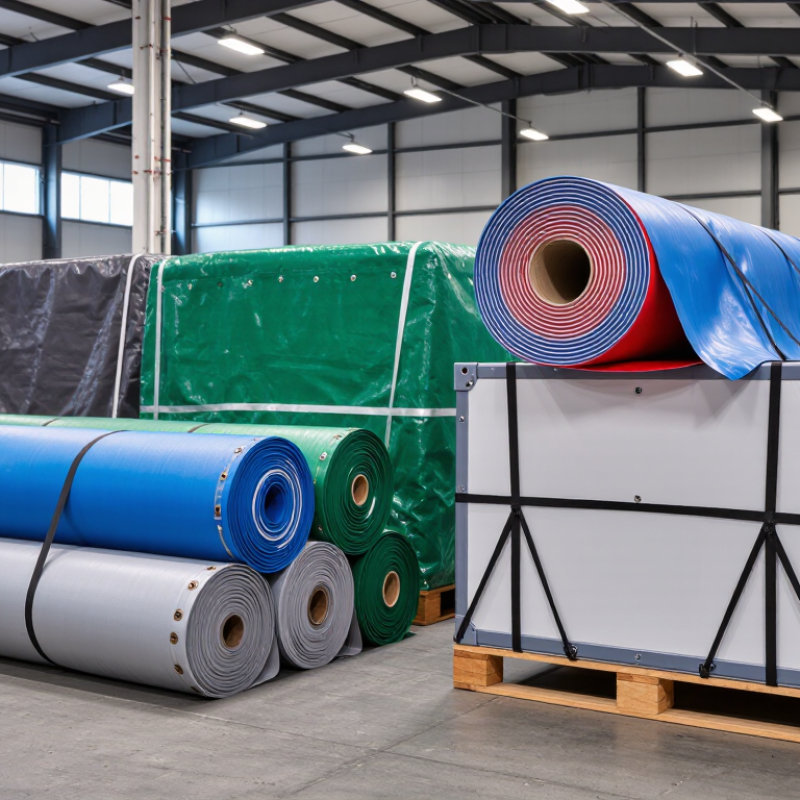
Shipping Tarps: Products, Materials, and Common Uses
Top 10 Shipping Tarp Manufacturers in China
Shipping Tarps: Products, Materials, and Common Uses
Shipping tarps protect cargo from rain, road spray, dust, and sunlight during transport or temporary storage. Common options include flatbed covers, equipment tarps, and mesh covers for loads that need airflow. Many heavy-duty tarps use woven polyethylene or PVC-coated polyester. Polyethylene is relatively light and water-resistant, while coated polyester often offers stronger abrasion resistance. Actual performance depends on fabric weight, coating, stitching, and edge reinforcement.
Look closely at the details. Reinforced hems help reduce tearing around tie-down points, and evenly spaced grommets make secure fastening easier. A tarp that fits poorly can flap in the wind, rub against cargo, or collect water in low spots. These problems are easy to overlook. For regular routes, match the cover’s dimensions to the load and consider how often workers will fold, handle, and clean it. No material stays pristine forever; sharp corners and rough edges can still cause damage.
Tips: Check seams, hems, and grommets before loading. Use corner protectors where straps meet cargo, and keep the tarp taut without overstretching it. After use, dry it fully before storage to limit mildew and coating damage.
How to Evaluate Shipping Tarp Manufacturers in China
When evaluating shipping tarp manufacturers in China, start with the conditions your tarp must handle. A cover used on an open truck may face wind, rain, abrasion, and long hours of sunlight. Ask for the fabric’s weight, weave, coating type, and stated UV performance. Details matter. Confirm finished dimensions and acceptable tolerances, rather than relying on a product photo or a general description.
Review how the tarp is assembled. Check whether seams are stitched, welded, or reinforced, and ask how edge hems and grommets are secured. Request a sample with the same material and construction as the proposed order. Examine it closely: pull around a grommet, flex a seam, and look for uneven coating or rough edges. Test reports can help, but ask what was tested, by which method, and whether the results apply to the actual product. A polished brochure is not proof.
Production reliability matters too. Ask about material sourcing, batch identification, inspection records, production capacity, and realistic lead times. Clear answers are useful; vague promises deserve follow-up. Compare quotations by specification, not just price, and confirm how defects or dimensional errors are handled. No checklist catches everything. An on-site or independent inspection may add confidence, though it can take time and still miss occasional flaws. Keep written specifications and approved samples as reference points before production begins.
Top 10 Shipping Tarp Manufacturers in China
Choosing among the top 10 shipping tarp manufacturers in China requires more than comparing prices. Start with the tarp’s intended use, expected weather exposure, and required dimensions. Ask about fabric weight, coating type, seam construction, and UV resistance. These details affect durability during storage and transport. A clear product specification is essential.
Tips: Request a sample and inspect its edges, eyelets, and stitching. Ask for written test information and production lead times. Small details matter.
A reliable manufacturer should explain material choices and confirm whether custom sizes or reinforcements are available. Check how the supplier handles quality inspections, packaging, and damaged goods. Photos can help, but they do not replace a physical sample. Keep communication specific: share measurements, expected use, and any fitting requirements. One weakness in this process is that buyers may focus too heavily on a single test result. Real working conditions can differ. Compare several suppliers using the same questions, then review their answers carefully before deciding.
Top 10 Shipping Tarp Manufacturers in China: Container Size Reference
Typical external dimensions of common ISO shipping containers are shown for general reference. Actual dimensions can vary within specified tolerances; use the container’s measured dimensions when planning tarp coverage.
Comparing Product Range, Quality, and Manufacturing Capabilities
When comparing Chinese shipping tarp manufacturers, look beyond catalog size. A broad range may include woven polyethylene covers, PVC-coated tarpaulins, truck-side curtains, and custom-cut sheets. Check available weights, coating choices, colors, edge finishes, and dimensions. A product page can look complete while omitting practical details. Ask for actual specifications.
Quality shows in repeatable details. Examine fabric weight, coating adhesion, seam construction, reinforced corners, grommet spacing, and water-resistance or UV-test reports. Request a sample and inspect it under tension; feel alone cannot verify performance. Ask how production batches are checked and whether defects are recorded. Small differences matter.
Manufacturing capability is more than stated monthly output. Confirm whether cutting, welding or stitching, printing, and packing happen in-house. Ask about lead times for standard and custom orders. Review sample approval, production updates, and packaging before dispatch. Capacity can change during peak seasons. Keep comparisons grounded in evidence, not polished claims. I would leave room for uncertainty. Specifications cannot show how a tarp performs after months of folding, wind, and abrasion. A modest trial order can reveal fit, finish, and communication gaps before a larger commitment.
How to Choose and Source from a Chinese Tarp Manufacturer
Top 10 Shipping Tarp Manufacturers in China: How to Choose and Source from a Chinese Tarp Manufacturer
Choosing a Chinese tarp manufacturer starts with the conditions your cover must withstand. Specify finished dimensions, fabric weight, coating type, UV exposure, and expected load. Ask for test reports covering tensile strength, tear resistance, and water resistance. A sample should match the production material, not just look similar. Check the hems and grommets closely. Weak stitching can fail before the fabric does.
UNCTAD’s Review of Maritime Transport 2023 reports that over 80% of international trade in goods by volume travels by sea. That scale makes dependable cargo protection important, but it does not prove any supplier’s quality. Request recent inspection records, production photos, and a written tolerance for dimensions and weight. Clarify packaging, lead time, payment terms, and who handles pre-shipment checks. Ask how defects are recorded and corrected. Small details matter.
Compare suppliers using the same specification sheet, then order a trial batch before committing to a larger shipment. Inspect it under real conditions: spread a tarp flat, measure it, check the seams, and test water shedding. Keep a signed sample for comparison. A neat sample is not a guarantee of consistent production, and paperwork can miss practical problems. I may still overlook something, so independent inspection is worth considering when the order is substantial.
Top 10 Shipping Tarp Manufacturers in China - How to Choose and Source from a Chinese Tarp Manufacturer
Anonymous capability guide for comparing suppliers—not a verified ranking of individual manufacturers. Material weights and specifications are indicative ranges; confirm the exact construction, test method, and acceptance criteria with each supplier.
| No. | Anonymous Supplier Capability | Typical Product / Material | Useful Specification Checks | Questions to Ask Before Ordering |
|---|---|---|---|---|
| 1 | PVC-coated fabric specialist | Coated polyester tarpaulin for truck covers and heavy-duty cargo protection; commonly specified around 500–900 g/m². | Total fabric mass, base-fabric construction, coating adhesion, tensile and tear strength, weldability, and surface finish. | Can you provide a production sample and test reports for the exact fabric grade and color quoted? |
| 2 | PE woven tarp producer | Woven polyethylene fabric with laminated surfaces; commonly available in a broad range, roughly 100–250 g/m², depending on construction and use. | Fabric mass, weave and lamination, edge reinforcement, hem construction, eyelet spacing, and water-resistance test method. | Is the quoted weight the finished-product weight or fabric weight, and how is it measured? |
| 3 | Truck-cover and side-curtain fabric specialist | PVC-coated polyester fabric intended for repeated handling, cargo transport, and fabrication into truck covers or side curtains. | Roll width, coating consistency, color matching, cold-flex performance, seam compatibility, and repairability. | What roll widths are available, and can you supply cut panels or finished covers to drawings? |
| 4 | Mesh-tarp manufacturer | Knitted or woven mesh, often made from polyethylene or PVC-coated polyester, for airflow and load coverage. | Mesh construction, open area, finished weight, edge reinforcement, and whether the product is water-resistant or water-permeable. | Can you state the open-area or airflow specification and clarify whether rain passes through? |
| 5 | Custom-size tarp converter | Finished covers made from coated or laminated fabric, with hems, webbing, ropes, grommets, or other specified fittings. | Finished dimensions, measurement points, corner details, fitting material, reinforcement layout, and dimensional tolerances agreed in the purchase specification. | Will you confirm a technical drawing and tolerance schedule before mass production? |
| 6 | Welded-seam fabricator | Fabricated PVC or compatible thermoplastic tarpaulins using hot-air or high-frequency welding, depending on material and equipment. | Seam width, seam continuity, corner reinforcement, weld appearance, and agreed seam-strength acceptance criteria. | Can you make a pre-production sample and document how seams are inspected? |
| 7 | UV-exposure-focused supplier | Outdoor-use tarp fabrics offered with UV-stabilized materials or coatings, subject to the supplier’s formulation and test evidence. | UV test method, exposure conditions, test duration, and the measured property before and after exposure. ISO 4892-3 is one laboratory method for fluorescent UV exposure of plastics. | What test method and exposure conditions support the stated outdoor-life claim? |
| 8 | Performance-testing-oriented supplier | Shipping tarp materials supplied with performance data for specified mechanical properties. | Ask whether tensile strength is tested using ISO 1421 and whether tear resistance is tested using ISO 4674-1; confirm specimen direction and reported units. | Are reports from an independent laboratory, and do they identify the same grade and production lot? |
| 9 | Special-finish supplier | Tarp fabrics offered with requested finishes such as color options, printed markings, or specified surface treatments, subject to product compatibility. | Color approval, print durability, finish compatibility with welding, and any claim-specific test or certification requirements. | Can the finish be maintained across repeat orders, and what sample-approval process is used? |
| 10 | Export-ready finished-goods supplier | Finished tarpaulins prepared to a buyer’s packing, labeling, documentation, and shipment requirements. | Carton or bale dimensions, packing method, product labeling, order quantity, inspection plan, and agreed shipping terms. | Request a written quotation showing specifications, sample and production lead times, packing details, and payment and delivery terms. |
Sourcing tip: Compare like-for-like samples against a written specification. Verify applicable test reports, production capacity, quality-control procedures, and export references directly; product ranges and tolerances vary by supplier.