How to Choose the Best Crawler Crane for Your Project?
Selecting the right crawler crane for your project can be daunting. The choice involves multiple factors, each impacting your project's success. Crawler cranes are essential for heavy lifting in construction, making them a popular choice for many companies.
Understanding the specifications of crawler cranes is crucial. You need to evaluate load capacity, reach, and terrain adaptability. Each project presents unique challenges. Sometimes, even a slight oversight can lead to significant issues later. This emphasizes the importance of gathering data and expert recommendations beforehand.
Professionals with experience can guide you in making informed choices. An expert’s perspective can unveil details you may not notice at first. The right crawler crane can enhance efficiency and safety. Reflect on your project requirements carefully. Don't rush into a decision. A well-considered choice can prevent costly mistakes and ensure your project's success.
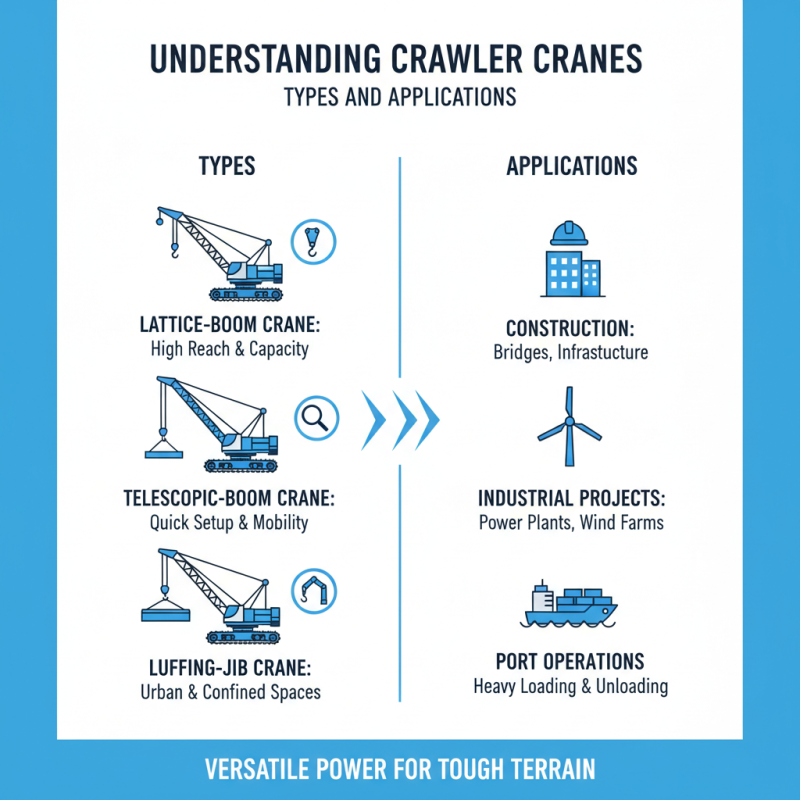
Understanding Crawler Cranes: Types and Applications
Crawler cranes are essential in construction, offering versatility and power. They are designed to move over rough terrain, making them suitable for various industrial applications. Understanding the different types of crawler cranes helps in selecting the right one for your specific project needs.
There are several types of crawler cranes. For instance, lattice boom cranes are lightweight and can lift heavy loads. They are often used in larger projects, such as bridge construction. On the other hand, telescopic crawler cranes have a compact design, making them ideal for urban environments where space is tight. Each type has unique features that cater to specific tasks, so evaluating the project scope is crucial.
Selecting an appropriate crawler crane requires careful thought. Consider the load capacity, lift height, and working conditions. The crane's base stability is vital, especially on uneven surfaces. Get feedback from operators about their experiences. Understanding these factors can help avoid costly mistakes in equipment selection. It’s beneficial to review past project performance as well. Learning from previous experiences is key to making better decisions in the future.
Assessing Project Requirements: Load Capacity and Reach
When selecting a crawler crane, assessing the project's load capacity and reach is critical. Load capacity refers to the maximum weight a crane can lift at a specific radius. According to a report by the American Society of Civil Engineers, crane failures often occur due to underestimating the load capacity required for specific tasks. Thus, conducting a thorough analysis of all materials and weight distributions is necessary.
Reach is equally important. It determines how far the crane can extend to lift materials. A study by the International Association of Foundation Drilling showed that cranes with longer reaches can significantly enhance efficiency. However, longer reach often means more complexity. Many construction teams might overlook the necessary adjustments that come with longer reach, leading to operational difficulties.
Evaluating both load capacity and reach requires a detailed understanding of project specifics. Collaborating with engineers and operators is essential for accurate assessments. Familiarity with terrain, obstacles, and operational limits is vital. Some projects may benefit from a crane with less reach but higher load capacity. Others might require both, depending on their unique challenges. Mistakes can happen when assumptions replace data-driven decisions.
How to Choose the Best Crawler Crane for Your Project? - Assessing Project Requirements: Load Capacity and Reach
| Crawler Crane Model |
Load Capacity (tonnes) |
Maximum Reach (meters) |
Operating Weight (tonnes) |
Engine Power (kW) |
| Model A |
120 |
45 |
50 |
150 |
| Model B |
150 |
55 |
60 |
200 |
| Model C |
200 |
60 |
70 |
250 |
| Model D |
180 |
50 |
65 |
220 |
| Model E |
250 |
70 |
80 |
300 |
Evaluating Ground Conditions and Stability Needs
Choosing the right crawler crane involves careful evaluation of ground conditions and stability requirements. Soil types, moisture levels, and load-bearing capabilities affect the crane's performance on site. Soft or sandy soil may require additional support measures to prevent sinking or tipping. Conversely, solid ground typically allows for heavier loads and more extensive operations.
Tip: Always conduct a thorough soil test before starting your project. This can help identify potential issues and avoid costly delays later on.
Stability is also crucial when selecting a crawler crane. Assess if the site is prone to shifting or settling. Uneven terrain may require the crane to operate at different angles, posing a risk of imbalance. Pay attention to nearby structures or obstacles that might affect stability.
Tip: Use leveling equipment to ensure the crane remains stable during operation. Regular checks can minimize risks associated with sudden shifts or movements.
Keep in mind that selecting the right crane isn't just about lifting capacity. It's about understanding your site's unique conditions. Reflect on the potential risks to develop a more informed approach.
Budget Considerations: Cost, Rental vs. Purchase
Budget considerations are crucial when selecting a crawler crane for your project. The cost varies widely based on the crane's capacity and features. According to a report by the International Monetary Fund, the average cost of a new crawler crane ranges from $200,000 to $1 million. This substantial range depends on the crane's load capacity and lifting height. Companies must carefully assess their project needs before deciding.
Rental vs. purchase is another significant factor. Renting a crawler crane can be cost-effective for short-term projects. For instance, rental rates typically range from $1,000 to $3,000 per day, depending on the crane's size and type. However, long-term projects may benefit from purchasing. Owning a crane might also lead to additional costs, like maintenance and storage. Studies suggest that 65% of construction companies prefer renting cranes for flexibility and lower upfront costs. This decision can impact project timelines and budgets significantly.
Analyzing these financial aspects can reveal shortcomings in planning. Miscalculating project duration or equipment needs can increase costs unexpectedly. Therefore, accurate budgeting is essential.
Choosing the Right Features: Attachments and Technology
When selecting a crawler crane, the right attachments and technology make a significant difference. Many projects demand specific features to optimize performance. For instance, if you're lifting heavy loads, consider using a hook block or a grapple. Both can enhance efficiency and safety on the job site. However, it’s crucial to assess the weights and dimensions of your materials before making a choice. Not all cranes can accommodate every attachment effectively.
Technology integration is another important aspect. Advanced control systems can improve precision and reduce the risk of accidents. Some cranes now feature remote monitoring capabilities. These systems can track performance and diagnose issues in real time. Yet, relying solely on technology can sometimes lead to oversight. Operators must remain vigilant and knowledgeable about their equipment. Ensuring proper training for the team is essential. This combination of experience and advanced technology maximizes safety and productivity on a project.