How to Choose Marine Steel Pipes for Global Projects?
Choosing the right Marine Steel Pipes can determine whether a global project performs reliably or faces costly repairs. These pipes may serve offshore platforms, port structures, seawater cooling systems, or submarine utility lines. Each application creates different demands. Saltwater is relentless. Pressure is unforgiving.
A dependable selection process begins with service conditions. Engineers should review pipe diameter, wall thickness, design pressure, temperature, water chemistry, installation method, and expected loading. Steel grade matters, but it is not the only concern. Weld quality, corrosion allowance, surface protection, and dimensional accuracy can influence long-term performance. In practice, a pipe may look excellent in a factory and still fail when coatings are damaged during transport. Small details matter.
Project teams should also examine manufacturing standards, inspection records, heat numbers, mill certificates, and traceability documents. Independent testing can verify chemical composition, tensile strength, impact performance, and weld integrity. Experienced buyers often request non-destructive testing, such as ultrasonic or radiographic inspection, when risk levels justify it. Classification requirements from recognized maritime bodies may provide additional confidence, but they should match the project’s actual location and use. A certificate alone is not proof of suitability.
No selection method is flawless. Budget pressure can encourage thinner walls or cheaper coatings, yet short-term savings may create serious maintenance costs. Supplier communication also deserves attention. Clear drawings, realistic delivery schedules, and documented quality procedures reduce avoidable disputes. A thoughtful decision balances engineering evidence, field experience, supplier reliability, and lifecycle cost. That balance is difficult. It is still worth pursuing.
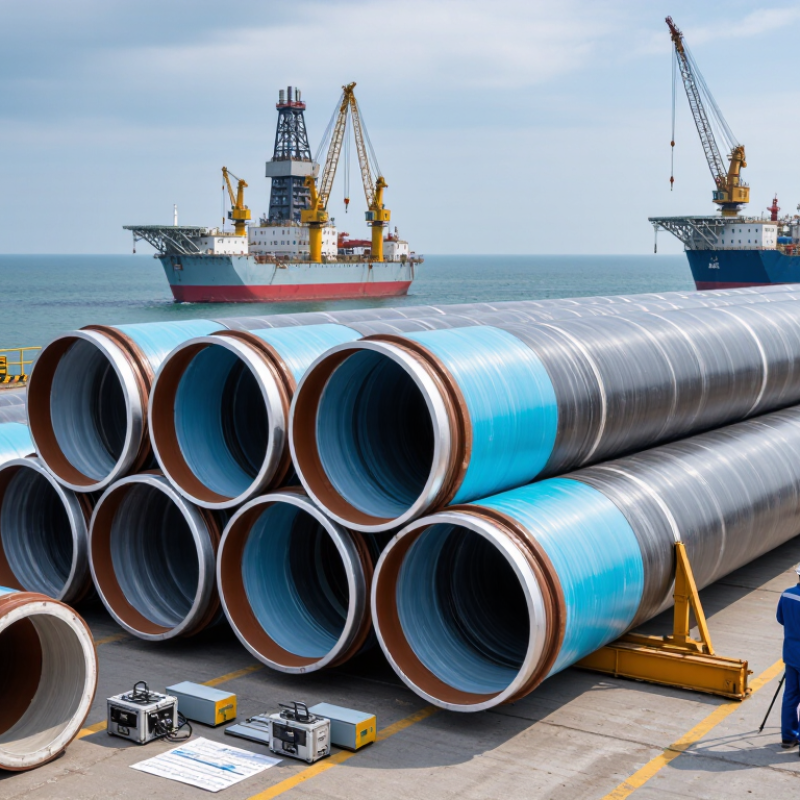
Define Project Requirements for Marine Steel Pipes
Defining project requirements is the safest starting point when selecting marine steel pipes for global projects. Start with the service. State whether the pipe carries seawater, ballast, firewater, exhaust, or structural loads. Record design pressure, temperature, flow rate, diameter, and expected operating hours. A pipe carrying chilled seawater faces different risks than one exposed to hot gases. Small omissions become expensive offshore.
Specify steel grade through required yield strength, toughness, weldability, and thickness range. Include corrosion allowance, external coating, internal lining, and cathodic protection where applicable. In splash zones, wave impact and salt exposure may govern thickness more than pressure. Check fatigue life for lines connected to vibrating pumps or moving platforms. Do not rely on nominal wall thickness alone. Manufacturing tolerances matter.
Project documents should identify applicable classification rules, pressure-testing methods, inspection levels, traceability, and delivery conditions. Ask for heat numbers, test certificates, dimensional reports, and non-destructive examination records. Confirm transport length, end preparation, lifting points, and storage limits before ordering. A qualified engineer should review the final data against local regulations and site conditions. I have seen schedules fail because a pipe fit the drawing but not the welding procedure. Verify every assumption. That detail deserves another review.
Select Suitable Steel Grades and Pipe Specifications
How to Choose Marine Steel Pipes for Global Projects?
Marine steel pipes must match the water, load, connection method, and project standard. Start with the steel grade, not the supplier’s price. For seawater exposure, assess corrosion resistance, toughness, weldability, and strength together. A high-strength grade may reduce wall thickness, but it can demand stricter welding control. In cold waters, impact performance matters because brittle steel can fail suddenly. Confirm chemical composition and mechanical properties through current mill test certificates.
Pipe specifications need equal attention. Define outside diameter, wall thickness, length, end preparation, straightness, and dimensional tolerance. For piles, jacket structures, and seawater lines, calculate external pressure, bending stress, fatigue, and corrosion allowance. A pipe that looks adequate on a drawing may lose capacity after years of coating damage. Specify hydrostatic testing, ultrasonic inspection, weld inspection, and heat-number traceability. These details make quality checks practical at a busy port.
Tips: Match the grade to the design code and service temperature. Check whether the selected thickness suits welding and handling equipment. Request samples of inspection records before production. I have seen projects choose thicker pipes for comfort, then discover transport limits and difficult field joints. That decision was safe in theory, but inefficient in practice. Review the full route, lifting points, storage conditions, and local fabrication skills before freezing the specification. Shortcuts rarely stay short.
Evaluate Corrosion Resistance and Protective Coatings
Choosing marine steel pipes starts with the water, not the catalogue.
Seawater, splash zones, buried sections, and freshwater create different corrosion pressures. In project reviews, I check chloride exposure, temperature, flow velocity, and oxygen levels before selecting steel. A pipe that performs well underwater may deteriorate quickly where waves repeatedly wet and dry its surface. Small details matter.
Corrosion resistance depends on steel chemistry, wall thickness, weld quality, and the protective coating system. I request traceable mill certificates, inspection records, and coating data sheets before approval. For external surfaces, epoxy, polyurethane, or multilayer systems can provide durable barriers when correctly applied. The choice should match service temperature, immersion time, impact risk, and repair access. Coating adhesion must be tested after surface preparation, not assumed from appearance. A clean-looking pipe can still hide weak bonding.
Surface preparation is often the real deciding factor. Abrasive blasting removes mill scale and salts, while controlled profile depth improves mechanical adhesion. Inspectors should record surface cleanliness, humidity, steel temperature, dry-film thickness, and holiday-test results. Field joints deserve extra attention because rushed repairs are common. Cathodic protection may extend service life, but it cannot rescue poorly prepared steel. I have seen coating specifications copied without checking local conditions. That shortcut is risky. Design reviews should include maintenance access, spare coating materials, and realistic inspection intervals.
Verify Manufacturing Standards, Testing, and Certification
How to Choose Marine Steel Pipes for Global Projects?
Marine steel pipes must meet the project’s governing standards, not just a supplier’s internal specifications. Confirm whether the design requires EN, ASTM, ISO, or another recognized standard. Check the latest edition and compare it with the contract documents. Small differences in yield strength, wall tolerance, or impact testing can affect installation and service life. Marine conditions are unforgiving.
Request complete manufacturing records before approving shipment. These should include the heat number, chemical analysis, mechanical test results, and dimensional inspection data. Hydrostatic testing is important, but it cannot replace ultrasonic or radiographic examination when weld quality is critical. Ask which areas were tested, what acceptance level applied, and who reviewed the results. Vague wording deserves attention.
Certification should come from a competent, independent body or an accredited laboratory. For critical projects, specify third-party inspection and an EN 10204 3.2 inspection certificate where appropriate. Verify that certificate details match the pipe markings, packing list, and mill records. Traceability must survive cutting and coating. It often does not. One missed transfer of a heat number can weaken an otherwise careful quality system.
I have seen teams focus heavily on certificates and overlook storage damage. Salt deposits, open pipe ends, and damaged coatings can create problems before installation. Inspect the delivered pipes, record photographs, and preserve documents in a shared quality file. No process is perfect. Review the evidence again when conditions, suppliers, or project standards change.