Why Are Boom Cranes Essential in Modern Construction Projects?
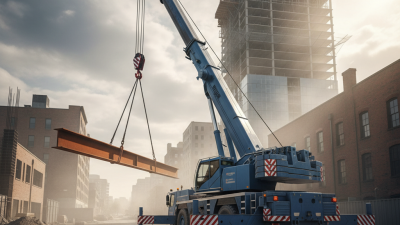
In the realm of modern construction, the boom crane stands out as a vital asset. These machines redefine efficiency and safety on job sites. Capable of lifting heavy materials, a boom crane enhances workflow significantly. When a project demands precision and power, these cranes are indispensable.
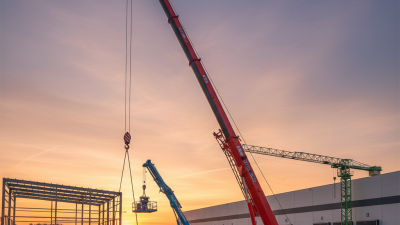
The complexity of construction projects continues to grow. Boom cranes can reach high elevations and difficult angles. This versatility is crucial in today's crowded urban landscapes. However, with power comes responsibility. Operators must ensure they adhere to safety protocols. Accidents, though rare, are a concern. Proper training and equipment checks are non-negotiable.
As construction evolves, the importance of boom cranes will only increase. Their role is not just lifting heavy loads; it’s about shaping the future. Embracing technology and innovation will streamline their use further. Yet, challenges persist. The need for skilled operators remains. Balancing efficiency with safety is a constant challenge for the industry.

Importance of Boom Cranes in Modern Construction Projects
Boom cranes play a vital role in modern construction projects. They enable efficient lifting of heavy materials. According to the Global Construction Equipment Market report, the boom crane market is projected to grow significantly, achieving a compound annual growth rate (CAGR) of about 6.2% through 2025. This data underscores the increasing reliance on cranes amid rising urbanization.
These machines are crucial for tasks such as transporting steel beams and precast concrete. Their ability to extend over long distances enhances site accessibility. However, their operational complexity cannot be overlooked. Operators must be well-trained to avoid accidents. The reality is that safety incidents still occur, with OSHA reporting over 42% of crane-related fatalities due to operator error. Regular training and updates on safety practices are essential, yet often neglected.
Furthermore, the integration of technology in boom cranes has transformed their capabilities. Features like remote control and automation are becoming standard. Yet, these advancements require significant investment. Many contractors hesitate to adopt them due to budget constraints. Therefore, balancing cost and efficiency is a constant challenge in the industry.
Why Are Boom Cranes Essential in Modern Construction Projects?
| Aspect |
Description |
Benefits |
| Versatility |
Boom cranes can be used in various construction applications, from lifting heavy materials to positioning equipment. |
Enhanced efficiency and adaptability across different construction tasks. |
| Safety |
Boom cranes are equipped with advanced safety features to reduce accidents on construction sites. |
Minimized risk of injury and property damage, leading to a safer work environment. |
| Operational Efficiency |
Allows for quick and efficient lifting and movement of materials, reducing project timelines. |
Significantly improved productivity leading to cost savings. |
| Accessibility |
Can access hard-to-reach locations on construction sites where traditional lifting methods may not be effective. |
Increased operational range and flexibility in positioning loads. |
| Precision |
Boom cranes allow for high precision in load lifting and placement, essential in modern construction projects. |
Reduction of human error during heavy lifting operations. |
Key Functions of Boom Cranes in Construction Activities
Boom cranes play a crucial role in modern construction projects. Their unique design allows for lifting heavy structures with precision and efficiency. In fact, data from the Construction Industry Institute indicates that using boom cranes can reduce project completion times by up to 30%. This significant increase in efficiency underscores their importance on job sites.
One of the key functions of boom cranes is their versatility. They can easily maneuver around obstacles, reaching heights and depths that are often challenging for other lifting equipment. A report by the National Institute of Standards and Technology reveals that this flexibility can decrease the risk of accidents by 25%. However, operators must be knowledgeable. Poor handling may lead to mistakes, impacting safety on the site.
Moreover, boom cranes are vital for relocating materials across large areas. In congested construction environments, they prevent bottlenecks. This capability is essential in urban settings where space is limited. Unfortunately, not every project utilizes boom cranes effectively. Lack of training for operators can lead to inefficiencies. Reflecting on these factors, it becomes clear that the proper integration of boom cranes is necessary for successful construction operations.
Advantages of Using Boom Cranes Over Traditional Equipment
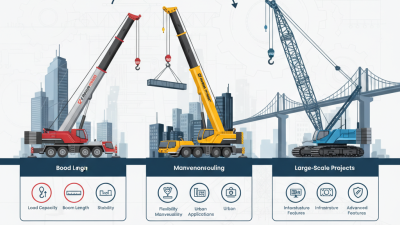
Boom cranes have become vital in modern construction due to their unique advantages over traditional equipment. These cranes can lift heavy loads to significant heights, making them ideal for high-rise projects. According to a report from the International Construction Equipment Association, boom cranes can improve lifting efficiency by up to 30%. This efficiency is critical when working on complex job sites with limited space and height restrictions.
Moreover, boom cranes provide superior flexibility. Their ability to extend and articulate allows them to access hard-to-reach areas without repositioning. This feature is particularly beneficial for urban construction, where space is often a constraint. A study by the Construction Industry Research Board found that using boom cranes can reduce project timelines significantly, sometimes by two weeks for every month of construction. However, the initial investment for boom cranes can be substantial, raising concerns for some contractors regarding budget allocation.
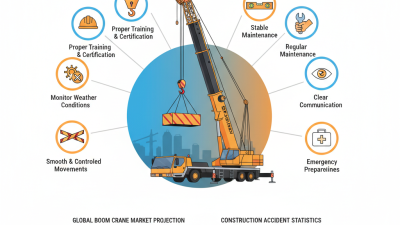
In terms of safety, boom cranes also deliver advantages. They reduce the need for manual lifting, which can mitigate worker injuries. However, improper use can lead to accidents. Operators need proper training and certification. This is a critical area for reflection, as many companies still overlook this aspect. Rigorously following safety protocols is essential, yet gaps in training practices persist in the industry.
Safety Considerations When Operating Boom Cranes
The operation of boom cranes in construction sites involves significant safety considerations. Training is critical. A recent report by the Occupational Safety and Health Administration (OSHA) indicates that over 40% of crane-related accidents are linked to operator error. This highlights an urgent need for rigorous training programs that cover various operational scenarios and emergency protocols.
When using boom cranes, awareness of surroundings is vital. An AEM report shows that proper site assessment can reduce accidents by 30%. Operators must continuously observe site conditions and be aware of potential hazards, such as overhead power lines. Miscalculations in load handling can lead to serious accidents. Regular inspections and maintenance are equally important, as mechanical failures contribute to a significant percentage of jobsite incidents.
Moreover, communication among crew members is essential. Poor coordination can increase risks. A study found that projects with effective communication protocols saw a reduction in incidents by almost 25%. Establishing clear signals and using technology to enhance communication can help improve safety outcomes. Boom crane operations require constant vigilance. The complexities involved demand a comprehensive approach to safety, which is not always easy to achieve. Reflection on past incidents can guide improvements in safety practices.
Future Trends in Boom Crane Technology for Construction Industry
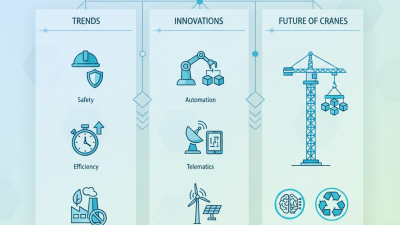
Boom cranes play a crucial role in today's construction landscape. They enable efficient lifting of heavy materials. As construction projects grow more complex, so does the need for advanced crane technology. Future trends are poised to revolutionize this industry.
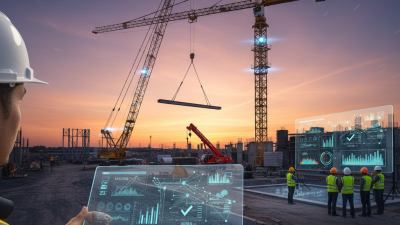
One focus is automation. Automated boom cranes can operate with minimal human input. This reduces labor costs and enhances efficiency. However, a lack of skilled operators may pose a challenge. Another area of development is connectivity. Smart cranes can be integrated into a project management system. This allows real-time tracking and better resource allocation. Yet, there’s a risk of over-reliance on technology.
Safety features are also evolving. Advanced sensors can detect obstacles and prevent accidents. Still, accidents occur more frequently in construction. Companies must constantly rethink training and protocols. Embracing new technology will be essential, but so will addressing potential pitfalls. Balancing innovation with safety remains a work in progress.