

Sanghvi Crane

10 Explosion Proof Box Buying Tips for Global Buyers?

Choosing an Explosion Proof Box for international operations requires more than comparing prices and enclosure sizes. A box may look robust on a supplier’s website, yet fail your actual installation conditions. Dust, gas, salt spray, vibration, and heat can change the decision. Global buyers need evidence, not confident wording. This guide introduces ten practical buying tips based on equipment evaluation, supplier discussions, and common site concerns. Small details matter. A mismatched cable entry can undermine an otherwise well-built enclosure.

The review should examine certified protection concepts, material quality, ingress protection, temperature ratings, terminal space, and cable-gland compatibility. Ask for current test reports and traceable product documentation. Do not rely on a copied certificate. Requirements differ across regions, hazardous-area classifications, and project specifications. An experienced supplier should explain those differences clearly. If the answer stays vague, pause before ordering. It is easy to overlook maintenance access when reviewing drawings. Technicians may later work inside a cramped box wearing gloves.

The following tips also address customization, sample inspection, logistics, after-sales support, and total ownership cost. Request photographs of labels, sealing surfaces, fasteners, and internal wiring. Compare lead times honestly, including testing and export packing. One uncomfortable lesson deserves attention: the cheapest quote can become expensive after redesign, delay, or replacement. Still, no checklist replaces competent local review. Have a qualified engineer confirm suitability before installation. Use these questions to challenge assumptions, record decisions, and select protection equipment with dependable evidence.
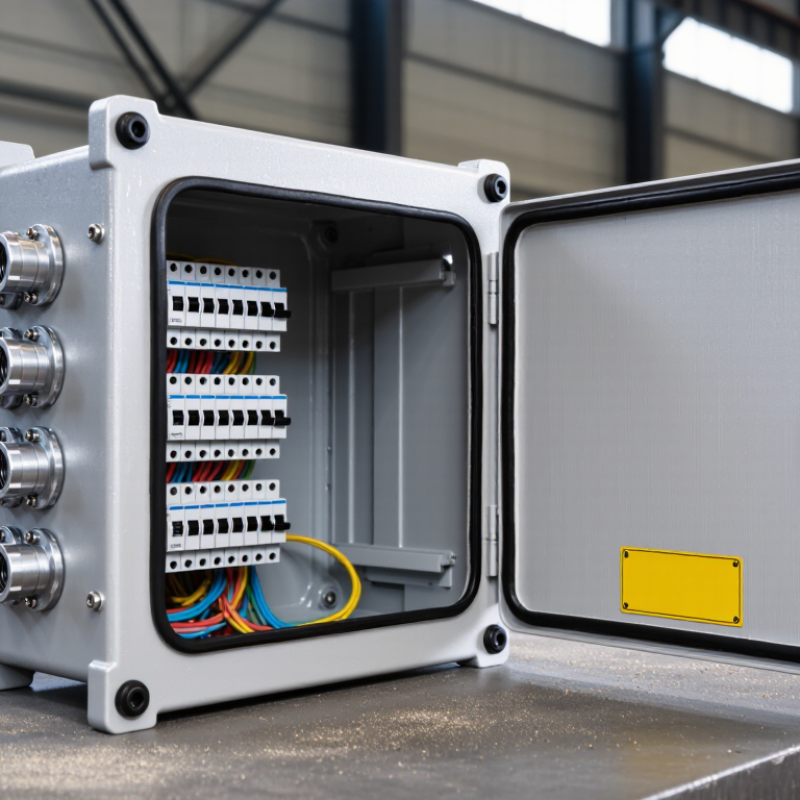
10 Explosion Proof Box Buying Tips for Global Buyers?

Understand Explosion Proof Box Certifications and Hazard Ratings

Explosion Proof Box Buying Tips for Global Buyers

When buying an explosion proof box, start with the hazardous area classification, not the price. Confirm whether the location contains gas, vapor, dust, or fibers. Gas zones may be marked Zone 0, 1, or 2, while dust zones commonly use Zone 20, 21, or 22. Some regions use Class I, Division 1 or 2 instead. These systems are not interchangeable.

Check the certification documents carefully. IECEx and ATEX certificates may support different market requirements, but local acceptance still matters. Review the protection method, such as Ex d, Ex e, Ex p, or Ex t. The temperature class must remain below the ignition temperature of the surrounding material. A box rated for gas may not suit combustible dust. That mistake is surprisingly common.

Also inspect the equipment group, ambient temperature range, cable entries, and IP rating. IP66 can show strong dust and water resistance, but it does not prove explosion protection. The certificate should match the complete assembly, including glands, windows, terminals, and fasteners. Ask for the certificate number and technical schedule, not only a printed logo.

In one purchasing review, the enclosure rating looked correct, but the cable glands had a different approval scope. Small details matter. Recheck the installation drawing with a qualified engineer, because certification marks alone cannot resolve every site condition.

Match the Box to the Hazardous Area and Protection Method

10 Explosion Proof Box Buying Tips for Global Buyers

Match the box to the hazardous area before comparing price, size, or delivery time. Zone 0, 1, and 2 require different protection decisions. Dust areas use separate classifications, such as Zones 20, 21, and 22. The wrong classification can make a strong-looking enclosure unsuitable.

OSHA safety data records over 900 combustible-dust fires and explosions since 1980. These events caused 119 deaths and 718 injuries. That record makes dust control and enclosure selection practical concerns, not paperwork. Check the gas or dust group, temperature class, ambient temperature, and required ingress protection. A box rated Ex d may contain an internal explosion, while Ex e reduces ignition risks through enhanced construction. Intrinsically safe Ex i equipment uses energy limitation instead. Pressurized Ex p systems need reliable monitoring and purge control.

Use IEC 60079 principles, NFPA 70 requirements, or applicable regional rules during evaluation. IECEx or regional certification should match the exact protection method and installation location. Do not accept a certificate for a similar model without checking the enclosure markings. Cable glands, blanking plugs, hinges, and window materials matter too. Small details fail first.

One uncomfortable lesson remains: buyers often specify the box before defining the hazard. That reverses the engineering process. Recheck the area drawing, gas data, dust layer thickness, and maintenance routine with a qualified specialist. A cheaper box may create expensive uncertainty.

Check Materials, Enclosure Design, and Environmental Resistance

10 Explosion Proof Box Buying Tips for Global Buyers

Material choice sets the foundation. Stainless steel suits corrosive areas, while aluminum can reduce weight. Reinforced plastic may resist chemicals and ultraviolet exposure. Check material compatibility with nearby solvents, salt spray, moisture, and cleaning agents. A shiny finish is not proof of durability. Request test reports, material grades, and surface-treatment details from the supplier.

Examine the enclosure design closely. Strong hinges, captive fasteners, and a stable cover help preserve sealing during repeated access. The gasket should remain flexible across the stated temperature range. Check the ingress protection rating, but do not treat it as permanent. Dust, aging seals, and poor installation can reduce real performance. Cable entries need matching thread types, approved sealing parts, and enough space for safe bends. Small gaps matter.

Environmental resistance deserves practical testing. Compare operating temperature, humidity, impact rating, UV exposure, vibration, and corrosion resistance with the installation site. In coastal facilities, ordinary steel can deteriorate faster than expected. In cold regions, stiff gaskets may leak. I once underestimated heat trapped inside a dark enclosure; that mistake can shorten component life. Ask about internal heat dissipation and available mounting space. Review certification documents for the destination market, installation instructions, inspection records, and maintenance access before purchase. When details conflict, pause and verify them in writing.

Verify Size, Cable Entries, Wiring, and Installation Requirements

10 Explosion Proof Box Buying Tips for Global Buyers?

Verify Size, Cable Entries, Wiring, and Installation Requirements

An explosion-proof box must fit the equipment, wiring, and required termination space. Measure internal length, width, and height before ordering. Include terminal blocks, fuses, connectors, and bending clearance. A crowded enclosure can damage insulation and complicate inspection.

One assumption deserves reconsideration: a larger box is not always safer. Excess space may affect layout, heat dissipation, and installation cost. Check the certified enclosure volume, not only its external dimensions.

Review every cable entry in advance. Confirm cable diameter, entry thread, entry direction, and sealing method. Metric and imperial threads are not interchangeable. Ask whether unused openings require certified stopping plugs.

Cable glands must match the cable type, enclosure certification, and hazardous-area classification. Do not treat the IP rating as proof of explosion protection. They are different requirements. Small details matter.

Wiring plans should show conductor size, terminal capacity, grounding points, and segregation between circuits. Verify voltage, current, temperature, and short-circuit requirements.

Installation instructions should identify torque values, cover fasteners, mounting orientation, and inspection access. Local rules may require specific certificates or competent installers. Confirm these requirements before shipment.

A document that looks complete can still miss the installation environment. Recheck ambient temperature, corrosion exposure, dust, moisture, and available maintenance space.

Costly surprises often begin with one unverified measurement.

Compare Suppliers, Testing Records, Total Cost, and After-Sales Support

10 Explosion Proof Box Buying Tips for Global Buyers

Compare suppliers by evidence, not polished catalogs. IECEx’s 2023 annual report highlights certificates, test reports, and quality assessments as core confidence tools. Request the certificate number, test laboratory, enclosure type, gas or dust group, temperature class, and IP rating. Verify each record through the official IECEx online system. A document without traceable scope is only paperwork.

Tip: Ask for recent production samples and calibration records. Compare steel thickness, gasket compression, terminal layout, and coating quality. Suppliers should explain inspection frequency and corrective actions. Also check response times, spare-part availability, and local technical support. I would not accept a low quotation before reviewing these details. A cheaper box can become expensive after customs delays, field modifications, or failed inspections.

Calculate total cost across the equipment’s service life. Include testing, freight, duties, installation, cable glands, certification reviews, maintenance, and replacement parts. The World Bank Logistics Performance Index 2023 shows major differences in customs efficiency and delivery reliability between markets. Therefore, a supplier’s factory price cannot predict the final cost. Request a landed-cost sheet with clear assumptions. Add realistic lead-time buffers. They may feel excessive, but projects rarely fail because buyers planned too carefully. One overlooked issue remains common: after-sales promises are often not written into the contract. Require response times, warranty limits, remote troubleshooting, and escalation contacts in measurable terms.

10 Explosion Proof Box Buying Tips for Global Buyers — Compare Suppliers, Testing Records, Total Cost, and After-Sales Support

Buyer comparison framework for hazardous-area electrical enclosures
No. Buying tip Data to compare Required evidence or record Practical decision metric Buyer warning sign
1 Match the hazardous-area classification Compare gas or dust risk, zone or division, gas group or dust group, temperature class, and ambient temperature range. A certificate or technical file that states the complete protection marking for the exact enclosure configuration. The marking must cover the installation location; a general “explosion proof” statement is not sufficient. The supplier provides only a marketing label, an incomplete marking, or a certificate for a different model.
2 Check the applicable certification route Determine whether the destination requires IECEx, ATEX, UKCA, North American hazardous-location approval, or another local scheme. Certificate number, issuing body, product scope, protection concept, limitations, and current validity status. Use the certification route accepted by the authority having jurisdiction at the installation site. The document is undated, cannot be independently verified, or lists only a similar product family.
3 Verify the testing standard and scope Compare the protection concept and relevant standards, such as IEC 60079-0, IEC 60079-1, IEC 60079-7, IEC 60079-31, IEC 60529, or the required national standard. Test report reference, revision, laboratory identification, sample description, test configuration, and pass or fail results. The tested sample, materials, cable entries, windows, hinges, and fasteners must match the quotation and final purchase specification. Only a generic factory inspection sheet is supplied instead of a relevant explosion-protection test record.
4 Compare enclosure protection and environmental durability Compare IP rating, corrosion resistance, impact resistance, UV exposure, operating temperature, humidity, and outdoor installation suitability. IP test report under IEC 60529 or the required local standard, material certificate, coating specification, and temperature limits. Select an IP rating appropriate to dust and water exposure; IP rating does not by itself prove explosion protection. The quote combines IP protection and hazardous-area approval as if they were the same test.
5 Compare construction and usable internal space Compare enclosure dimensions, internal usable volume, wall thickness, door opening, mounting plate, cable-entry area, terminal capacity, and maximum heat dissipation. Dimensioned drawing, 3D or 2D file, internal layout, material grade, fastener specification, and approved component list. Evaluate usable volume rather than external dimensions; confirm that all installed equipment fits without exceeding thermal limits. The supplier changes wall thickness, hinges, windows, or cable entries without updating the certification documents.
6 Audit supplier quality and configuration control Compare quality-system status, incoming-material controls, machining tolerances, assembly inspection, traceability, and change-control procedures. Quality certificate where applicable, inspection and test plan, lot traceability, calibration records, nonconformance process, and sample inspection report. Prefer suppliers able to link each delivered unit to drawings, materials, inspection results, and serial or batch records. The supplier cannot identify the production lot or explain how design changes are approved.
7 Calculate total landed cost Compare enclosure price, certified components, cable glands, accessories, engineering, testing, packaging, freight, insurance, duties, taxes, installation, and inspection. Itemized quotation, Incoterms, shipping weight and dimensions, tariff classification, warranty exclusions, and expected maintenance parts list. Total landed cost = product and options + logistics + import charges + site acceptance and compliance costs. A low unit price excludes certification, special entries, documentation, customs charges, or replacement parts.
8 Confirm lead time and delivery controls Compare standard production time, engineering approval time, test-document release, inspection hold points, shipping time, and spare-part availability. Manufacturing schedule, approved drawing, production milestone plan, packing list, inspection release, and shipment tracking procedure. Separate quoted lead time from transport time and from the time required for document approval. The promised date starts before technical approval or depends on undocumented component availability.
9 Evaluate installation and maintenance requirements Compare gland compatibility, earthing points, torque values, flamepath or gasket care, replacement fasteners, cleaning method, and access requirements. Installation and maintenance manual, torque chart, approved spare-parts list, grounding instructions, and limitations of use. Estimate lifecycle labor and downtime, not just purchase price; maintenance must preserve the certified configuration. The manual permits modifications or replacement parts that are absent from the certification scope.
10 Assess warranty and after-sales support Compare warranty duration, response time, remote troubleshooting, replacement policy, field-service coverage, spare-parts support, and document updates. Written warranty terms, service-level commitment, escalation contacts, return procedure, spare-parts pricing, and technical-support coverage by region. Score response time, resolution time, and availability of certified replacement parts alongside the warranty period. Support is limited to sales communication, warranty exclusions are unclear, or replacement parts lack traceability.
Minimum document package before purchase: certification document for the exact configuration, technical drawing, protection marking, applicable test records, material and component information, installation and maintenance manual, itemized quotation, warranty terms, and delivery schedule.
Reference framework: IEC 60079 series for explosive atmospheres, IEC 60529 for ingress-protection ratings, ATEX Directive 2014/34/EU where applicable, and the hazardous-location requirements of the destination jurisdiction.
Scroll to Top