Sanghvi Crane

How to Choose Racking Equipment in 2026?

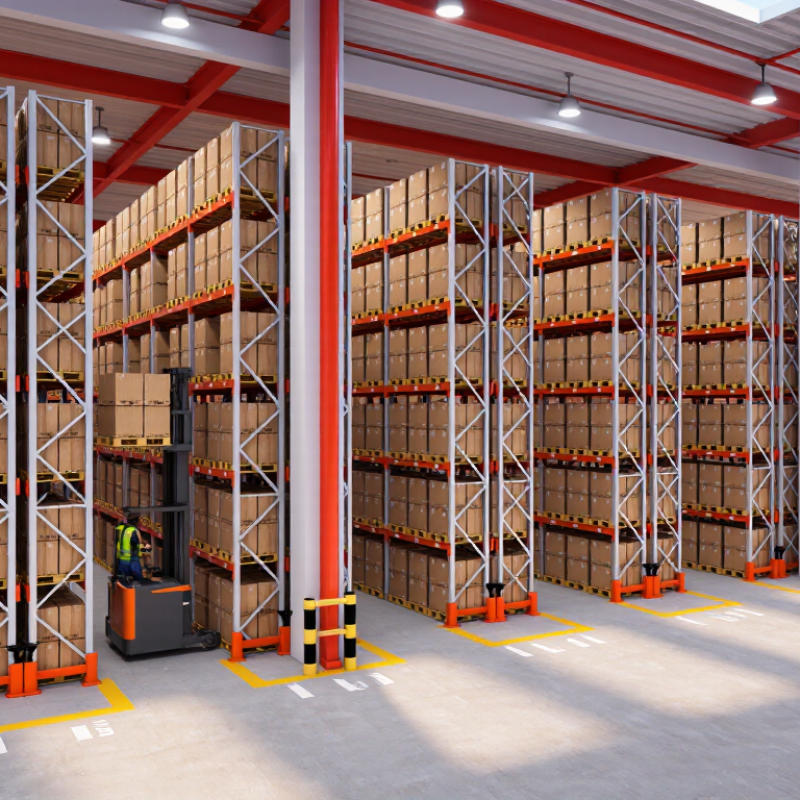
Choosing Racking Equipment in 2026 requires more than comparing prices or warehouse photographs. Storage density, load capacity, forklift movement, and future expansion must work together. A rack that fits today’s pallets may restrict tomorrow’s automation. Measure the building first. Note clear heights, column positions, floor conditions, and emergency access routes.

Reliable selection begins with verified data. Confirm pallet dimensions, unit weights, beam deflection limits, and expected loading cycles. Ask suppliers for engineering calculations, inspection procedures, and documented installation experience. Regional building, fire, and workplace requirements also matter. Local professionals should review the final design, especially in seismic areas or high-rise warehouses. Small details can prevent expensive failures.

Walk through the proposed layout before ordering. Mark rack lines with tape and move a loaded pallet through each aisle. This simple test often reveals turning problems. It is not perfect. Operational habits change, and forecasts can be wrong. Leave adjustable levels and a realistic growth allowance where possible. Consider selective racks, drive-in systems, cantilever storage, or automated solutions based on product behavior, not fashion.

The best decision balances safety, accessibility, productivity, and lifetime cost. Cheap equipment can become costly after repeated damage, difficult inspections, or poor access. Ask how damaged components will be identified and replaced. Review maintenance responsibilities in writing. A practical plan should remain understandable to operators, auditors, and future managers. Good storage starts with evidence, not assumptions.

How to Choose Racking Equipment in 2026?

Define Storage Needs, Load Profiles, and Warehouse Constraints

How to Choose Racking Equipment in 2026?

Storage decisions should begin with demand, not equipment catalogs. List each SKU’s dimensions, weight, pallet type, turnover rate, and replenishment pattern. A 1,000-kilogram pallet needs different support than cartons picked individually.

The 2024 MHI Annual Industry Report found that 55% of supply chain leaders planned to increase technology investment. That trend makes accurate inventory data essential. Review at least twelve months of receipts and shipments before selecting rack capacity. Separate fast-moving items from reserve stock. Measure peak demand, not only average demand. Small errors become expensive.

Load profiles need practical testing. Check pallet deflection, beam ratings, frame capacity, and uneven loading risks. Leave required clearance below sprinklers. Confirm the floor slab can support concentrated loads. Measure column spacing, ceiling height, dock positions, fire exits, and forklift turning paths. Aisles may look generous on paper. They often are not.

Warehouse constraints also include people. The U.S. Bureau of Labor Statistics reported 1.9 million nonfatal workplace injuries and illnesses in private industry during 2022. Safer layouts deserve measurable attention. Use guarded rack ends, visible load plaques, and inspection routines. Standards still need local verification.

Do not trust a clean spreadsheet completely. Real pallets lean, labels disappear, and seasonal peaks arrive early. Recheck assumptions with operators who touch the inventory daily. That conversation can expose the missing constraint.

How to Choose Racking Equipment in 2026?

Define storage needs, load profiles, and warehouse constraints before selecting a racking system.

Storage needs

Use selective racking for high SKU variety and frequent direct access. Use drive-in systems when dense storage and fewer SKU types are more important.

Load profiles

Confirm pallet weight, dimensions, beam span, load distribution, and required safety factors before approving the rack design.

Warehouse constraints

Aisle width affects equipment choice, storage density, travel speed, and building utilization. Verify clear heights, columns, fire protection, and local codes.

Typical clear aisle ranges are shown in metres and vary with truck type, pallet dimensions, rack height, and site regulations. Final specifications should be verified by a qualified rack and material-handling designer.

Compare Racking Types by Capacity, Accessibility, and Space Usage

How to Choose Racking Equipment in 2026?

Racking selection should begin with product movement, not available floor area. Selective pallet racking offers direct access to every pallet, but it usually sacrifices storage density. Drive-in racking stores more pallets in deep lanes and suits uniform products with fewer stock-keeping units. Double-deep systems improve cube usage, although forklifts need longer reach and inventory rotation becomes less simple. The 2024 MHI Annual Industry Report found that 55% of supply-chain professionals expected to increase technology investment. That figure supports smarter layouts, but automation cannot repair poor product data.

Accessibility affects labor time. A high-density rack may look efficient, yet blocked pallets create extra travel, waiting, and handling. Carton-flow racks support fast picking and first-in, first-out rotation. Mobile racks reduce aisles and can significantly increase usable storage positions, but opening one aisle at a time slows simultaneous access. The 2024 U.S. Industrial and Logistics Occupier Survey by CBRE reported that 58% of occupiers were pursuing greater warehouse efficiency through technology and process improvements. Racking should support that effort, not merely fill the building.

Measure clear height, aisle width, pallet dimensions, load weight, and replenishment frequency. Leave practical clearance around beams and sprinklers. Small mistakes matter. A 100-millimeter pallet variation can disrupt an entire bay plan. I have seen dense layouts fail because operators could not reach fast-moving stock safely. Recheck the assumptions. Real warehouse behavior is often messier than the spreadsheet.

Assess Automation, Safety Standards, and 2026 Technology Options

How to Choose Racking Equipment in 2026?

Choosing racking equipment in 2026 requires more than comparing load capacity and price. Start with your inventory, aisle width, ceiling height, and replenishment patterns. A practical site survey often reveals hidden limits, such as uneven floors or poorly placed columns. Measure twice. Mistakes become expensive after installation.

Automation should match your workflow, not follow fashion. Consider sensors for impact detection, digital inspection records, and software that connects inventory data with material-handling equipment. Autonomous transport may improve movement in repetitive aisles, but it needs clear routes and reliable charging space. Ask whether staff can operate and maintain the system safely. Technology can fail. Your plan should not.

Safety must remain measurable. Confirm rated loads, beam locking, upright protection, anchoring, and visible capacity labels. Use equipment that follows applicable local standards and workplace requirements. Schedule inspections after installation, relocation, and any collision. In my experience, rushed inspections cause more trouble than complex equipment. No checklist is perfect.

Tips: Request layout drawings, maintenance instructions, and test records before purchase. Leave space for emergency access and future growth. Train every shift, including temporary workers. Review automation data monthly, but question unusual results before acting. A low-cost option may be costly when repairs, downtime, and retraining are included.

How to Choose Racking Equipment in 2026? Assess automation, safety standards, operating conditions, and technology options before specifying a system.
Decision Dimension Recommended Data to Collect Suitable Racking or Automation Option 2026 Technology Considerations Safety and Compliance Reference Selection Guidance
Load Profile Unit-load mass, pallet dimensions, load stability, load overhang, and the percentage of uniform versus mixed stock. Selective pallet racking for high SKU variety; drive-in or shuttle storage for high-volume, low-variety pallets; cantilever racking for long goods. Use barcode or RFID identification where item-level traceability is required. Digital load records can support slotting and inspection workflows. Rack capacity plates, beam ratings, upright protection, and approved load configurations should be documented and visible to operators. Critical input
Never select a rack from pallet dimensions alone; the complete load unit and support conditions must be verified.
Throughput Requirement Required pallet movements per hour, order lines per hour, peak-hour demand, receiving profile, shipping cut-off times, and seasonal variability. Manual selective racks for low-to-moderate flow; pallet shuttle or conveyor-supported systems for repetitive flows; AS/RS for high and predictable throughput. Warehouse control systems can coordinate conveyors, shuttles, cranes, AMRs, and inventory software. Simulation is recommended before committing to peak capacity. Automated equipment still requires safeguarding, emergency stops, access control, maintenance isolation, and documented operating procedures. Model peaks
Size equipment for the required peak rate rather than average daily volume.
Storage Density Available clear height, floor area, aisle width, fire-sprinkler layout, floor load capacity, and target pallet positions. Narrow-aisle racks increase locations per square metre; very-narrow-aisle systems and high-bay AS/RS can use vertical space more efficiently. Automated storage can reduce travel aisles, but equipment clearances, maintenance zones, battery-charging areas, and fire access must remain available. Fire protection design must be coordinated with the adopted building and fire codes, commodity classification, storage height, and sprinkler arrangement. Verify building limits
Density gains are not acceptable if they compromise fire access, egress, inspection access, or structural capacity.
Automation Readiness SKU count, inventory accuracy, order variability, labour availability, process repeatability, and the expected payback period. Manual racks with scanning for flexible operations; AMR-assisted picking for variable routes; pallet shuttles or AS/RS for repeatable pallet movements. Prioritize modular systems, open interfaces, fleet management, remote diagnostics, condition monitoring, and graceful manual recovery. Risk assessment must cover human–machine interaction, restricted zones, safe speeds, emergency access, and restart procedures after faults. Automate selectively
Automation is most suitable when the process is stable, data quality is high, and the facility can support commissioning and maintenance.
Aisle and Equipment Interaction Forklift type, turning radius, load centre, travel speed, pedestrian routes, crossing points, and battery or charging requirements. Conventional aisles for counterbalance trucks; narrow aisles for reach trucks or guided vehicles; dedicated automation zones for cranes and shuttles. Use pedestrian detection, traffic sensors, digital speed controls, location geofencing, and collision-warning systems where justified by risk assessment. OSHA 29 CFR 1910.176(b) requires safe clearances for material-handling equipment and passageways in covered U.S. workplaces. Local requirements may differ. Separate traffic
Design physical separation wherever possible; markings alone should not be the only control for high-risk interactions.
Structural and Seismic Conditions Rack height, bay width, anchor type, slab thickness, concrete strength, wind exposure, seismic design category, and local engineering requirements. Standard adjustable pallet racks for ordinary conditions; engineered frames, bracing, anchors, and restraints for high-bay or seismic applications. Digital engineering models can help coordinate rack geometry, clearances, sprinkler layouts, sensors, and automation equipment before installation. ANSI/RMI MH16.1 provides a U.S. specification for the design, testing, and utilization of industrial steel storage racks. EN 15512 covers the structural design of adjustable pallet racking in Europe. Require engineering review
Rack design should be checked against the governing jurisdiction, building conditions, and actual operating loads.
Inspection and Damage Control Forklift impact history, rack age, damage frequency, inspection intervals, repair response time, and spare-component availability. Install upright guards, end-of-aisle protection, back stops, mesh decking, column protection, and impact-resistant barriers according to the risk assessment. Mobile inspection forms, QR-coded rack identification, photographs, and digital work orders can improve traceability and corrective-action closure. EN 15635 gives guidance for the use and maintenance of steel static storage systems, including systematic inspection and damage classification practices. Inspect routinely
Damaged components should be unloaded, isolated, assessed, and repaired or replaced by a competent party.
Fire and Emergency Planning Stored commodity, packaging materials, storage height, ceiling height, sprinkler type, flue spaces, aisle arrangement, and emergency access. Open-frame racks, suitable flue-space arrangements, and rack configurations compatible with the facility’s fire-protection design. Monitoring systems may provide alerts for temperature, smoke, equipment faults, or access-door status, but they do not replace code-compliant fire protection. NFPA 13 is commonly used in the United States for sprinkler-system design. The applicable edition and local authority requirements must be confirmed for each project. Coordinate early
Rack layout, commodity classification, sprinkler design, fire lanes, and evacuation routes should be reviewed as one system.
Environmental Conditions Temperature, humidity, corrosion exposure, dust, wash-down requirements, cold-storage operation, and food or pharmaceutical hygiene controls. Galvanized or corrosion-protected racks for demanding environments; stainless or hygienic components where required by the process. Wireless sensors can monitor temperature, humidity, vibration, and equipment status, subject to network coverage and data-governance controls. Material selection, coatings, electrical protection, and cleaning procedures must match the environment and applicable workplace, food, or pharmaceutical rules. Specify materials
Environmental exposure can reduce service life and may invalidate standard load assumptions.
Lifecycle Cost Purchase price, installation, civil work, software, energy, labour, training, maintenance, downtime, inspection, and future expansion. Standard racks usually provide lower initial cost and high flexibility; automated systems may reduce labour and increase density but require higher integration effort. Compare energy consumption, battery lifecycle, software subscriptions, cybersecurity controls, spare parts, system obsolescence, and upgrade paths. Include planned maintenance, lockout/tagout procedures, operator training, periodic inspections, and documented change management. Use total cost
Evaluate total cost of ownership over the intended service period rather than comparing equipment purchase prices only.
Expansion and Flexibility Forecasted volume growth, new SKU introduction, seasonal peaks, lease term, building changes, and potential relocation. Selective racks and modular shelving offer high reconfiguration flexibility; fixed high-density automation is better for stable, long-term demand. Choose scalable controls, standard communication interfaces, configurable software, and equipment that can be added without redesigning the whole facility. Any change to rack height, beam level, load, anchoring, aisle layout, or automation zone should be reviewed before implementation. Plan in phases
Reserve structural capacity, power, network connectivity, and safe expansion space where future growth is likely.
Application note: Standards and legal requirements vary by country, state, building classification, commodity, and facility use. Confirm the adopted editions with a qualified structural engineer, fire-protection professional, and workplace-safety specialist before procurement or installation.

Calculate Total Ownership Costs, Installation Needs, and Future Flexibility

How to Choose Racking Equipment in 2026?

Choosing racking equipment in 2026 requires more than comparing purchase prices. Calculate total ownership costs before approving a layout. Include racking, transport, unloading, installation labor, anchors, inspections, repairs, and eventual removal. Energy and handling costs matter too. A poorly arranged aisle can add seconds to every pallet move. Those seconds become labor expenses across thousands of picks. Field assessments often reveal overlooked costs, especially floor repairs and temporary storage during installation. The cheapest quote may win the meeting, then lose the year. Measure twice.

Installation needs should be checked against the building, not a sales drawing. Confirm slab thickness, floor condition, clear height, sprinkler clearance, column positions, and equipment turning paths. Check local workplace and fire safety requirements with qualified professionals. Plan delivery windows and isolation zones so normal operations remain controlled. A 100-metre aisle may look efficient on paper but fail when forklifts need wider turning space. Do not guess. Small assumptions create expensive rework.

Future flexibility deserves a monetary value. Adjustable beam levels can accommodate changing carton sizes, while modular frames may support expansion or relocation. Record each bay’s rated capacity and keep loading data visible. Consider whether new handling equipment will fit beneath the structure. Also model a slower-growth scenario; forecasts are rarely perfect. That is uncomfortable, but useful. A system designed for today’s peak may become an obstacle after one product change. Test a sample layout with real pallets, actual vehicles, and the people who will use it. Their practical objections often expose weaknesses that spreadsheets miss.

Select, Validate, and Plan the Right Racking System for Your Facility

How to Choose Racking Equipment in 2026?
Select the system from measured demand, not a showroom photograph. Record pallet height, load weight, SKU turnover, forklift reach, and available clear height. A 1,200-millimeter pallet may fit the bay, but its wrap can still block sprinkler clearance. Walk the floor with an operator. Small observations matter.
Validate every assumption before ordering. Check slab capacity, column locations, aisle width, impact zones, and fire protection requirements. Use applicable local codes and ANSI/RMI MH16.1 guidance for design review. The 2024 MHI Annual Industry Report found that 83% of supply-chain professionals viewed digital capability as a competitive advantage. That supports barcode scanning and location control, but software cannot correct weak beams or poor housekeeping. It is easy to overtrust dashboards.
Plan several demand scenarios.
Model peak inventory, seasonal overflow, damaged pallets, and future automation. The 2023 MHI Annual Industry Report reported that 57% of respondents planned to increase investment in automation and technology. That trend does not mean every facility needs automated storage. Sometimes adjustable pallet racking and disciplined replenishment perform better. Less glamorous. Often practical.
Ask suppliers for load tables, deflection limits, drawings, and installation qualifications. Then test the proposed layout with real equipment, empty and loaded. Leave space for maintenance access. I would also document one uncomfortable assumption: future growth may arrive unevenly, not neatly by 10% each year. Recheck the plan quarterly. Storage decisions age faster than expected.
Scroll to Top