

Sanghvi Crane

What Is a JS1500 Concrete Mixer and How Does It Work?

Concrete remains the backbone of modern infrastructure, from bridge decks to factory floors. The Global Cement and Concrete Association estimates that the world uses about 14 billion cubic metres of concrete each year. That scale demands consistent mixing, accurate batching, and dependable equipment. The Js1500 Concrete Mixer is designed for this demanding environment, especially in commercial plants and medium-to-large construction projects.

The “JS” designation commonly refers to a twin-shaft forced mixer. Its 1,500-litre rating usually describes the nominal discharge volume, although specifications differ among manufacturers. Inside the mixing chamber, two horizontal shafts rotate in opposite directions. Paddles lift, split, and fold aggregates through cement paste and water. The result should be a more uniform mixture than ordinary drum mixing. It is not magic.

A typical cycle begins with weighed aggregates, cement, water, and additives entering the chamber. The paddles then create strong circulation around the trough. After the programmed mixing period, a pneumatic or hydraulic gate opens beneath the mixer. The fresh concrete drops into a truck or receiving hopper. ASTM C94/C94M highlights the importance of uniformity and delivery control for ready-mixed concrete, while project specifications determine the required testing frequency. The JS1500 can support these goals, but it cannot correct poor batching or unsuitable moisture measurements. That limitation deserves attention.

Fortune Business Insights’ Concrete Equipment Market report, published in 2024, identifies infrastructure development and urban construction as major demand drivers. This article examines the Js1500 Concrete Mixer through its structure, operating sequence, capacity, maintenance needs, and practical performance. Manufacturer data, site experience, and recognized standards should be checked together. Specifications alone are never enough.
What Is a JS1500 Concrete Mixer and How Does It Work?

JS1500 Concrete Mixer: Definition, Capacity, and Main Applications

A JS1500 concrete mixer is a heavy-duty, twin-shaft forced mixer used for consistent concrete production. The “1500” usually refers to a nominal 1,500-liter batch capacity, not the exact amount of finished concrete. Actual output changes with material moisture, aggregate size, loading accuracy, and mixing time. In many batching systems, one cycle can produce about 1.2 cubic meters of concrete, although operating conditions may reduce this figure.

The mixer uses two horizontal shafts fitted with durable paddles. As the shafts rotate in opposite directions, they lift and fold cement, sand, stone, and water through the mixing chamber. This forced action creates stronger contact than simple drum rotation. A complete cycle often includes charging, mixing, and discharge. Practical results still depend on correct water control and paddle condition. Real sites are less tidy than manuals suggest. Worn paddles or overloaded chambers can create dry pockets, even when the mixer appears to run normally. Common applications include commercial batching plants, road construction, bridge projects, precast components, and large foundation pours.

Tips: Keep the batch below its rated capacity when aggregate is unusually wet or oversized. Check the discharge gate and paddle wear regularly. Record mixing time for each concrete grade. A short trial batch is wise, because local materials may behave differently. Safety checks around moving shafts should never be skipped.

Core Components and Structural Design of the JS1500 Mixer

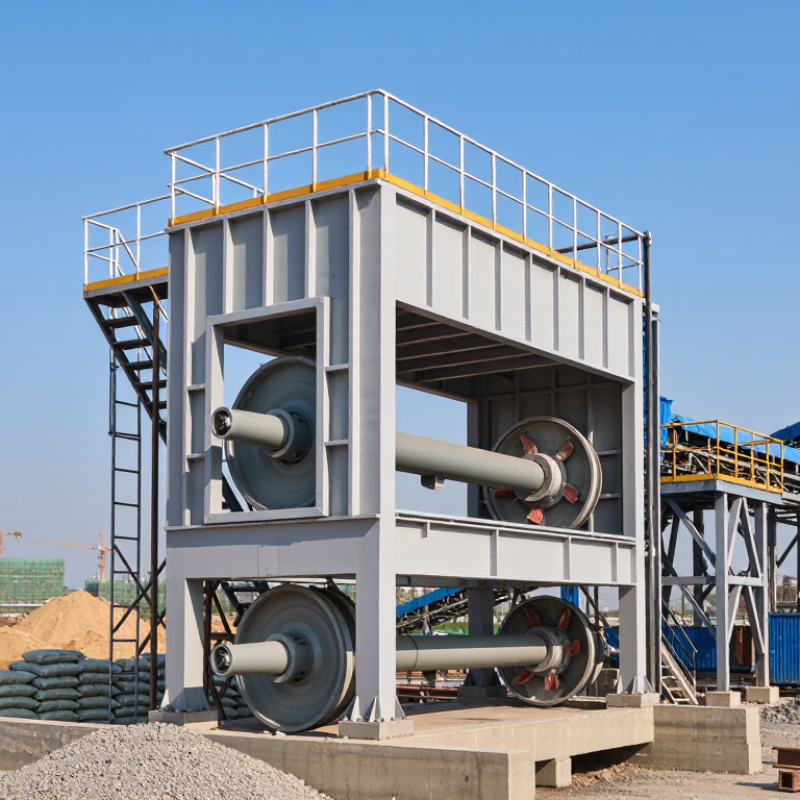
A JS1500 concrete mixer uses two horizontal shafts inside a reinforced mixing chamber. Each shaft carries several paddles, mixing arms, and wear-resistant blades. The shafts rotate in opposite directions. This creates lifting, folding, and crossing movements throughout the batch. The layout matters. It is not decorative.

A heavy steel frame supports the chamber, drive system, reducer, and discharge gate. Bearings hold the shafts in alignment, while sealed housings help prevent cement slurry from entering sensitive parts. Replaceable liners protect the chamber walls from sand and aggregate impact. The discharge opening is positioned below the mixing zone, allowing the prepared concrete to leave quickly. Access covers and guards also support safer inspection and maintenance.

During operation, aggregates, cement, water, and additives enter through the upper charging area. The paddles lift heavier stones, then push them through the cement paste. This action reduces dead zones and helps produce a more uniform mixture. Field checks show that shaft clearance, blade condition, and moisture control strongly affect performance. Still, the mixer cannot correct every mistake. Overloading may slow the shafts and increase power demand. Poorly adjusted water can leave dry pockets or weaken the concrete. Even a well-built structure needs regular cleaning, bolt checks, and careful calibration. Some maintenance routines seem minor. They are often the difference between stable mixing and repeated delays.

What Is a JS1500 Concrete Mixer and How Does It Work? - Core Components and Structural Design of the JS1500 Mixer

Category Parameter Typical JS1500 Value Structural or Operating Significance
Basic Classification Mixer type Twin horizontal shafts Two counter-rotating shafts create overlapping mixing zones for intensive convection, shearing, and material exchange.
Capacity Nominal discharge capacity 1,500 L (1.5 m³) The designation “1500” generally refers to the approximate rated volume of compacted fresh concrete discharged per batch.
Capacity Theoretical hourly output Approximately 60–75 m³/h Actual production depends on loading, mixing, discharge, material characteristics, and the complete batching cycle.
Charging System Typical charging volume Approximately 2,400 L The larger charging volume accommodates aggregates, cement, water, and admixtures before the mixture is compacted during blending.
Mixing Chamber Main chamber construction Heavy-duty welded steel body The chamber supports the shafts and mixing tools while resisting abrasion, impact, and cyclic loads generated by aggregate movement.
Mixing Tools Paddles and scraper arms Replaceable wear-resistant components Paddles lift and propel the material; scraper arms help move concrete away from the chamber walls and maintain mixing circulation.
Shaft Drive Drive motor arrangement Two geared electric drives Independent or synchronized drives transmit high starting torque to the two shafts through reduction gearboxes and coupling components.
Drive Power Typical total motor power Approximately 55–60 kW Power requirements vary with local electrical standards, concrete formulation, aggregate size, and the selected drive configuration.
Shaft Speed Typical mixing speed Approximately 25–30 rpm The relatively low shaft speed combines high torque with controlled material movement, limiting excessive splashing and segregation.
Mixing Action Material-flow pattern Counter-current, three-dimensional circulation Material is lifted, folded, and pushed along the chamber, promoting uniform distribution of cement paste, water, aggregates, and admixtures.
Aggregate Handling Typical maximum aggregate size Up to approximately 80 mm The allowable size depends on the mixer design, paddle clearance, concrete recipe, and the requirements of the installation.
Discharge System Discharge opening Full-length bottom discharge gate A broad bottom gate supports fast unloading and helps reduce retained concrete inside the mixing chamber.
Discharge System Gate actuation Hydraulic or pneumatic actuation The actuator opens and closes the gate under load; the exact arrangement depends on the installation and control system.
Support Structure Frame and mounting base Rigid steel support frame The frame distributes mixer weight and dynamic forces to the foundation while maintaining shaft and gearbox alignment.
Bearings and Seals Shaft-end protection Heavy-duty bearings with multi-stage seals Bearing assemblies support radial and axial loads, while sealing systems reduce the entry of cement paste and abrasive fines.
Wear Protection Common wear zones Floor, side liners, paddles, and scraper tips Replaceable liners and wear parts protect the chamber and help preserve the designed mixing clearance over time.
Batch Cycle Typical complete cycle Approximately 60–90 seconds The cycle includes charging, mixing, and discharge; the required time changes with recipe, moisture, and automation settings.
Control System Standard operating controls Motor, gate, water, and safety interlock controls Controls coordinate loading, mixing, discharge, emergency stopping, access-door monitoring, and overload protection.
Safety Design Access and protection features Inspection covers, guards, emergency stop, and interlocks These features help prevent contact with moving shafts and tools and allow safer inspection, cleaning, and maintenance.
Typical Applications Suitable concrete production Ready-mix, precast, block, and infrastructure concrete The twin-shaft configuration is suited to medium- and high-consistency mixes requiring fast and uniform blending.

Note: The values shown are typical engineering specifications for JS1500-class twin-shaft concrete mixers. Exact dimensions, motor power, discharge height, cycle time, and auxiliary-system details may vary according to the selected configuration and operating conditions.

How the JS1500 Concrete Mixing Process Works Step by Step

A JS1500 concrete mixer typically produces about 1.5 cubic meters per batch. Its twin horizontal shafts carry mixing paddles through a reinforced chamber. The process begins with an operator checking the paddles, liners, discharge gate, and emergency controls. Small checks matter. Worn paddles can reduce mixing quality and increase power use.

Measured aggregates enter the chamber first, followed by cement and other dry materials. The shafts rotate, lifting and folding the ingredients across the mixing zone. Water and approved admixtures are added according to the mix design, not by guesswork. Moisture in sand can change the final water ratio. This is where practical experience helps, although measurement remains more reliable than instinct. The materials gradually form a dense, moving mixture rather than a simple rotating pile.

After the planned mixing time, the operator checks the texture and uniformity through the inspection system. The discharge gate then opens, allowing concrete to flow into a truck or placing system. A clean, steady discharge reduces leftover material inside the chamber. The timing is not always perfect. Cold weather, damp aggregates, or overloaded batches may require adjustments within the equipment limits. Operators should record batch times, water additions, and unusual noise. Those records support quality control and reveal problems before they become expensive repairs.

Key Performance Features and Material Handling Capabilities

What Is a JS1500 Concrete Mixer and How Does It Work?

A JS1500 concrete mixer is a twin-shaft forced mixer with a nominal 1.5 m³ batch capacity. Two horizontal shafts rotate in opposite directions. Paddles lift, split, and fold the material through the mixing zone. This action handles cement, water, sand, and coarse aggregate more evenly than simple drum rotation.

The Global Cement and Concrete Association reports that around 14 billion cubic metres of concrete are produced worldwide each year.

Consistent mixing therefore matters at every production scale. A JS1500 mixer can manage stiff concrete, ordinary structural mixes, and some low-slump formulations. Its discharge gate supports fast release into a truck or skip. Wear-resistant liners protect the chamber, but moisture and aggregate size still affect performance. A 1,500-litre rating is not always the real output. Overloading can reduce uniformity and increase power demand.

Tips:

Check aggregate moisture before batching. Adjust water carefully. Keep the mixer clean after each shift. ACI 304R recommends controlling batching, mixing time, and material uniformity.

In practice, operators should inspect paddle clearance and liner wear regularly. Small gaps can change mixing quality. This is easy to overlook.

One useful improvement is recording batch time, slump, and discharge condition. Those records expose recurring problems, although they may also reveal inconsistent feeding habits.

Feeding all materials too quickly can create dry pockets near the shaft ends. Slower sequencing often produces a more stable mixture.

Operation, Maintenance, and Safety Considerations

A JS1500 concrete mixer typically handles about 1.5 cubic metres per batch through twin horizontal shafts and forced mixing. The operator should confirm the approved mix design before loading materials. Aggregate, cement, and water need accurate weighing. Small dosing errors can change slump and strength. Keep the charging area clear. Never reach into the mixing chamber, even when the shafts appear still. Stored mechanical energy can remain dangerous.

Daily maintenance is practical, not optional. Inspect paddles, arms, liners, shaft seals, discharge gates, and emergency stops before starting. Remove fresh concrete from internal surfaces after each shift. Hardened buildup increases resistance and may damage drive components. Lubricate only at specified points. Isolate electrical and mechanical energy before cleaning or repair, following a documented lockout procedure. A useful but imperfect rule is simple: if a guard, sensor, or bolt looks questionable, stop and investigate.

Safety deserves extra attention. The International Labour Organization estimates nearly three million workers die annually from work-related accidents and diseases. The Global Cement and Concrete Association reports that around 14 billion cubic metres of concrete are produced worldwide each year. That scale makes routine discipline important. Operators should wear eye protection, hearing protection, gloves, and slip-resistant footwear. Keep hands away from discharge openings. Test emergency controls regularly. Manuals can be incomplete, and workers can become overconfident; a short pre-start check often prevents a long shutdown.

Scroll to Top