Why Choose a Lattice Boom Crane for Your Heavy Lifting Needs?
When it comes to heavy lifting, choosing the right equipment is crucial. Industry expert John Smith, a leading figure in crane technology, states, “A lattice boom crane offers unparalleled versatility for complex projects.” This statement reflects the significant advantages of this type of crane.
Lattice boom cranes are known for their strength and stability. They excel in various lifting tasks, from construction to infrastructure projects. Their design allows for longer reaches and enhanced load capacities. Many operators appreciate these features, especially when handling massive loads. However, there are challenges. Proper setup and maintenance are vital for optimal performance. Misjudgments can lead to dangerous situations.
Making an informed choice involves understanding both benefits and limitations. Lattice boom cranes can be costly. However, their efficiency often justifies the investment. Ultimately, the right decision hinges on specific project needs and safety considerations. Choosing a lattice boom crane can elevate project success, but it requires careful thought.

Benefits of Using Lattice Boom Cranes for Heavy Lifting
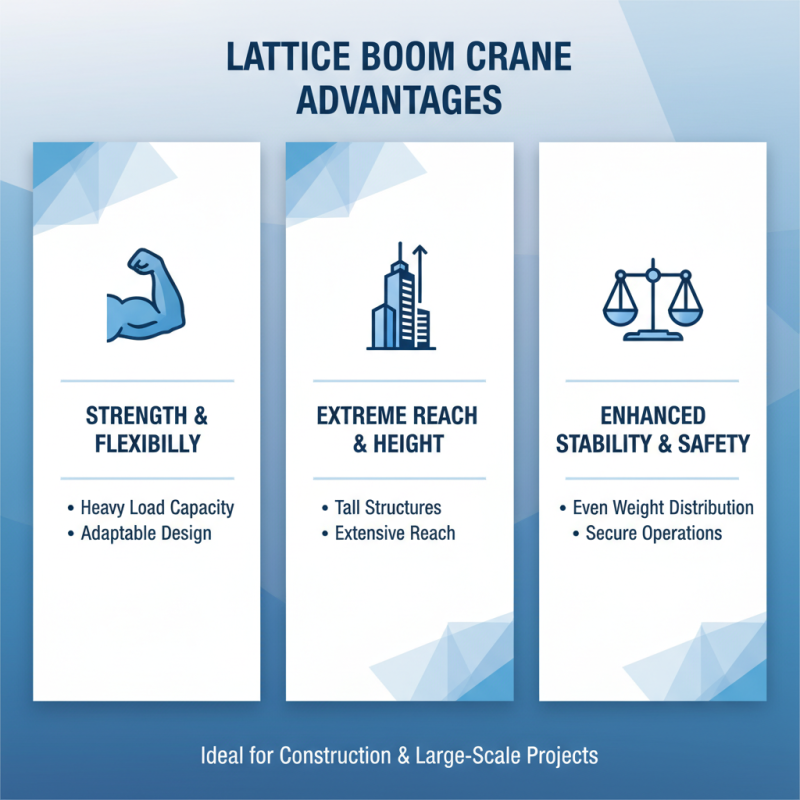
Lattice boom cranes offer unique advantages for heavy lifting. Their design combines strength and flexibility, making them suitable for various applications. These cranes can reach impressive heights while carrying substantial loads. The lattice structure distributes weight evenly, enhancing stability during operation. This characteristic is crucial for ensuring safety on construction sites.
Another notable benefit is the reduced operational footprint. Lattice boom cranes require less ground space compared to other types. This can be particularly helpful in urban areas where space is limited. Additionally, they are easier to disassemble and transport than solid boom cranes. This mobility can save time and costs during relocation to different job sites.
However, some challenges can arise with lattice boom cranes. They may require more detailed setup and maintenance than simpler models. Operators need to be skilled and trained to handle them safely. Misjudgments in load capacity can lead to accidents. Regular inspections are essential for preventing equipment failures. Understanding these aspects can help maximize the efficiency of these powerful machines.
Key Features of Lattice Boom Cranes That Enhance Performance
Lattice boom cranes offer unique features that enhance their performance, making them ideal for heavy lifting needs. One of their key attributes is their lightweight yet robust design. The lattice structure allows for a larger lifting capacity without adding unnecessary weight. This makes them efficient and effective in various construction environments.
Another important feature is their reach. Lattice boom cranes can extend their booms to significant heights. This flexibility allows operators to lift materials over obstacles. It’s crucial for projects that have space constraints. However, this capability must be managed carefully. Overreaching can lead to instability. Always ensure that the load is within the crane's limits.
**Tips:** When using a lattice boom crane, check the ground conditions. Unstable terrain can compromise safety. Regular inspections are also vital. Look for signs of wear on cables and connectors. These checks can prevent accidents and improve performance. Remember, safety should always take precedence.
Key Features of Lattice Boom Cranes That Enhance Performance
Applications and Industries That Rely on Lattice Boom Cranes
Lattice boom cranes are essential in various industries. Construction sites often rely on them for heavy lifting. They can handle weights of several tons, making them suitable for tall buildings and large structures. The adjustable boom length provides flexibility, enabling cranes to reach high elevations or far distances.
In oil and gas, these cranes are critical during drilling operations. They support the heavy rig components and equipment needed for exploration. In addition, they facilitate the movement of materials across rugged terrains. Many projects require careful planning and execution, which can be challenging. This type of crane helps minimize downtime and boosts safety.
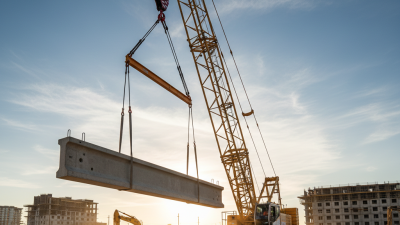
Similarly, in infrastructure projects like bridge construction, lattice boom cranes play a vital role. They can position large girders with precision. However, using them requires skilled operators due to their complexity. Issues such as ground stability should always be considered. These factors can significantly impact lifting efficiency and safety outcomes. As industries grow, the demand for reliable lifting solutions continues to rise.
Comparing Lattice Boom Cranes with Other Crane Types
When comparing lattice boom cranes to other crane types, several factors stand out. Lattice boom cranes are designed for heavy lifting and provide exceptional stability. Their lattice structure distributes weight more evenly, which minimizes stress on the crane itself. According to the American National Standards Institute, these cranes can lift loads exceeding 1,000 tons safely, outperforming many conventional cranes.
In contrast, hydraulic cranes, while versatile, often lack the same load capacity as lattice boom cranes. They may handle around 300 tons, but typically not as efficiently for extreme loads. Many construction projects require flexibility alongside power. Here, lattice boom cranes excel. They can adapt to various situations, with boom lengths exceeding 300 feet. This can enhance reach without compromising strength.
However, not every job necessitates a lattice crane. For smaller lifts, the cost and operational complexity might not justify its use. Smaller operations may find mobile or tower cranes more convenient. It's essential to assess the specific lifting needs and site conditions thoroughly before choosing the crane type. Evaluating potential shortcomings is crucial in making an informed decision.
Why Choose a Lattice Boom Crane for Your Heavy Lifting Needs?
| Feature |
Lattice Boom Crane |
Telescopic Crane |
Tower Crane |
Crawler Crane |
| Max Lifting Capacity |
Up to 3,000 tons |
Up to 1,200 tons |
Up to 1,600 tons |
Up to 1,200 tons |
| Reach |
Long reach for high elevations |
Limited reach |
Excellent for high-rise construction |
Moderate reach |
| Mobility |
Stationary on job sites |
Highly mobile |
Stationary, requires set up |
Moderately mobile |
| Cost |
Higher initial investment |
Moderate cost |
High setup costs |
Moderate cost |
| Terrain Adaptability |
Best for rough terrains |
Limited adaptability |
Limited to flat surfaces |
Good for rough and uneven ground |
Safety Considerations When Operating Lattice Boom Cranes
Operating lattice boom cranes requires strict safety measures. One crucial aspect is load management. Always know the exact weight of the load. Overloading can lead to catastrophic failures. Inspect the crane regularly. Check for structural integrity and wear. These inspections should become a routine.
Communication is vital for safe operations. Ensure all team members understand their roles. Use clear hand signals or radios to avoid misunderstandings. Situational awareness is key. Always be mindful of the surroundings. Watch for hazards like power lines or uneven ground.
Training is essential for operators. Proper training helps mitigate risks. However, even experienced operators can make mistakes. Regular drills can improve response times during emergencies. Encourage a culture of safety on-site. It's important to reflect on incidents, even minor ones. Learning from these can prevent future accidents.