
What is a telescopic boom crane and how does it work?
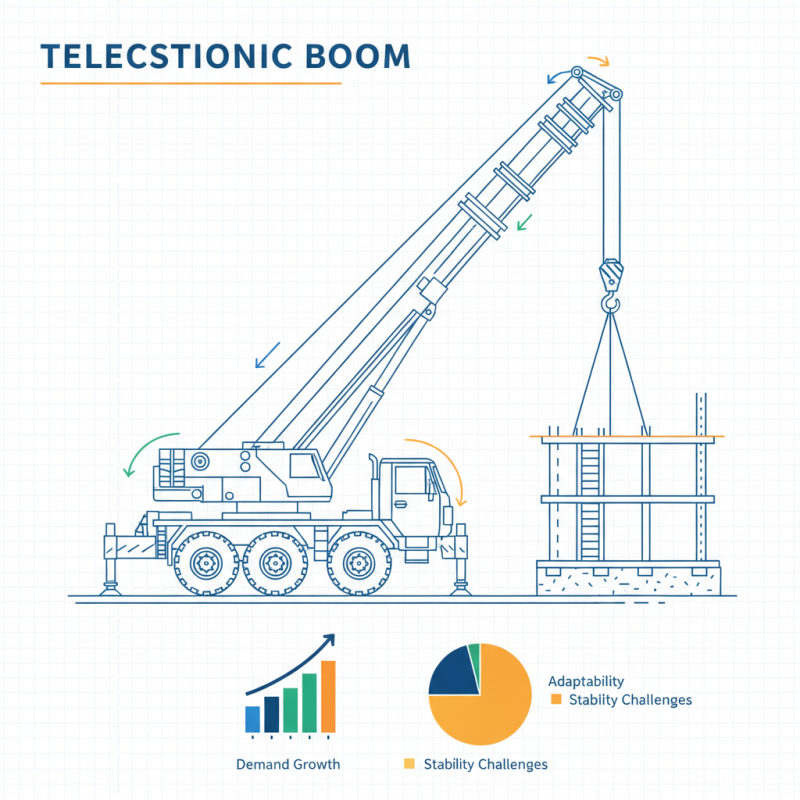
A telescopic boom crane is a vital tool in modern construction. Its versatility and reach make it essential in various industries. According to a recent report from the Global Construction Equipment Market, the demand for such cranes has surged by 15% in the past two years. This growth reflects the increasing complexity of construction projects.
Expert in the field, John Smith, states, "The adaptability of telescopic boom cranes allows us to tackle challenges that traditional cranes cannot." This adaptability enables these cranes to extend their booms far above typical heights, reaching remote sites with ease. However, the operation of telescopic boom cranes is not without its challenges. Operators must be skilled to prevent accidents and ensure safety.
One must consider the limitations of telescopic boom cranes as well. For instance, while they provide significant reach, their stability can be compromised in certain environments. Careful planning and execution are crucial to maximize their advantages. Understanding both the strengths and weaknesses of telescopic boom cranes leads to safer and more efficient use in the field.
What is a telescopic boom crane?
A telescopic boom crane is a specialized piece of equipment often used in construction. It has a long extendable arm, known as a boom, which can reach significant heights. This feature allows it to lift heavy objects to lofty places where traditional cranes might struggle. The design offers versatility in various environments, making it a popular choice among contractors.
These cranes operate using hydraulic systems. When the operator activates the controls, hydraulic fluid moves through cylinders, causing the boom to extend or retract. This mechanism allows for precise movement and positioning of loads. When working with heavy materials, this precision is crucial for safety. However, there are challenges, like the risk of tipping if the load is not balanced properly.
It is essential to consider the limitations of a telescopic boom crane. Factors like wind resistance and ground stability can impact operations. Mistakes can lead to accidents, so proper training and safety checks are critical. Operators may sometimes overlook environmental conditions. This can lead to dangerous situations, reminding everyone of the importance of vigilance on the job.
What is a telescopic boom crane and how does it work?
| Dimension | Description |
|---|---|
| Maximum Lift Height | Up to 100 feet (30 meters) |
| Maximum Load Capacity | Up to 40 tons |
| Boom Extension | Telescopes in and out for flexibility |
| Control System | Remote control and manual operation available |
| Common Uses | Construction, maintenance, and heavy lifting tasks |
| Safety Features | Anti-overload systems, stabilizers, and emergency brakes |
Key components of a telescopic boom crane
A telescopic boom crane is recognized for its flexibility and reach. Its key components play a crucial role in its functionality. The base allows stability, while the rotating platform enables 360-degree movement. The operator can control the boom length, reaching heights and distances with precision.
The boom itself consists of telescoping sections. Each section can extend and retract, adjusting to various lifting tasks. This design helps navigate tight spaces, making these cranes versatile. The hydraulic system powers the movement, enabling smooth transitions.
Another essential element is the hook or attachment at the end of the boom. It connects to loads and secures them for lifting. Operators must ensure the load is balanced. An unbalanced load can lead to accidents. Daily inspections are necessary for safety and efficiency. Even with advanced technology, human error can occur, prompting constant training and vigilance.
How does the telescopic boom mechanism function?
A telescopic boom crane is a versatile and powerful machine often used in construction and heavy lifting. Its key feature is the extendable boom, which allows for greater reach and height. The mechanism consists of several sections that slide in and out. This design provides flexibility in positioning the load.
The functioning of the telescopic boom relies on hydraulic cylinders. When activated, these cylinders extend the boom outward. Each section locks into place, maintaining stability during lifting operations. It's fascinating how a series of simple movements results in such complex capabilities. Users should regularly check fluid levels and inspect hydraulic lines for leaks. These checks can prevent accidents and equipment failures.
Tips: Always consider the weight limits of the crane. Overloading can cause it to tip over. Practicing with the crane in a safe space helps build confidence. Additionally, understand the swing radius. This knowledge reduces the risk of hitting nearby structures. Always stay vigilant when operating heavy machinery. Be prepared for unexpected challenges.
Applications and advantages of telescopic boom cranes
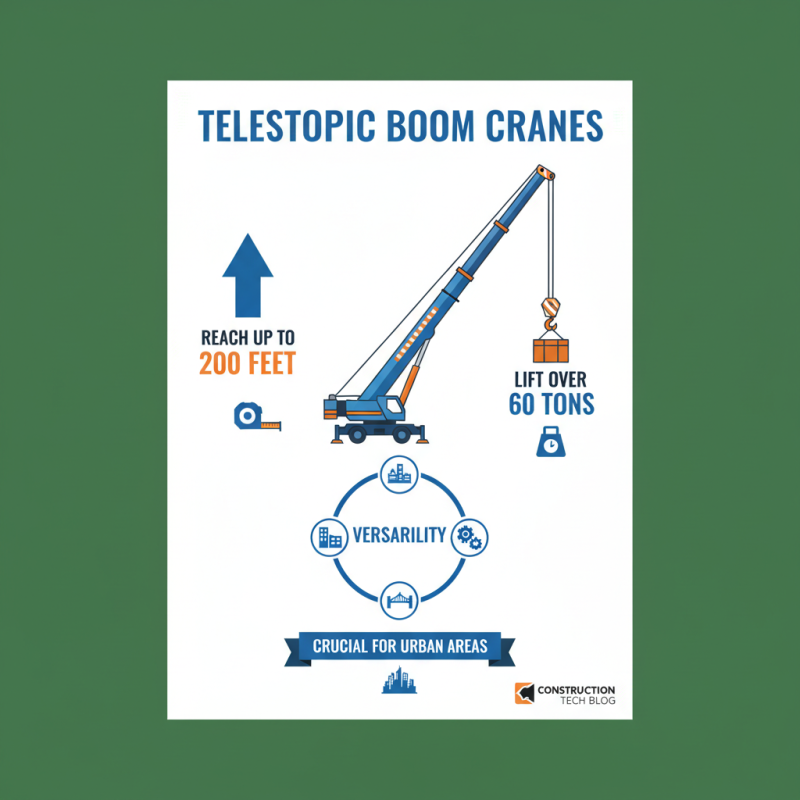
Telescopic boom cranes are widely used in construction and industrial applications. Their versatility allows them to handle various loads over significant distances. In fact, studies show that these cranes can reach heights up to 200 feet and lift weights exceeding 60 tons. This capability is crucial in urban areas, where space is limited.
One major advantage of telescopic boom cranes is their ability to extend and retract. This feature allows operators to access hard-to-reach locations. Additionally, they often come equipped with advanced safety features, which help reduce accident rates. For instance, a report by industry experts indicates that the use of these cranes has led to a 30% decrease in workplace injuries compared to conventional cranes.
However, there are challenges to consider. Operating a telescopic boom crane requires skilled personnel. Insufficient training can lead to mishandling and accidents. Additionally, regular maintenance is essential for optimal performance. Neglecting this can result in costly downtimes or equipment failures. The versatility of these cranes continues to make them invaluable in modern construction despite these challenges.
Safety considerations when operating a telescopic boom crane
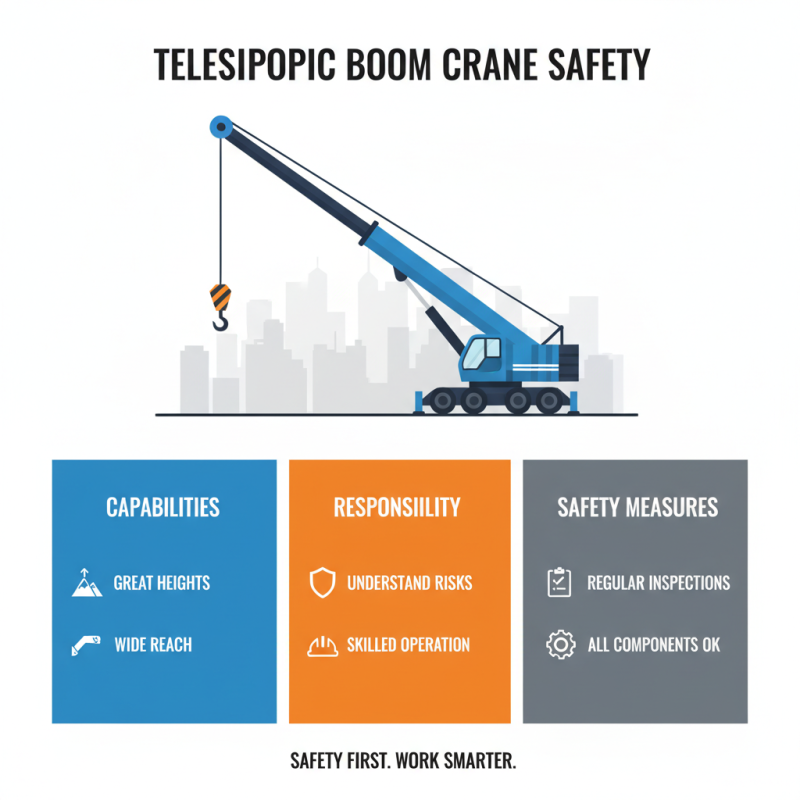
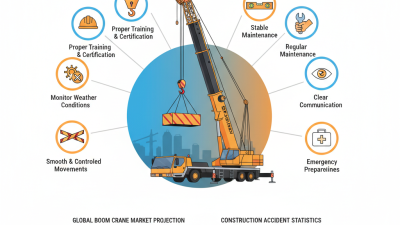
Operating a telescopic boom crane requires strict adherence to safety measures. These cranes can reach great heights and extend widely, making them immensely useful. Yet, with such capability comes responsibility. Operators must understand the risks involved. Regular inspections are vital to ensure all components function properly.
Tips for safe operation include always checking the load limit. Never exceed the recommended weight. It's crucial to maintain a clear area around the crane. This reduces the risk of accidents. Operators should be aware of their surroundings at all times. Positioning the crane on stable ground reduces the chances of tipping.
Communication is key. Use hand signals or radios to relay messages. This minimizes misunderstandings. Training is also essential. Inexperienced operators may overlook safety protocols. Reflective practice can help. Consider the potential hazards before each job. Insight can lead to safer practices. Always remember, safety should never be compromised.
Related Posts
-
7 Best Lifting Cranes for Efficient Heavy Lifting in 2023
-
The Best All Terrain Crane Models for Your Heavy Lifting Needs in 2023
-
10 Essential Tips for Operating a Telescopic Crane Safely and Efficiently
-

What is a Lattice Boom Crane and How Does It Work in Construction
-
2026 How to Choose the Right Precision Crane for Your Project?
-
2026 Top Truck Mounted Crane Models and Their Features?