What is a Telescopic Crane and How Does It Work?
A telescopic crane is a versatile machine used in construction and heavy lifting. According to the International Telecommunication Union, the global construction equipment market is projected to reach USD 250 billion by 2025. Telescopic cranes are essential tools in this sector, enabling efficient lifting and positioning of heavy loads.
These cranes can extend their boom to reach unprecedented heights. This capability allows them to access tight spaces and perform tasks that other cranes cannot. However, their operation requires skilled operators to ensure safety.
Despite their advantages, telescopic cranes come with challenges. For instance, they can be tricky to maneuver in urban environments. Operators must be cautious of potential hazards like overhead power lines. Industry reports indicate that improper use of telescopic cranes can lead to accidents. Continuous training and adherence to safety protocols are vital for optimal usage.
What is a Telescopic Crane?
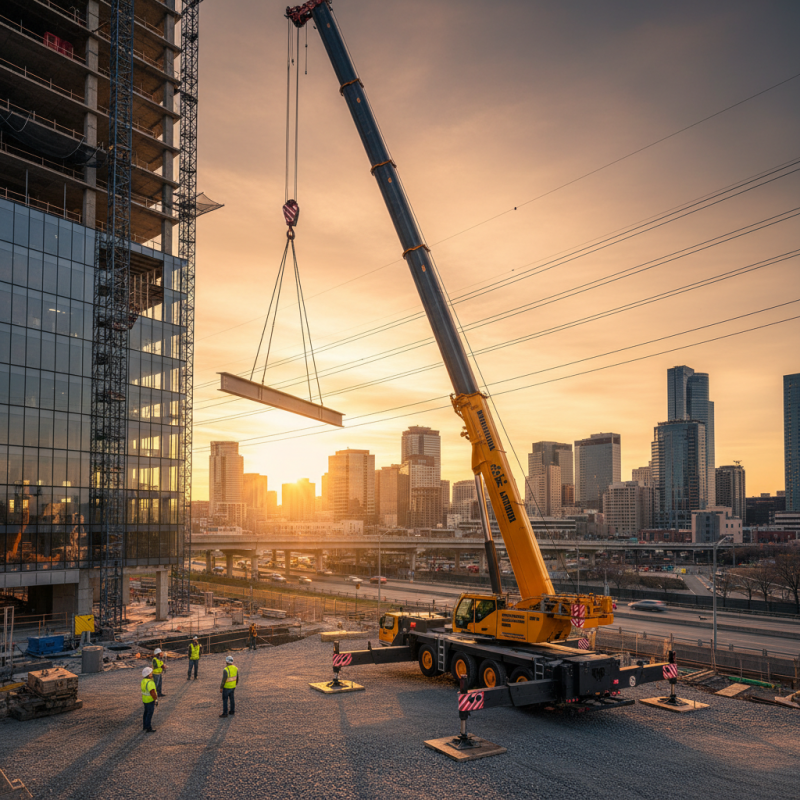
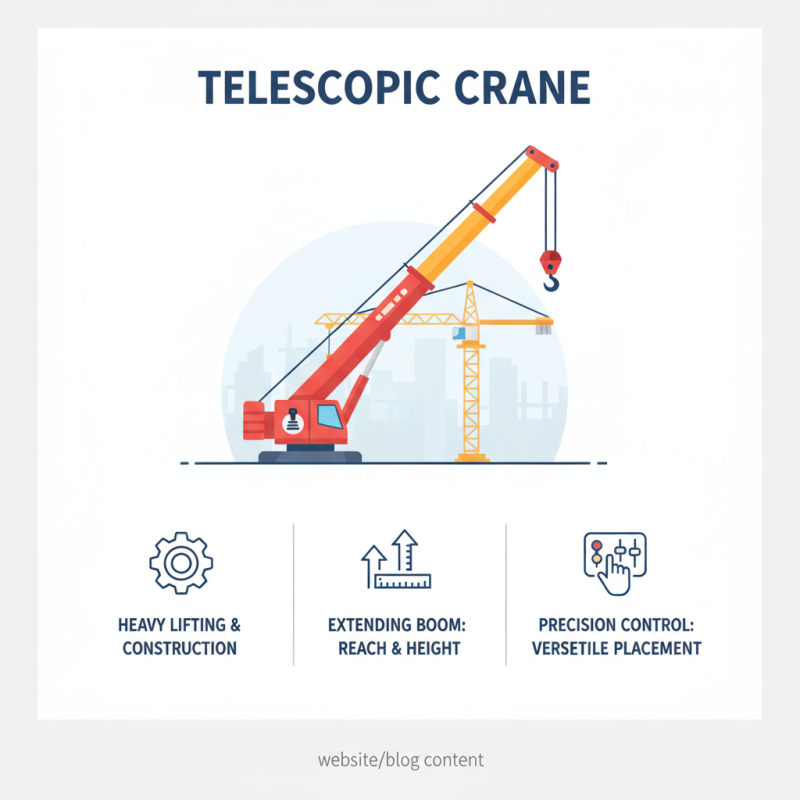
A telescopic crane is a type of machine used in construction and heavy lifting tasks. This crane features a long, extending arm, known as a boom. It is designed to reach heights and distances that traditional cranes cannot. The boom can retract or extend, allowing for versatile lifting capabilities. Operators use controls to adjust the crane's arm length, providing precision in placing heavy loads.
The design of a telescopic crane allows for easy transport and setup. It can operate in tight spaces and on uneven terrain. However, this versatility comes with challenges. The crane requires skilled operators to prevent accidents. Miscalculations in load weight or boom extension can lead to dangerous situations. Maintenance is also crucial; wear and tear on the extending parts can compromise safety.
Operators must be aware of their surroundings. Weather conditions can impact stability and performance. Stormy weather can make lifting tasks difficult. Understanding these factors is essential for safe operation. Overall, while telescopic cranes are powerful tools, they demand respect and careful handling. Their capabilities are impressive, but they also require constant vigilance from those who use them.
Key Components of a Telescopic Crane
A telescopic crane is a versatile lifting machine often used in construction and industrial settings. Its primary components include a boom, hydraulic system, and control mechanism. The boom consists of telescopic sections that extend and retract. This allows the crane to reach varying heights and distances, making it suitable for different tasks.
The hydraulic system powers the boom's movement. It uses pressurized fluid to move the sections. According to a recent industry report, over 70% of construction projects now employ hydraulic cranes due to their efficiency.
The control mechanism helps the operator maneuver the crane accurately. Operators require extensive training to handle these powerful machines safely. Many accidents occur because of operator error or misjudgment.
While telescopic cranes are powerful, they come with challenges. Stability is crucial. A crane can topple if it extends too far without proper counterweights. Regular maintenance is needed to ensure the hydraulic system functions well. Deterioration can lead to malfunction, causing accidents. Awareness of these risks is vital for safety on job sites.
How Telescopic Cranes Operate: Mechanisms Explained
Telescopic cranes have revolutionized the lifting industry. Their unique design allows for significant reach and flexibility. These cranes can extend and retract their booms, adapting to various lifting needs. In 2022, the global telescopic crane market was valued at approximately $3.5 billion, with steady growth expected.
The operation of a telescopic crane involves a series of mechanisms. At its core, a hydraulic system powers the boom extension. A motor pumps fluid through the cylinders. This creates pressure, causing the sections of the boom to slide in and out. The crane operator has precise control over the movement. However, operators must be cautious. Overextension can lead to instability. According to industry data, improper usage contributes to 30% of all crane accidents.
Understanding the lifting capacity is crucial. Telescopic cranes can lift loads from 1 to 100 tons. They often operate at heights exceeding 100 feet. Yet, the heavier the load, the more critical it becomes to assess the ground conditions. A weak base can lead to tipping. The balance between load and height remains a constant challenge for operators. It’s essential to continuously evaluate both factors to ensure safety.
What is a Telescopic Crane and How Does It Work?
| Feature |
Description |
Function |
| Boom Length |
Extended length can vary from 15 to 80 feet |
Reach heavy loads at greater heights |
| Load Capacity |
Typically ranges from 5 to 30 tons |
Lifts and moves materials on site |
| Mechanism |
Uses hydraulic cylinders to extend |
Allows precise movements and adjustments |
| Mobility |
Can be mounted on trucks or tracked vehicles |
Easily transportable to different job sites |
| Control System |
Usually remote-controlled for safety |
Enhances operator precision and safety |
Typical Applications of Telescopic Cranes in Various Industries
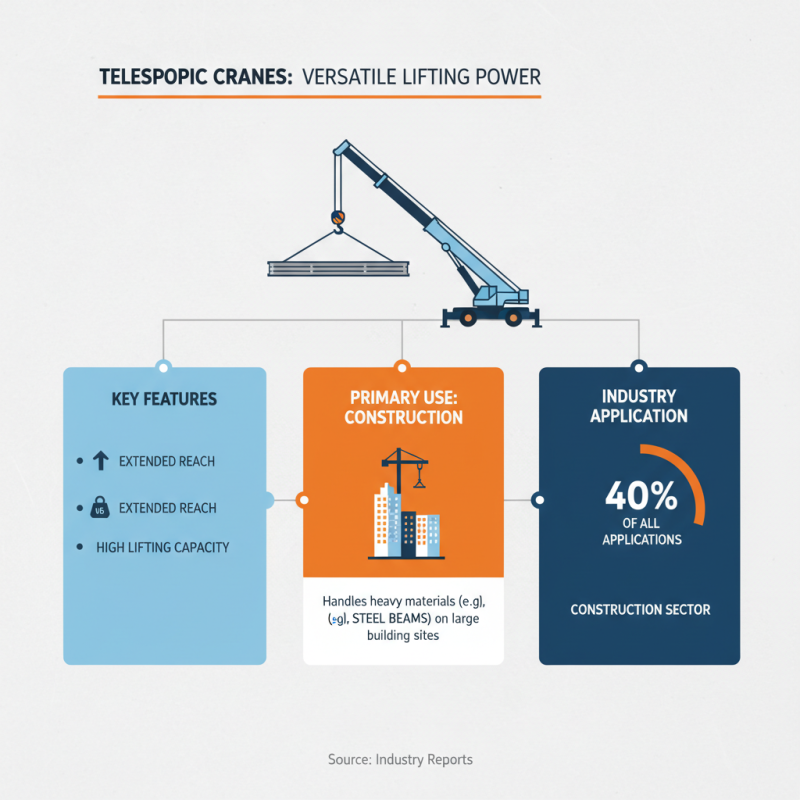
Telescopic cranes are versatile lifting machines used across many industries. Their extended reach and high lifting capacity make them ideal for various applications. In construction, these cranes handle heavy materials like steel beams. They’re often found on large building sites, where height and weight are critical factors. According to industry reports, the construction sector accounts for around 40% of all telescopic crane applications.
In the oil and gas industry, telescopic cranes play a significant role in maintenance and installation. For instance, they assist in lifting heavy drilling equipment. Reports indicate that efficiency in these operations can increase by 30% when using the right crane. This highlights how crucial these machines are in challenging environments.
**Tips:** Always assess the ground conditions before operating a telescopic crane. Stability is key. Proper training for operators can minimize risks during lifts. While cranes are immensely helpful, improper use can lead to accidents. Regular inspections are necessary to ensure safety as well.
Maintenance and Safety Considerations for Telescopic Cranes
Maintenance of telescopic cranes is crucial for safe operations. Regular inspections can prevent accidents. According to industry data, improper maintenance is responsible for over 50% of crane accidents. Each inspection should include checks on the hydraulic system, cables, and structural integrity. Observing wear and tear signs is essential. Operators must document these checks meticulously.
Safety considerations are equally vital. Operators should undergo training to understand the crane's limits. The load chart must always be followed. A study showed that 30% of operators fail to adhere to load specifications. Using proper safety gear can mitigate risks. Frequent safety drills can reinforce a safe working culture.
Lack of attention to these factors may lead to serious incidents. Annual maintenance checks are not enough alone. Inadequate training and oversight can lead to dangerous scenarios. Regular feedback sessions can improve safety outcomes. Sustainability in crane operations relies on these practices.
Maintenance Considerations for Telescopic Cranes