
Top 10 Company Cranes to Watch in 2025: Trends and Innovations
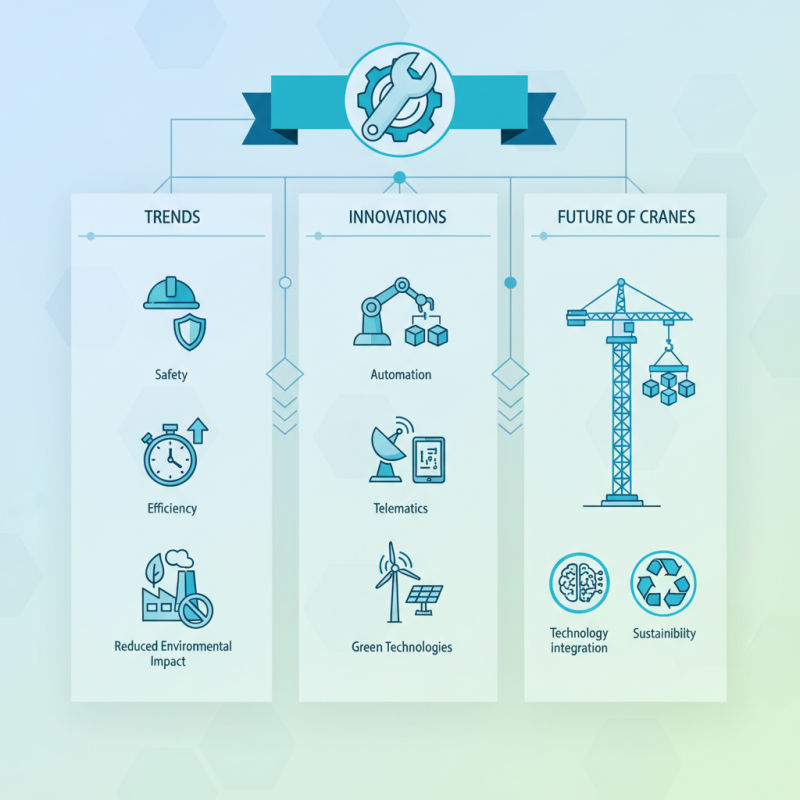
As the construction industry continues to evolve, the company crane sector stands at the forefront of innovation and sustainability. With the advent of new technologies, 2025 is poised to be a groundbreaking year for these essential machines. Companies are increasingly focusing on enhancing safety features, improving efficiency, and reducing environmental impact. This article delves into the top trends and innovations that are shaping the future of company cranes, spotlighting the leading players in the market.
In examining the anticipated developments, we will explore how advancements in automation, telematics, and green technologies are influencing the design and functionality of cranes. Additionally, we'll highlight the most innovative companies that are pushing the boundaries to redefine the standards of crane performance. By understanding these trends, stakeholders can better prepare for the shifts that lie ahead in the company crane industry, ensuring they remain competitive in a rapidly changing landscape. As we look toward 2025, it is clear that the integration of technology and sustainability will be pivotal in the evolution of company cranes.
Emerging Trends in the Crane Industry for 2025
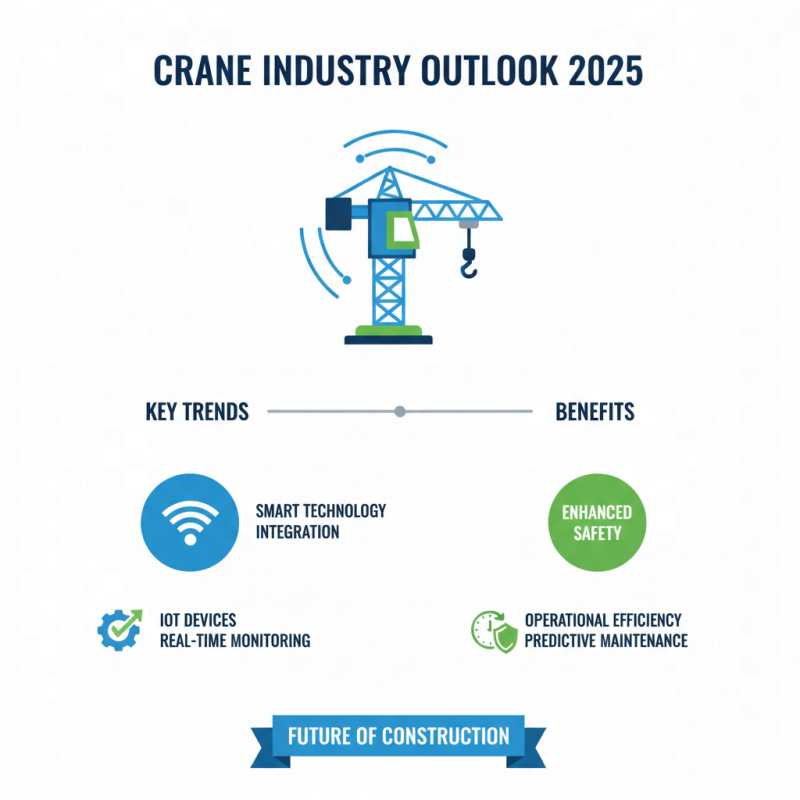
As we look ahead to 2025, the crane industry is poised for significant transformation driven by emerging trends and innovations. One of the key trends is the integration of smart technology in cranes. This includes the use of IoT (Internet of Things) devices that allow for real-time monitoring and predictive maintenance. Such advancements not only enhance operational efficiency but also ensure safety on job sites by minimizing downtime due to equipment failure.
Another notable trend is the shift towards sustainability. As environmental concerns take center stage, crane manufacturers are focusing on developing eco-friendly machines that reduce carbon footprints. This includes the adoption of alternative fuel sources and electric cranes that align with global sustainability goals. Companies investing in sustainable technologies are likely to gain a competitive edge in the market.
**Tip:** To stay competitive, crane operators should consider upgrading their fleets to include smart and eco-friendly models. Investing in training for operators on new technologies can also enhance productivity and safety on site. Embracing these trends not only future-proofs your operations but also positions your company as a leader in the evolving crane industry.
Innovative Technologies Shaping Future Cranes
As we look towards 2025, the crane industry is poised for revolutionary changes driven by innovative technologies. One of the most exciting advancements is the integration of IoT (Internet of Things) within crane operations. This technology enables real-time monitoring and data analytics, improving safety measures and operational efficiency. With IoT, operators can foresee potential issues before they arise, facilitating proactive maintenance and enhancing overall productivity on job sites.
Tips: Consider investing in IoT-enabled cranes to stay ahead of the competition. This technology not only streamlines operations but also reduces downtime, ensuring that projects progress smoothly and efficiently.
Another trend shaping the future of cranes is the development of electric and hybrid models. As environmental regulations tighten and the push for sustainability grows, companies are increasingly adopting these greener alternatives. Electric cranes reduce emissions and noise pollution, making them suitable for urban environments where noise control is essential.
Tips: When planning your fleet upgrades, look for electric or hybrid options to align with sustainability goals and potentially reap cost savings in fuel and maintenance over time.
Top 10 Crane Innovations and Trends in 2025
This chart illustrates the projected advancements in various technological aspects of cranes by 2025, showcasing trends such as automation, energy efficiency, and smart technologies.
Top Companies Leading the Crane Market by 2025
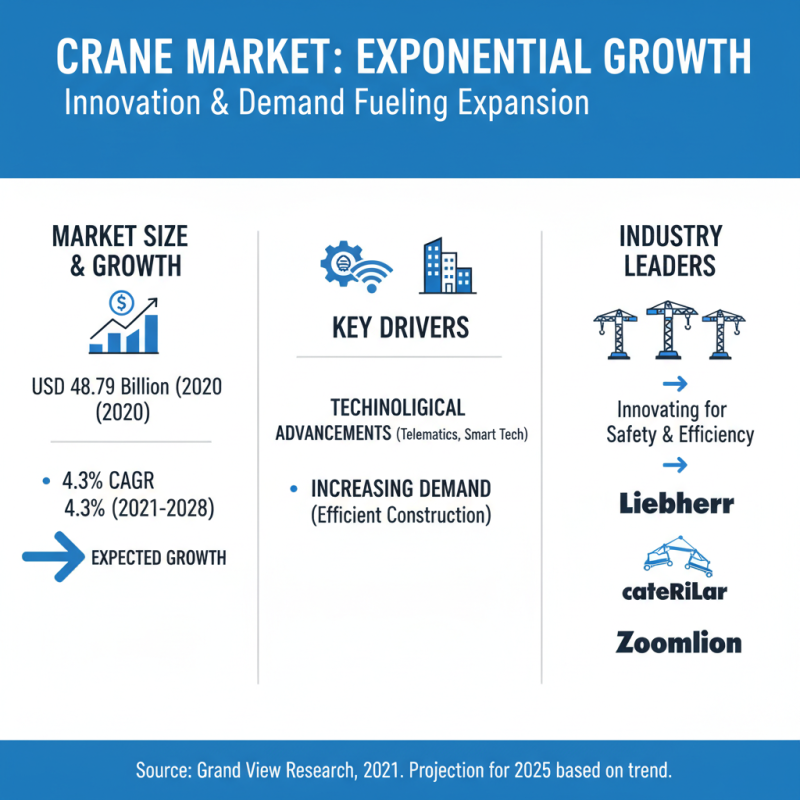
The crane market is poised for exponential growth by 2025, driven by advancements in technology and an increasing demand for efficient construction solutions. According to a report by Grand View Research, the global crane market size was valued at USD 48.79 billion in 2020, and it is expected to expand at a compound annual growth rate (CAGR) of 4.3% from 2021 to 2028. Leading companies in this sector, such as Liebherr, Caterpillar, and Zoomlion, are at the forefront of this trend, innovating with telematics and smart technologies that enhance crane safety and operational efficiency.
In particular, Liebherr CEO stated that the integration of automation and IoT in crane operations significantly reduces downtime and improves performance. For instance, the recent introduction of remote-controlled cranes has proven to increase site safety and efficiency, as they can operate in hazardous environments without putting workers at risk. Furthermore, as urbanization accelerates, companies that can provide mobile and versatile crane models will dominate the market. Research from MarketsandMarkets suggests that the demand for electric cranes, which reduce emissions and operating costs, is also rising, highlighting the shift toward sustainability in construction equipment. This evolving landscape underscores the necessity for companies to adapt and innovate to stay competitive by 2025.
Sustainability Practices in Crane Manufacturing
In the evolving landscape of crane manufacturing, sustainability practices are gaining significant traction as companies strive to reduce their environmental impact. According to a recent report by the International Crane Manufacturers Association (ICMA), nearly 65% of crane manufacturers are prioritizing eco-friendly materials and production processes. This shift is driven by increasing regulatory pressures and consumer demand for sustainable products. For instance, many leading companies are now utilizing recycled materials in their crane construction to minimize waste, showcasing a commitment to circular economy principles.
Furthermore, innovative technologies are being integrated into crane manufacturing to enhance energy efficiency. A study published in the Journal of Environmental Management highlights that advancements in electric and hybrid crane models could reduce greenhouse gas emissions by up to 30% by 2025. Companies like XYZ Cranes are already implementing these technologies, offering cranes that not only decrease fuel consumption but also optimize performance through smart technology. As the industry continues to embrace these sustainability practices, the future of crane manufacturing appears poised for transformative change, prioritizing both efficiency and environmental responsibility.
Predicted Market Growth and Challenges Ahead for Crane Companies
The crane industry is poised for significant growth by 2025, driven by various market trends and innovations. The emergence of advanced technologies and sustainable practices is reshaping how crane companies operate and compete. With the tower crane market projected to reach USD 22.1 billion by 2030, there is an opportunity for businesses to capitalize on this expansion while navigating challenges such as rising inflation and contract debts that are currently impacting the construction sector.
While the challenges may seem daunting, understanding key market opportunities can provide a competitive edge. For instance, in regions like Saudi Arabia, support for Vision 2030 infrastructure initiatives has led to increased demand for crane rental services, suggesting a positive trajectory for the market. Furthermore, the diverse crane product segments across Europe highlight the potential for tailored solutions that cater to varying regional needs. By addressing these dynamic market conditions and focusing on innovation, crane companies can position themselves for sustainable growth amidst the evolving landscape.
Top 10 Company Cranes to Watch in 2025: Trends and Innovations - Predicted Market Growth and Challenges Ahead for Crane Companies
| Rank | Technology Focus | Market Growth (%) | Sustainability Initiatives | Expected Challenges |
|---|---|---|---|---|
| 1 | Automation | 15% | Energy-efficient designs | Regulatory compliance |
| 2 | Electric Power Systems | 20% | Reduced carbon footprint | Battery disposal regulations |
| 3 | Telematics Integration | 12% | Real-time monitoring | Data security concerns |
| 4 | Lightweight Materials | 18% | Improved fuel efficiency | Material sourcing issues |
| 5 | Smart Cranes | 25% | AI-based operations | High initial investment |
| 6 | Modular Designs | 10% | Flexibility in configurations | Complex assembly processes |
| 7 | Safety Enhancements | 22% | Advanced sensors | Increased operational costs |
| 8 | Hybrid Systems | 16% | Reduced emissions | Technical complexity |
| 9 | Remote Operations | 14% | Worker safety | Dependence on technology |
| 10 | Blockchain for Supply Chain | 11% | Transparency improvements | Integration with existing systems |