Top 10 Types of Steel Casing Pipe for Global Buyers
Buying Steel Casing Pipe across borders requires more than comparing price per meter. Each casing choice affects well stability, pressure control, installation speed, and service life. This guide examines ten important types for global buyers, including conductor casing, surface casing, intermediate casing, production casing, structural casing, and water well casing. It also considers seamless and welded options, connection designs, steel grades, and application-specific requirements.
Dr. Lars Aadnøy, a respected petroleum engineer and well-design authority, has stated, “Well integrity depends on controlling pressure throughout the well.” That principle remains practical. A thick wall cannot correct a poorly selected connection. Nor can a premium grade compensate for inaccurate load calculations, poor storage, or unsuitable corrosion protection. Buyers should review API 5CT or ISO 11960 compliance, mill test certificates, heat numbers, dimensional tolerances, and inspection records. These details may look routine. They prevent expensive surprises.
The right selection depends on geology, drilling depth, collapse loads, internal pressure, temperature, fluids, and installation equipment. A water well project may need different priorities than a geothermal or oil and gas application. Cost matters, but it should not dominate the decision. In reality, categories sometimes overlap. Some suppliers also describe products differently. That can confuse even experienced purchasers. This overview offers a clear starting point, while leaving room for engineering review, regional standards, and site-specific judgment.
Steel Casing Pipe: Definition, Purpose, and Main Applications
Top 10 Types of Steel Casing Pipe for Global Buyers
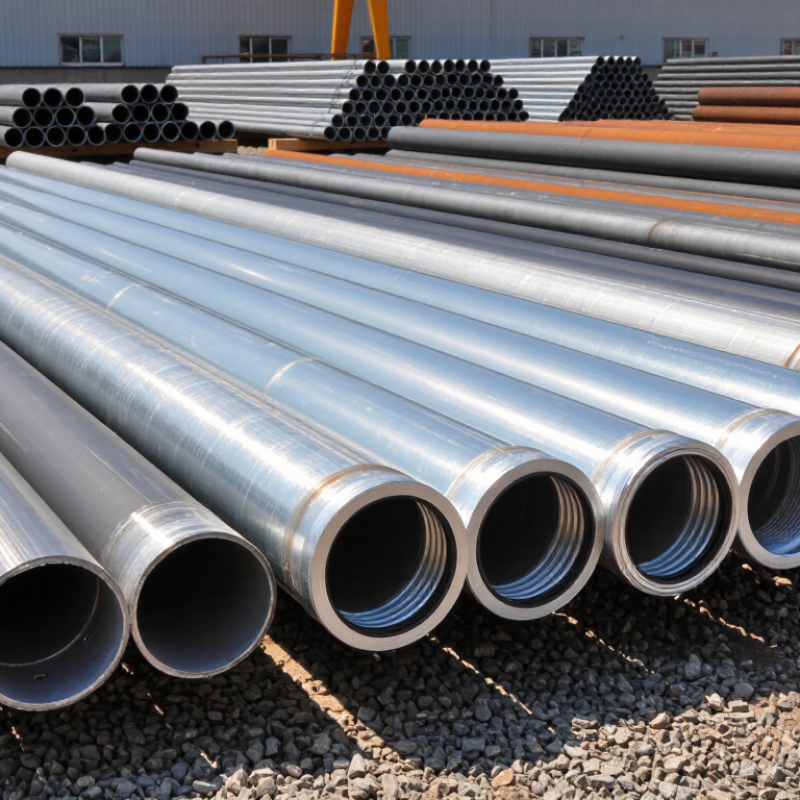
Steel casing pipe is a heavy steel tube installed inside drilled wells. It stabilizes boreholes and isolates different underground formations. Casing also prevents loose soil, sand, and contaminated water from entering the well. In oil and gas wells, it supports pressure control and protects the production path. Common types include conductor, surface, intermediate, production, seamless, welded, water-well, geothermal, and structural casing pipes.
The World Steel Association reported approximately 1.89 billion tonnes of crude steel production in 2023. This enormous output supports broad casing availability, but quality still varies between mills. The International Energy Agency reported global oil demand near 102 million barrels per day in 2023. That demand keeps casing important for energy infrastructure. Water supply and geothermal projects also use casing where drilling conditions are difficult. Standards such as API Spec 5CT help buyers compare steel grades, dimensions, connections, and test requirements. Yet specifications are often copied without checking actual formation pressure. That is a costly weakness.
Tips: Confirm well depth, collapse pressure, temperature, corrosion risk, and connection type before ordering. Request mill test certificates and independent inspection records. A thicker wall is not always better. It may increase weight, handling difficulty, and project cost. Local groundwater chemistry deserves attention too. Many purchasing errors begin with incomplete site data.
How Steel Casing Pipes Are Classified by Structure and Use
Top 10 Types of Steel Casing Pipe for Global Buyers
How Steel Casing Pipes Are Classified by Structure and Use
Steel casing pipes are classified by structure, connection, and service environment. The ten common types include seamless, welded, API 5CT, conductor, surface, intermediate, production, liner, casing-drilling, and corrosion-resistant casing. Seamless casing offers consistent wall strength, while welded casing can support larger diameters and controlled project budgets. Threaded-and-coupled connections suit standard field installation. Premium connections provide stronger sealing under pressure. The classification is practical, not perfect.
Use also changes the selection. Conductor casing stabilizes shallow ground. Surface casing protects freshwater zones. Intermediate casing handles unstable formations. Production casing supports long-term well flow. Liners reduce steel usage below existing casing. Casing-drilling systems combine drilling and support functions. Corrosion-resistant grades fit sour or chemically aggressive environments. The Energy Institute’s Statistical Review 2024 recorded global oil production at about 96.4 million barrels per day in 2023. That scale keeps casing performance commercially important. The World Steel Association reported 1.89 billion tonnes of crude steel production in 2023, but not all steel is suitable for downhole service.
Tips: Match grade, wall thickness, connection, collapse resistance, and temperature to the actual well profile. Check API 5CT or ISO 11960 documentation, heat numbers, hydrostatic-test records, and third-party inspection results. A cheaper pipe can create expensive handling problems. Rechecking the design is wise.
Top 10 Types of Steel Casing Pipe for Global Buyers
How Steel Casing Pipes Are Classified by Grade, Structure, and Use
This chart compares ten commonly specified API 5CT casing grades by minimum yield strength. H40, J55, and K55 are widely used for conventional casing applications; N80, L80, C90, and T95 are commonly selected when higher strength or controlled service conditions are required; P110 and Q125 are high-strength options for demanding well designs. Casing may be manufactured as seamless or welded pipe depending on the applicable specification, size, and purchasing requirements.
Reference basis: API Specification 5CT grade yield-strength requirements. Values are shown in ksi.
How to Select the Right Steel Casing Pipe for a Project
Selecting the right steel casing pipe starts with the ground, not the catalog. Soil pressure, groundwater, depth, and installation equipment all influence the choice. For drilled wells, seamless or electric resistance welded casing can provide consistent dimensions. For large foundation shafts, spiral welded and longitudinal submerged arc welded pipes often offer useful diameter flexibility.
Check wall thickness against collapse pressure, handling loads, and expected service life. A thicker pipe is not always better. It may increase lifting difficulty and project cost.
Review yield strength, outside diameter tolerance, end preparation, and weld inspection records. These details affect alignment when pipes are coupled or welded onsite.
Coating selection depends on exposure. Bare steel may suit temporary foundation work, while external coatings or corrosion-resistant grades can support buried utility applications. Confirm compatibility with soil chemistry and cathodic protection plans.
I have seen buyers compare price before checking transport limits. That mistake can erase the original saving.
Ask for mill certificates, traceability documents, hydrostatic or nondestructive test results, and applicable standards. Requirements can differ between water wells, piling, tunneling, and geothermal projects. An engineer should verify the design loads before purchase. Field conditions often differ from the preliminary report. Recheck them.