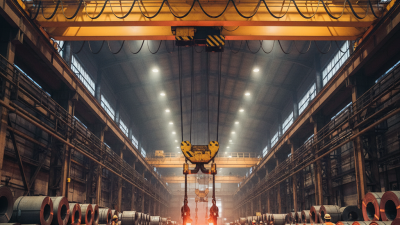
Why Choose a Boom Crane for Global Construction Projects?
Global construction is becoming more complex, pressured by labor shortages, tighter schedules, and difficult jobsite access. The Associated General Contractors of America reported in its 2024 workforce survey that 94% of contractors struggled to fill craft positions. A boom crane can reduce manual handling while placing steel, concrete, and equipment across wider working areas. It brings reach to the project. It also brings responsibility.
The International Labour Organization identifies construction as one of the world’s most hazardous industries. Therefore, lifting capacity alone cannot define a successful equipment choice. Crane expert Mike Parnell, president of Industrial Training International, has stated, “Planning is the foundation of every safe lift.” That principle remains practical beside a crowded urban site, where one poor setup can delay several trades. A properly selected boom crane supports controlled movement, clearer exclusion zones, and fewer unnecessary relocations. Small details matter.
Industry forecasts from GlobalData continue to show strong infrastructure and energy construction demand across major regions. Yet, market growth does not guarantee the right machine for every project. A telescopic boom crane may suit changing work fronts, while a lattice boom crane can offer greater heavy-lift capability. The decision depends on load charts, ground conditions, wind limits, transport access, and operator competence. Sometimes, the cheaper crane is the expensive mistake. That assumption deserves challenge.
This article examines why a boom crane remains valuable for global construction projects, while acknowledging its limits. Reliable planning, verified manufacturer data, qualified personnel, and local compliance must guide every lift. Efficiency matters. Control matters more.
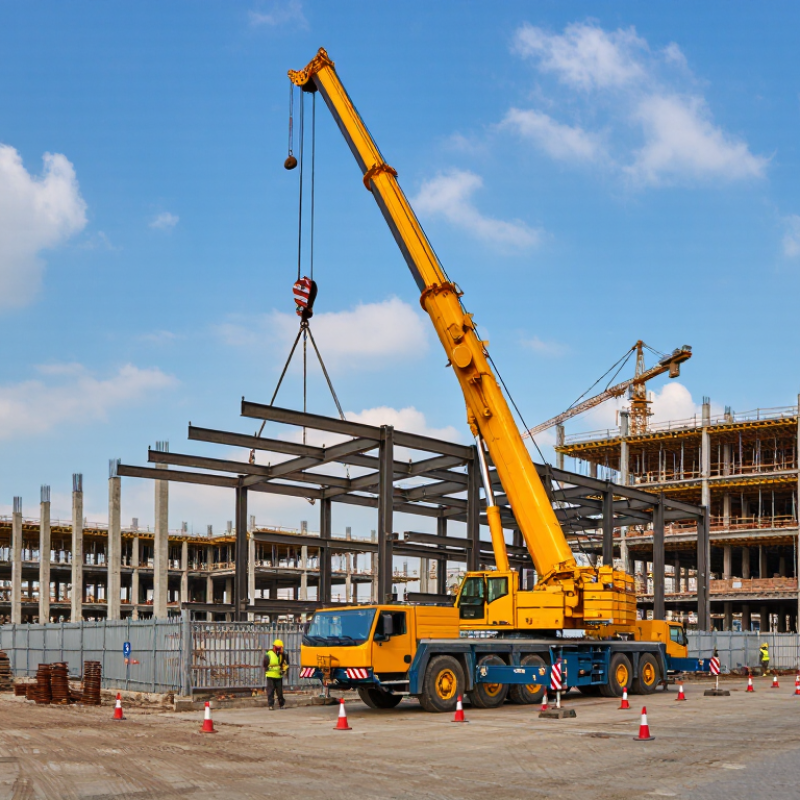
What Is a Boom Crane and How Does It Work?
A boom crane is a lifting machine with a long, adjustable arm called a boom. The boom reaches outward, upward, or across obstacles. Hydraulic cylinders control its movement. A winch, cable, and hook raise and lower the load. The crane body can also rotate, allowing precise placement.
During a lift, the operator checks the load chart, boom angle, working radius, and ground condition. Outriggers spread the crane’s weight and improve stability. Counterweights help balance heavy loads. Sensors may monitor pressure, angle, and overload risks, but trained judgment remains essential. Technology supports decisions. It does not replace them.
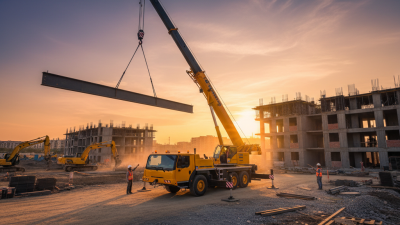
On construction sites, boom cranes handle steel beams, concrete sections, pipes, and equipment. Their reach is valuable when buildings, roads, or terrain limit access. Wind, soft soil, and changing site layouts can quickly affect a lift. A plan may appear complete yet overlook a buried service or uneven surface. That weakness deserves attention. Experienced teams inspect the area, confirm communication signals, and establish exclusion zones before lifting. They also review weather conditions and keep the load within approved capacity. Small corrections, such as repositioning an outrigger, can prevent serious instability. Careful operation makes boom cranes practical for demanding global projects.
How Boom Cranes Support Diverse Construction Applications
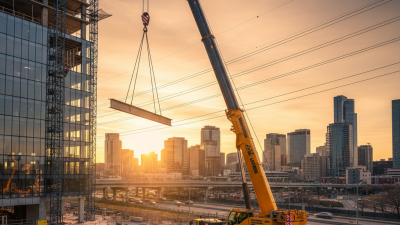
Boom cranes support diverse construction applications because their telescopic or lattice booms reach over obstacles and place loads precisely. On urban sites, operators can lift façade panels above traffic barriers, position HVAC units through narrow courtyards, or move steel beams beside existing buildings. Their mobility also helps contractors change work zones without rebuilding fixed lifting systems.
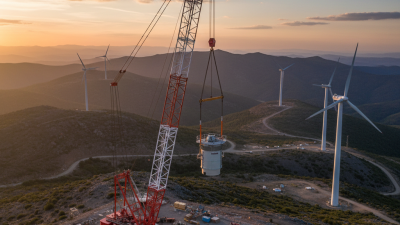
The U.S. Bureau of Labor Statistics projects 4% employment growth for construction equipment operators from 2023 to 2033, with about 47,000 annual job openings. This indicates continued demand for trained operators and adaptable machinery. In bridge construction, boom cranes can place segments across water or active roads. On renewable-energy sites, they handle tower sections, cable reels, and maintenance components. Ports and remote infrastructure projects benefit from their transportable setup.
Field experience still exposes weaknesses. A crane may reach the load, but poor ground preparation can stop the job. Wind changes quickly. So does a project schedule. The International Organization for Standardization’s ISO 12480-1 guidance emphasizes lift planning, competent personnel, and controlled operating zones. These details matter when several trades share one crowded site. A missed clearance check can damage materials or delay an entire shift. Bigger capacity is not always better. Sometimes, a smaller boom crane creates safer access and lower transport demands.
Factors for Selecting the Right Boom Crane Worldwide
Choosing a boom crane for an international project requires more than comparing lifting capacity. Site conditions, load paths, local standards, and transport limits can change the decision. An experienced project team studies the heaviest planned lift, not only the average workload. A steel beam may weigh 18 tonnes, yet its wind exposure can demand greater reach and stability. That detail is easy to overlook. Measure twice.
The right crane must match ground pressure, terrain, and available setup space. Urban sites may need compact outriggers, while remote projects may require simple assembly and fewer support vehicles. Engineers should verify rated load charts at the exact boom length and working radius.
Weather data also matters, especially in coastal, desert, or high-altitude locations. Teams should check documented inspections, operator qualifications, maintenance records, and emergency procedures. Paperwork matters.
Worldwide selection also depends on parts availability and technical support. A crane that performs well can still create delays if a hydraulic component needs weeks to arrive. Confirm language support, training access, insurance requirements, and import documentation before mobilization.
Independent inspection can add confidence, but it does not replace daily site checks. Field experience shows that access roads sometimes fail a turning test, forcing costly changes. That is an uncomfortable lesson. Leave room for revision.
Safety, Transport, and Maintenance Considerations
Why Choose a Boom Crane for Global Construction Projects?
A boom crane can reduce manual handling and improve reach on remote construction sites. However, safety depends on planning, not lifting capacity alone. OSHA crane safety data cites approximately 44 crane-related fatalities annually in the United States. The International Labour Organization also estimated 2.93 million work-related deaths worldwide in 2019. These figures make operator competence, exclusion zones, ground checks, and load-control procedures essential. Shortcuts become expensive.
Transport creates another practical challenge. A crane selected for one country may exceed another country’s axle-load, width, height, or escort requirements. Confirm route surveys, bridge limits, customs documents, and local permits before dispatch. Modular boom sections can reduce transport weight, but they add assembly points and inspection tasks. A perfect route plan can still fail after heavy rain damages a temporary access road. That possibility deserves more attention.
Tips: Check the load chart at the actual working radius. Inspect wire ropes, hooks, brakes, hydraulic lines, and outriggers before each shift. Follow ISO 12480-1 guidance for safe crane operations, and record every inspection. Do not treat maintenance logs as paperwork only; they reveal repeated leaks, unusual noise, and operator concerns. A brief pause can prevent a costly mistake.
Why Choose a Boom Crane for Global Construction Projects?
Representative planning values show how boom-crane configurations differ in mobility and deployment. Mobile telescopic cranes generally support faster road transport and setup, crawler cranes provide strong stability but require specialized transport and longer assembly, while rough-terrain cranes balance off-road access with moderate setup time. The 250-operating-hour service interval is a common planning benchmark; actual requirements must follow the equipment manufacturer’s maintenance schedule and local regulations.