Why Do Global Buyers Choose Phoenix Contact?
Global buyers often choose Phoenix Contact when a project needs dependable electrical connections, automation components, and support across more than one market. In a control cabinet, a terminal block may look like a small detail. Yet its fit, labeling, and documentation can affect installation time and later maintenance. Buyers therefore look beyond a product list. They compare technical specifications, availability, compatibility, and the help offered when a design changes.
The decision is practical. A manufacturer, systems integrator, or maintenance team may need components that work together across a production line, from field wiring to control equipment. Phoenix Contact is known internationally for products in electrical connection and industrial automation, giving purchasing teams a broad portfolio to assess. Still, a familiar name is not a guarantee of the right choice. Specifications must match the application, local requirements, and the people who will install and service the equipment. Details matter.
So does follow-through. Clear product data, responsive technical guidance, and predictable supply can reduce uncertainty during planning and procurement. Buyers may also weigh lifecycle needs, such as replacement parts and support for existing systems. These considerations differ by industry and region, so one buyer’s experience may not predict another’s. That is worth remembering. A careful comparison should include both strengths and limitations, rather than relying on reputation alone. This article explores why global buyers consider Phoenix Contact, what they typically evaluate, and where a closer technical review still matters.
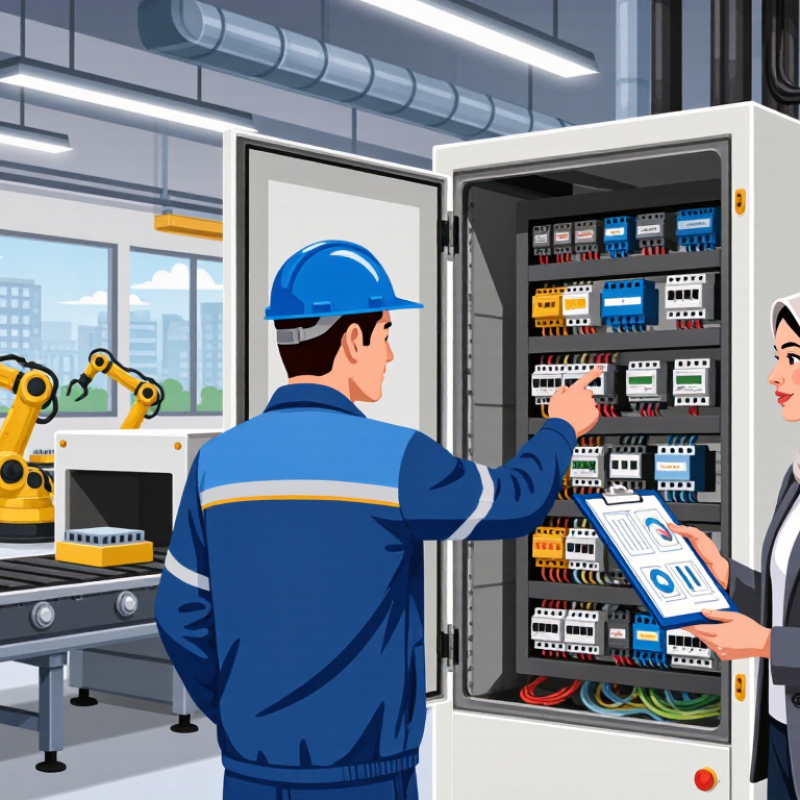
Phoenix Contact’s Position in Industrial Connectivity and Automation
Industrial connectivity is the quiet layer behind reliable automation. It links sensors, controllers, drives, and operator screens, so information can move from a machine floor to a production plan. A loose connector or incompatible protocol can interrupt that flow. Small details matter.
The International Federation of Robotics reported 4.28 million industrial robots operating worldwide in 2023, up 10% from the previous year. More robots increase the need for dependable interfaces, clear diagnostics, and components suited to heat, vibration, and frequent maintenance. A useful benchmark. Deloitte and MAPI’s 2024 Smart Manufacturing and Operations Survey polled 600 executives; 86% expected smart manufacturing solutions to drive competitiveness over the next five years.
That demand helps define a supplier’s position: not only by component range, but by how consistently products fit into existing control systems and plant workflows. Buyers can check protocol compatibility, documentation quality, spare-part access, and support for commissioning. Still, dashboards can flatter. A pilot on one production line may reveal wiring constraints, downtime risks, or training needs that a presentation misses. Those practical checks are worth making before scaling an automation project.
Core Product Categories and Their Industrial Applications
Industrial control cabinets depend on a few practical product categories: terminal blocks and connectors, power supplies, relays, circuit protection, and control and networking modules. Connectors organize sensor and actuator wiring; relays switch loads; protection devices help limit damage from faults and surges. In a food-processing line, for example, clear terminal labeling can make a fault easier to trace during a hurried shift. Small details matter.
Applications are expanding with automation. The International Federation of Robotics’ World Robotics 2024 report counted 4,281,585 industrial robots operating worldwide in 2023, up 10% from 2022. More robots mean more connection points, signals, and maintenance checks. The International Energy Agency’s Electricity 2024 report projected average annual global electricity-demand growth of 3.4% from 2024 to 2026, increasing attention to dependable power distribution. Buyers therefore assess voltage range, temperature tolerance, wiring access, and compatibility with existing equipment—not just price. The fit is rarely perfect. A component that works well in a clean assembly cell may be awkward inside a hot, crowded enclosure. Bench tests and site conditions still matter.
Engineering Standards, Reliability, and Product Compatibility
Global buyers often compare electrical components by how clearly they meet documented engineering requirements. A useful review starts with datasheets, dimensional drawings, and rated operating limits. Small details matter. Terminal spacing, wire range, and mounting depth can determine whether a part fits an existing panel.
Consistency also supports reliability. Buyers may ask how products are tested, how production changes are controlled, and whether material or batch information is available. In practice, steady performance under heat, vibration, or repeated connection cycles matters more than a polished specification sheet. No component is perfect. A rating may also depend on installation quality, so buyers should check the conditions behind every figure.
Compatibility requires more than matching a product name or catalog description. Check connector pitch, conductor size, voltage and current ratings, and the required control interface. A component that fits electrically but not mechanically can delay commissioning. Reviewing drawings alongside samples can reveal clearance problems before a full order is placed. Even careful teams miss details sometimes; a written compatibility checklist helps catch them before they become costly site issues.
International Protection (IP) Code: Solid-Particle Protection Levels
A clear view of the first digit in the IEC 60529 IP code, from no protection (0) to dust-tight (6).
Use the specified IP rating to match enclosure protection to the installation environment. These levels describe protection against access to hazardous parts and solid foreign objects; they are not a general measure of product reliability or compatibility.
Global Availability, Technical Support, and Customer Service
Global buyers often look beyond product specifications. They need dependable availability, clear technical guidance, and responsive service across time zones. Regional stock can shorten delivery routes, but a website listing alone is not enough. Ask about current lead times, order minimums, and alternatives for delayed items. A few clear answers can prevent a production line from waiting on one small connector.
Technical support matters when a drawing is incomplete or operating conditions change. Useful assistance should address details such as wire size, temperature range, mounting space, and compatibility with existing equipment. Share the application context and relevant measurements; specific information usually leads to more practical recommendations. That matters. No supply plan is flawless, and a missed update can still disrupt a schedule. Reliable service means communicating changes early and giving buyers a realistic next step.
Tips: Before ordering, confirm stock and delivery estimates in writing. Keep product specifications and support contacts together. If an answer seems vague, ask one focused follow-up question.
Factors Buyers Consider When Selecting Phoenix Contact
Industrial buyers weigh reliability, compatibility, delivery, and long-term support—not just unit price. During a line upgrade, a connector that fits existing cabinets and withstands vibration can prevent costly rework. Buyers also check whether components work with installed control systems and whether technical documents clearly list ratings, wiring, and environmental limits. Deloitte and MAPI’s 2019 Smart Factory study found that 86% of surveyed manufacturing executives expected smart-factory solutions to drive competitiveness within five years. That makes integration readiness an important selection factor, not a bonus.
Reliability claims need evidence. Ask for test results, operating-temperature ranges, and traceable product documentation. IEA reporting puts industry’s share of global energy use at about 37%, which makes efficient control and power monitoring relevant purchasing considerations. Service matters, too: confirm spare-part availability, response times, and access to application support before approving a supplier. A practical weakness in many tenders is the focus on purchase price while overlooking installation labor and downtime. Buyers should compare total lifecycle costs, but estimates can be imperfect; validate them against site conditions and maintenance records. Shortlist carefully.