

How to Choose the Right Track Crane in 2026?
Choosing the right track crane in 2026 starts with the lift, not the brochure.
“Match the crane to the ground, the load, and the work sequence,” advises Mark Phelan, a veteran crane-industry executive. That principle sounds simple. It is often ignored.
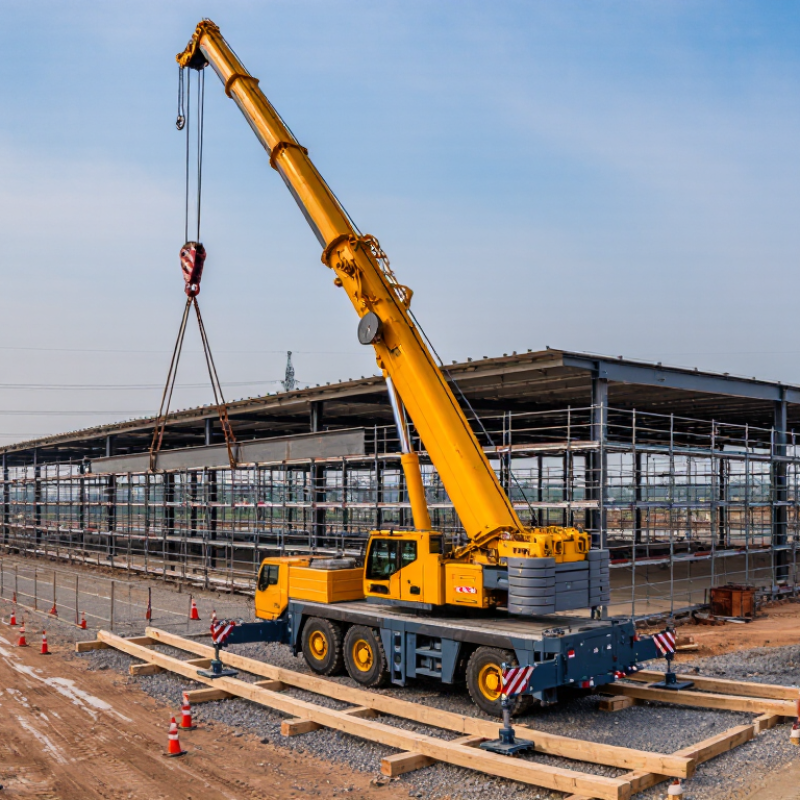
A 90-ton machine may look suitable on paper. Yet a muddy access road, a 45-metre radius, or a narrow gate can change the decision quickly. Review the actual load chart, not only the maximum rated capacity. Check lifting radius, boom configuration, counterweight requirements, and expected wind conditions. A crane that lifts 90 tons at close range may handle far less at full reach.
Ground pressure deserves careful attention. Timber mats may support one project, but unstable soil can still create unacceptable movement. Measure transport width, machine height, assembly space, and permitted axle loads before selecting equipment. These details affect cost more than many buyers expect.
Service support matters too. Ask how quickly technicians can respond, whether parts are locally available, and how telematics data will be used. A modern track crane can reduce downtime, but software cannot repair a damaged track in a remote location.
The right choice depends on the whole operation.
Experience also exposes uncomfortable gaps. Project estimates may change. Operators may prefer a familiar model, even when another crane fits better. That preference should be respected, but tested against evidence. Compare ownership cost, rental flexibility, fuel use, maintenance history, and resale value. Then confirm every assumption with the manufacturer, qualified lift planner, and site team before mobilization.
Define the Lift Profile: SWL, Radius, Boom Length, and ISO 4301 Duty Class
How to Choose the Right Track Crane in 2026?
Define the lift profile before comparing track cranes. Start with SWL, or safe working load, at the actual radius. A 20-ton crane may lift far less at 18 metres. Check the load chart, not the headline capacity. Include slings, hooks, spreader beams, and trapped material. The International Labour Organization estimates 2.78 million work-related deaths annually, so small planning gaps deserve attention.
Radius changes everything. Measure from the crane’s slewing centre to the load’s final position, including any ground slope or temporary access route. Then select boom length with room for reeving, clearance, and controlled placement. Excess boom can reduce capacity and increase transport complexity. Oxford Economics and Global Construction Perspectives forecast global construction output could reach 15.5 trillion dollars by 2030, up 42% from 2020. More projects may mean tighter lifting windows.
Match the crane’s ISO 4301-1 duty class to real use. Frequent heavy lifts require a stronger load spectrum than occasional light handling. Do not treat the class as a substitute for the manufacturer’s load chart or site assessment. A useful field check is simple: record the heaviest load, farthest radius, longest boom, and daily lift cycles. Then test the worst combination. It may reveal that the first choice was too small. Or unnecessarily large. Both mistakes cost money. Cite: ISO 4301-1:2016; ILO, Safety and Health at the Heart of the Future of Work; Oxford Economics and Global Construction Perspectives, Global Construction 2030.
How to Choose the Right Track Crane in 2026? - Define the Lift Profile: SWL, Radius, Boom Length, and ISO 4301 Duty Class
Lift Profile Planning Matrix
| Typical Lift Profile | Typical Application | Payload to Be Lifted | Estimated Rigging and Handling Allowance | Planning Gross Load | Working Radius | Required Boom Length Range | Planning SWL Target at Working Radius | Indicative ISO 4301 Duty Group | Selection Considerations |
|---|---|---|---|---|---|---|---|---|---|
| Compact Site Handling | Positioning steel members, formwork panels, pipes, or packaged equipment inside a restricted construction area | 3 t | 0.3 t | 3.3 t | 8 m | 12–18 m | At least 3.3 t, subject to the load chart | A3–A4 | Prioritize compact dimensions, low ground pressure, accurate load control, and sufficient capacity at the maximum—not average—radius. |
| General Construction Lifts | Routine lifting of concrete components, structural steel, generators, and construction materials | 8 t | 0.8 t | 8.8 t | 12 m | 18–26 m | At least 8.8 t, subject to the load chart | A4–A5 | Check capacity with the selected counterweight, track configuration, ground bearing conditions, and planned boom angle. |
| Heavy Structural Assembly | Installing bridge sections, large steel frames, precast elements, or industrial modules | 15 t | 1.5 t | 16.5 t | 16 m | 24–35 m | At least 16.5 t, subject to the load chart | A5–A6 | Longer boom length can reduce available capacity. Verify the exact boom, jib, reeving, and rated-capacity configuration. |
| Deep-Reach Industrial Lift | Handling vessels, transformers, plant modules, or process equipment at a significant horizontal offset | 20 t | 2.0 t | 22 t | 22 m | 30–42 m | At least 22 t, subject to the load chart | A5–A6 | Radius, wind area, tail swing, ground preparation, and stability often govern the selection more than maximum rated capacity. |
| Repeated Production Lifting | Regular material transfer, fabrication-yard handling, or repetitive lifting cycles throughout each shift | 10 t | 1.0 t | 11 t | 10 m | 16–24 m | At least 11 t, subject to the load chart | A6–A7 | Evaluate total operating cycles, load spectrum, starts and stops, duty-cycle heat, inspection intervals, and component fatigue. |
| Very Heavy, High-Cycle Service | Continuous heavy lifting in shipyards, infrastructure work, or industrial production environments | 30 t | 3.0 t | 33 t | 14 m | 24–38 m | At least 33 t, subject to the load chart | A7–A8 | Requires detailed duty classification, fatigue assessment, hydraulic and structural verification, and a documented lifting plan. |
ISO 4301 Duty Classification Reference
| ISO 4301-1 Group | General Service Level | Typical Operating Pattern | Typical Load Spectrum | Suitable Track Crane Planning Scenario | Engineering Review Focus |
|---|---|---|---|---|---|
| A1–A2 | Light service | Infrequent lifting with long periods of standby and relatively low cumulative usage | Predominantly light loads | Occasional maintenance or short-duration project work | Confirm that the low-use classification matches the actual number of cycles and load distribution. |
| A3 | Light to moderate service | Regular but limited operation, generally with modest daily utilization | Light to medium loads | Compact construction lifting and intermittent site handling | Review operating hours, number of starts, average lifted load, and maximum load frequency. |
| A4 | Moderate service | Routine operation with a balanced mix of light, medium, and occasional heavy lifts | Medium load spectrum | General construction and normal project lifting | Check the rated capacity at the most demanding radius and the expected daily cycle count. |
| A5 | Moderate to heavy service | Frequent operation over extended shifts with a meaningful proportion of higher loads | Medium to heavy loads | Heavy structural assembly and industrial installation | Assess fatigue, hydraulic duty, braking, slew cycles, and repeated operation near rated capacity. |
| A6 | Heavy service | High utilization with frequent lifting cycles and regular use of substantial capacity | Heavy load spectrum | Deep-reach industrial work and repeated heavy construction lifts | Require a documented duty calculation rather than selecting the class from payload alone. |
| A7 | Very heavy service | High-cycle operation with frequent heavy lifts and limited idle time | Heavy to very heavy loads | Production lifting, shipyard work, and demanding infrastructure projects | Review structural fatigue, wire rope usage, sheaves, drums, pins, bearings, and inspection planning. |
| A8 | Extreme service | Very high utilization with exceptionally frequent cycles and heavy loading | Very heavy load spectrum | Continuous high-cycle heavy-duty operations | Use a formal ISO 4301 classification and manufacturer engineering confirmation for the complete crane system. |
Key Dimensions to Confirm Before Selection
| Dimension | Definition | Why It Matters | Minimum Information to Collect |
|---|---|---|---|
| SWL / Rated Capacity | The maximum permitted load for a specific crane configuration, operating radius, boom length, and lifting arrangement | Capacity normally decreases as radius and boom length increase | Gross lifted load, radius range, boom configuration, counterweight, reeving, attachment, and load-chart limits |
| Working Radius | The horizontal distance from the crane's applicable center of rotation to the load line or lifted load position, as defined by the capacity chart | It is one of the primary factors controlling stability and rated capacity | Pick radius, set-down radius, maximum radius, swing path, and any required offset around obstacles |
| Boom Length | The operating length of the main boom, excluding or including extensions according to the manufacturer's stated configuration | A longer boom can provide reach but may reduce capacity and increase deflection | Required hook height, clearance over obstacles, boom angle, jib requirement, and maximum transport length |
| ISO 4301 Duty Class | A classification based on total operating time and the distribution of lifted loads over the crane's working life | It affects fatigue life, component sizing, inspection requirements, and suitability for repeated operation | Expected service life, working hours per day, cycles per hour, average load, maximum load frequency, and idle periods |
| Ground and Site Conditions | The bearing capacity, slope, access, clearance, and environmental conditions at the lifting location | Track pressure, stability, travel safety, and setup limitations can govern the usable capacity | Allowable ground bearing pressure, gradients, underground services, wind limits, obstacles, and travel routes |
ISO 4301 duty groups are preliminary planning references. The final classification should be calculated from the actual total operating time and load spectrum in accordance with the applicable standard and confirmed by the crane manufacturer or a qualified lifting engineer.
Related Posts
-

10 Best Crawler Crane Manufacturers Worldwide in 2026
-

What is a Lattice Boom Crane and How Does It Work in Construction
-

How to Effectively Track Crane Operations for Improved Safety and Efficiency?
-

Why Choose a Lattice Boom Crane for Your Heavy Lifting Needs?
-

Top 10 Facts You Need to Know About Lattice Boom Cranes?
-
How to Track Crane Performance for Efficient Operations?