
China Top Lift More Crane Manufacturers for Global Buyers
China has become a major sourcing destination for global buyers seeking reliable lifting equipment. Among the available options, a lift more crane must prove its value beyond catalogue photographs. Buyers need safe operation, stable performance, responsive service, and clear technical documentation.
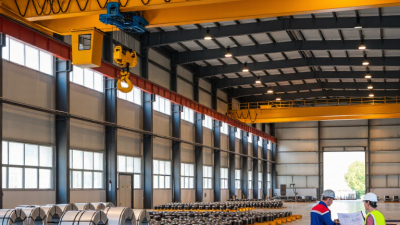
At a busy steel warehouse, a crane may lift coils repeatedly for ten hours. Small faults can then become costly delays. Motor temperature, brake response, pendant controls, and runway alignment deserve careful inspection. “A crane earns trust through controlled movement, predictable maintenance, and honest specifications,” says lifting-equipment consultant David Chen. His view reflects a practical truth: lifting capacity alone does not define quality.
Leading Chinese manufacturers usually offer overhead cranes, gantry cranes, jib cranes, and customized lifting systems. However, product categories can look similar online. The difficult part is comparing engineering depth, factory testing, component quality, and after-sales support. Ask for load-test records, welding standards, electrical protection details, and spare-parts availability. Ask difficult questions.
A dependable supplier should explain how its lift more crane performs under frequent starts, dusty workshops, temperature changes, and uneven workloads. It should also clarify installation responsibilities and operator training. Some manufacturers still present broad claims without enough evidence. That weakness deserves attention, even when the quoted price appears attractive.
This guide examines China’s top lift more crane manufacturers for global buyers. It considers manufacturing experience, technical capability, customization, certifications, delivery reliability, and service response. The ranking is not absolute. Buyer requirements vary, and a strong supplier for a shipyard may not suit a small fabrication plant. Practical verification remains essential.
China’s Crane Manufacturing Landscape: 1–500-Tonne Lifting Capacity
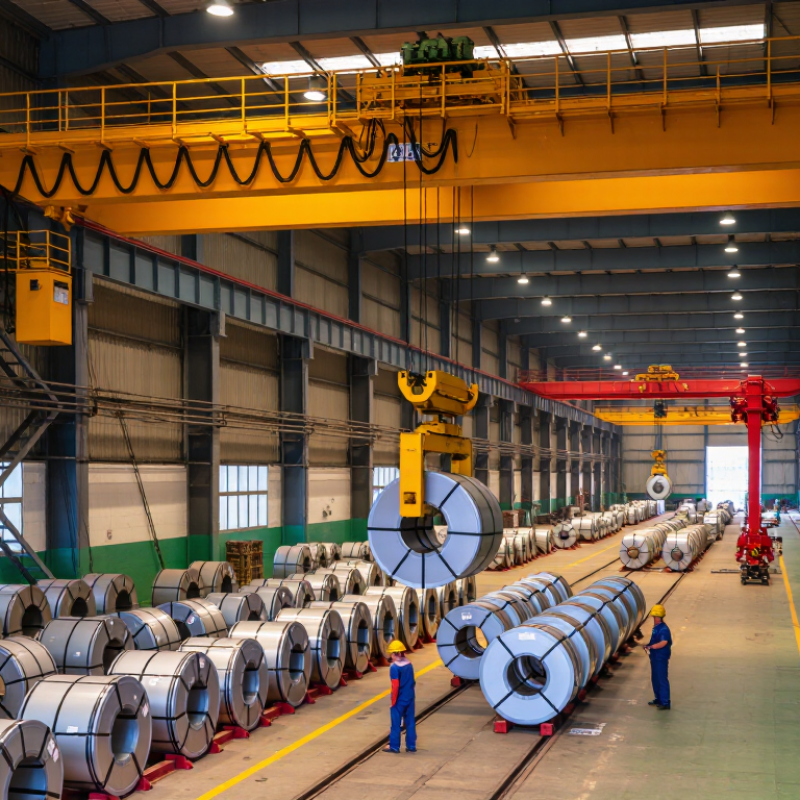
China’s crane manufacturing landscape covers lifting equipment from compact 1-tonne units to heavy-duty systems rated at 500 tonnes. This range serves workshops, warehouses, shipyards, power projects, and large construction sites. Small lifts still matter. They often support repetitive handling, limited floor space, and lower installation costs.
Manufacturers typically offer overhead cranes, gantry cranes, jib cranes, and specialized lifting systems. A 5-tonne workshop crane may use a simple electric hoist and pendant control. A 100-tonne system requires stronger girders, synchronized drives, reliable brakes, and carefully calculated runway loads. At 500 tonnes, engineering moves beyond standard catalog selection. Structural analysis, load testing, emergency controls, and installation planning become central concerns.
In practical sourcing, I would request drawings, duty-class details, motor data, and inspection records before comparing prices. Site conditions change. Temperature, dust, humidity, power supply, and rail alignment can affect performance. Suppliers with experienced engineers should explain these risks in clear technical language. They should also provide traceable material certificates and tested safety components.
Specifications can mislead. A higher rated capacity does not automatically mean better value or safer operation. The working cycle, lifting speed, span, and maintenance access must match the application. Some project information may remain incomplete during early purchasing, and that is where mistakes begin. A careful buyer should revise the design after visiting the installation site, even when the original plan appears convincing.
Major Crane Types: Overhead, Gantry, Jib and Port Cranes Under ISO 4301
Choosing a crane for global operations requires more than checking lifting capacity. ISO 4301 classifies cranes by utilization and load spectrum, helping buyers match equipment with real working conditions. A crane lifting five tonnes occasionally faces different demands from one moving the same load every few minutes.
Overhead cranes serve factories, workshops, and warehouses where loads travel along fixed runway beams. Gantry cranes move on legs, making them practical for yards, shipbuilding areas, and outdoor storage. Jib cranes offer a compact working radius, often beside machines or loading stations. Port cranes handle heavier cycles, longer outreach, and demanding exposure to wind, salt, and continuous handling.
A clear duty classification can prevent costly oversizing or early fatigue. Yet capacity charts alone are not enough. Buyers should examine daily lifting cycles, trolley speed, hook travel, temperature, dust, and maintenance access. A ten-tonne crane may perform poorly if its duty group does not match production rhythm. That detail is easy to miss.
On site, operators notice practical issues first: brake response, sway control, pendant reach, and visibility around the hook. Engineers should verify runway alignment, foundation loads, electrical protection, and emergency stopping systems. Port equipment needs special attention to corrosion control and wind limits. ISO 4301 supports sound comparison, but field data must remain honest. A neat spreadsheet can still hide uncertain assumptions. That deserves review.
Technical Benchmarks: 6–60 m Spans, 1–20 m Lifts and FEM Duty Classes
China’s top lift-overhead crane manufacturers serve projects requiring spans from 6 to 60 meters. Lift heights commonly range from 1 to 20 meters. These figures are starting points, not complete specifications. A 30-meter span may need stronger box girders, tighter deflection control, and improved runway alignment. Site measurements should confirm bay width, headroom, floor loading, and hook travel before design approval.
FEM duty classes provide a clearer view of working conditions. The correct class depends on lifting frequency, load spectrum, operating hours, and movement speeds. Light workshop use may suit a lower class, while continuous production requires a higher classification. Rated capacity alone can mislead buyers. A 10-ton crane lifting five tons repeatedly may experience greater fatigue than occasional full-load lifting. Experienced engineers should review duty cycles, brake performance, wheel loads, and emergency stopping distances. Small assumptions can become expensive repairs.
Tips: Ask for span and lift calculations, FEM classification records, load charts, inspection points, and maintenance schedules. Check whether controls remain practical at the highest lift. A pendant can feel simple, but poor visibility changes operator habits. Leave access around motors and brakes. This detail is often missed. Also compare test procedures, spare-part availability, and documentation quality. The cheapest quotation may exclude runway tolerances or commissioning support. That deserves careful questioning.
Global Compliance: CE, ISO 9001, GB/T 14405 and 380–480 V Systems
China Top Lift More Crane Manufacturers for Global Buyers
Global buyers often judge crane suppliers through documented compliance. CE marking supports access to applicable European markets, but it does not replace engineering review. ISO 9001 indicates controlled processes, including design checks, supplier evaluation, and corrective action records. In practice, buyers should request certificates, inspection reports, and equipment-specific files. A certificate alone is not enough.
GB/T 14405 provides an important reference for general overhead crane design and safety. A reliable manufacturer should connect this standard with real production details. Check the nameplate, lifting capacity, duty classification, emergency stop, limit switches, and brake response. Factory testing should include load verification, electrical insulation checks, and travel alignment. Small details matter. Uneven wheel contact can create noise, vibration, and faster rail wear.
Voltage compatibility also needs careful attention. Cranes configured for 380–480 V systems can support many industrial facilities, but frequency, phase sequence, control voltage, and site protection must match. A 400 V workshop supply may still require transformer or control-panel adjustments. Installation conditions are often underestimated. Dust, humidity, temperature, and cable length can affect performance. Paperwork cannot correct poor commissioning. Even experienced teams should review local wiring, operator training, and maintenance access before acceptance. There is always room for a second inspection.
China Top Lift More Crane Manufacturers for Global Buyers - Global Compliance: CE, ISO 9001, GB/T 14405 and 380–480 V Systems
| Capability Category | Global Buyer Requirement | Relevant Technical Data | Compliance or Verification Point | Export Purchasing Consideration |
|---|---|---|---|---|
| Overhead Travelling Cranes | Reliable material handling for factories, warehouses and production lines | Single-girder and double-girder configurations; top-running or under-running layouts; electric wire-rope or chain hoists | GB/T 14405 Applicable Confirm design calculations, load charts, inspection records and factory acceptance testing |
Specify safe working load, span, lifting height, duty class, runway length and operating environment before quotation |
| Typical Lifting Capacity | Selection based on the maximum working load and required operating frequency | Common project specifications range from approximately 1 to 100 tonnes; heavier capacities require project-specific engineering | Capacity must be supported by structural calculations, hoist data, brake capacity and overload protection settings | Do not select capacity from the maximum catalogue range alone; include dynamic loads and future production needs |
| Span and Lifting Height | Compatibility with the customer’s building and material-flow layout | Span, headroom, runway alignment and hook approach vary according to building geometry and crane arrangement | Verify certified dimensional drawings, wheel loads, rail details and minimum clearance requirements | Provide building drawings, column spacing, roof height, rail elevation and required hook coverage |
| Duty Classification | Correct equipment life for intermittent, regular or intensive service | Duty selection should consider load spectrum, starts per hour, daily operating hours and design life | Request the declared classification method and supporting calculations; avoid comparing duty classes without the applicable standard | Production cranes generally require a higher duty level than occasional maintenance cranes |
| CE Compliance | Market access for applicable European Economic Area projects | CE marking is a conformity declaration for applicable EU legislation; it is not itself a product-performance standard | Declaration Required Request the EU Declaration of Conformity, technical file references, risk assessment and user documentation |
Confirm which directives and harmonised standards apply to the complete crane and its supplied components |
| ISO 9001 Quality Management | Documented production and quality-control processes | ISO 9001 covers a quality management system, including process control, corrective action and continual improvement | Certificate Verification Check certificate scope, issuing certification body, validity period and covered production site |
An ISO 9001 certificate does not replace product inspection, testing or technical conformity documentation |
| GB/T 14405 Design Basis | General-purpose bridge crane design and manufacturing requirements for applicable Chinese projects | GB/T 14405 is associated with general-purpose bridge cranes and should be matched to the actual crane configuration | Review design drawings, welding procedures, material certificates, inspection plans and test results | For export projects, combine the selected Chinese standard with destination-country legal and safety requirements |
| 380–480 V Power Systems | Compatibility with international industrial power supplies | Typical three-phase options include 380 V, 400 V, 415 V, 440 V, 460 V and 480 V, subject to frequency and site conditions | Confirm rated voltage, frequency, phase, short-circuit rating, control voltage and motor insulation requirements | Voltage and frequency must be stated together; 400 V at 50 Hz is not electrically identical to 480 V at 60 Hz |
| Variable-Frequency Drive Control | Controlled acceleration, reduced mechanical shock and adjustable travel speed | VFD control may be applied to hoisting, cross travel and long travel functions | Check braking logic, emergency stop response, parameter backup, harmonic considerations and enclosure rating | Confirm whether the drive system supports the required voltage, frequency, ambient temperature and service duty |
| Safety Protection | Reduction of overload, collision, travel-limit and unauthorised-access risks | Common provisions include overload limiting, upper and lower limits, emergency stop, buffers, travel limits and audible or visual alarms | Request a safety-function list, functional test records and risk assessment for the complete crane system | Protection requirements depend on the site layout, operating method, load type and applicable local regulations |
| Environmental Adaptation | Stable operation in temperature, dust, humidity or outdoor conditions | Configuration may include weather protection, suitable enclosure ratings, corrosion protection, heating or cooling for control panels | Specify ambient temperature, humidity, altitude, dust level, corrosive exposure and indoor or outdoor installation | Outdoor cranes may require rain covers, wind alarms, rail clamps, storm anchors and enhanced coating systems |
| Testing and Inspection | Evidence that the supplied crane meets the agreed technical specification | Typical checks include dimensional inspection, no-load operation, load testing, electrical testing and safety-device verification | FAT Recommended Define witness points, test loads, acceptance criteria and documentation before production |
Independent inspection can be added for critical projects or when required by the destination country or end user |
| Documentation Package | Efficient installation, operation, maintenance and regulatory review | Recommended documents include manuals, wiring diagrams, parts lists, certificates, test reports, drawings and maintenance schedules | Confirm document language, revision control, equipment serial numbers and consistency with the delivered crane | Request electronic copies before shipment and controlled hard copies with the equipment where required |
| After-Sales Support | Reduced downtime after commissioning and during the operating life | Support may include remote troubleshooting, spare-parts planning, commissioning assistance and operator training | Evaluate response time, warranty terms, spare-parts lead time and availability of local service partners | Include critical spare parts, recommended consumables and escalation contacts in the purchase contract |
Buyer note: Final compliance depends on the complete crane design, destination-country regulations, site conditions and the exact scope of supply. CE, ISO 9001 and GB/T 14405 should be verified through current technical and certification documents rather than marketing claims alone.
Manufacturer Comparison: SWL, Hoist Speed, Lead Time and 12–24-Month Warranty
China Top Lift More Crane Manufacturers for Global Buyers
Comparing crane manufacturers requires more than checking price. Start with safe working load (SWL), not the maximum headline capacity. A 10-ton crane may handle less in real conditions due to span, duty class, and temperature. Ask for load charts, structural calculations, and recent inspection records. Experienced suppliers should explain these limits clearly.
Hoist speed affects productivity and control. Fast lifting suits repetitive work, but slower speeds can improve positioning near fragile loads. Check both lifting and traveling speeds. Lead time should include engineering approval, production, testing, packing, and shipping preparation. In practice, delays often begin when drawings change late. A written schedule is safer than a verbal promise.
Warranty terms also need careful comparison. A 12–24-month warranty may cover manufacturing defects, but exclude wear parts, poor installation, or overload damage. Request the exact coverage, response time, and spare-parts process.
Tips: Compare three written quotations using the same SWL, duty class, hoist speed, delivery point, and warranty conditions. Ask for a factory acceptance test with measured noise, brake performance, and load results. Keep photos of the nameplate and commissioning records. Small details matter. I have seen buyers overlook voltage requirements and lose several days during installation. A checklist helps, though it will never replace a qualified site inspection.
Related Posts
-
What Is the Best Lifting Crane Manufacturer in China?
-
How to Choose the Right Lifter Crane for Your Needs?
-
2026 Top Lifter Crane Models You Need to Know About?
-
How to Lift More With a Crane Safely?
-
7 Best Lifting Crane Manufacturers for Global Buyers?
-
China Top 10 Lifter Crane Manufacturers for Global Buyers