

2026 Top Precision Crane Types for Global Buyers
Choosing the right crane in 2026 requires more than comparing lifting capacity and price. Global buyers must examine working conditions, duty cycles, span requirements, control systems, and maintenance access. A precision crane should place loads accurately while operating safely in busy factories, ports, warehouses, and construction facilities. Small errors matter.
This guide introduces leading precision crane types, including overhead, gantry, jib, cleanroom, and automated models. Each type suits different material-handling problems. An overhead crane may improve floor space, while a jib crane can serve a compact workstation. Automated systems support repeatable movement, but they require reliable sensors, software, and trained technicians. Real performance depends on the complete system.
Field experience shows that a strong specification sheet does not guarantee a strong purchase. No ranking is perfect. Buyers should verify load charts, brake performance, runway alignment, spare-parts support, inspection records, and manufacturer certifications. Local installation rules and workplace standards also deserve careful review. Supplier claims need evidence.
The following overview helps procurement teams compare precision crane options through practical criteria. These include lifting accuracy, structural durability, energy use, operator visibility, service response, and total ownership cost. Clear application data improves decisions. Missing data creates risk. A buyer should record the heaviest load, lifting frequency, indoor or outdoor exposure, temperature range, and required positioning tolerance before requesting quotations. This approach supports informed selection across international markets, even when project conditions remain imperfect or change later.
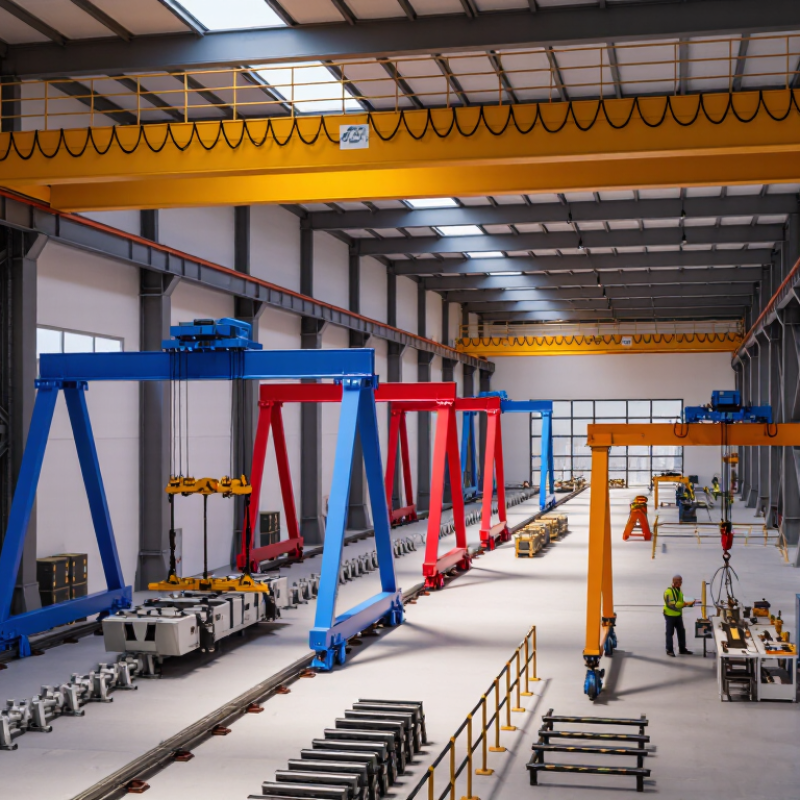
Precision Crane Criteria: ±1–3 mm Positioning and ISO 4301 Duty Classes
2026 Top Precision Crane Types for Global Buyers
Precision cranes are judged by control, repeatability, and duty life. A ±1–3 mm positioning claim sounds impressive, but it needs operating conditions. Load weight, trolley speed, wind, rail alignment, and brake response can change results. I would not accept the number without a witnessed test.
ISO 4301-1:2016 classifies cranes through utilization and load spectrum. Its A1–A8 duty groups help buyers match structure, hoist, and controls with real workloads. A warehouse crane moving light loads occasionally should not receive the same specification as a steel mill crane running continuously. Higher duty classes demand stronger fatigue planning and better maintenance records. The 2024 MarketsandMarkets Cranes Market report valued the sector at approximately USD 37.7 billion in 2024 and projected growth toward USD 49.6 billion by 2029. More installations may increase demand for measurable accuracy.
For global purchasing, bridge cranes with variable-frequency drives suit repetitive indoor handling. Gantry cranes work better across outdoor yards and long travel paths. Robotic or automated cranes can approach millimeter-level placement, but sensors require calibration. Temperature drift and floor movement remain practical risks. Small errors accumulate.
Buyers should request a loaded accuracy test, stopping-distance records, and repeatability results at several speeds. They should also review ISO 4301 classification, emergency stopping behavior, and inspection intervals. EN 13001 structural design principles can support the technical review. The specification may still be imperfect. That is normal. A transparent tolerance is safer than an attractive promise.
Overhead Cranes: 1–500 t Capacity Under EN 13001 Design Principles
2026 Top Precision Crane Types for Global Buyers
Overhead cranes from 1 to 500 tonnes demand more than a simple capacity comparison. Under EN 13001 design principles, engineers evaluate load actions, limit states, fatigue, and structural safety.
Single-girder cranes often suit lighter workshops and moderate spans. Double-girder cranes provide greater hook height and stability for heavier production loads.
Underslung designs can preserve floor space beneath existing roof structures.
Design begins with real operating conditions. Engineers review span, lifting height, travel speed, duty cycles, temperature, wind, and rail alignment.
A 50-tonne crane running twice daily is not equivalent to one lifting every few minutes. Repeated acceleration creates fatigue concerns. Small details matter. Wheel loads matter too.
In practical inspections, unclear duty information remains a common weakness. A neat spreadsheet can still hide harsh service conditions.
Buyers should request load combinations, wheel-load data, deflection limits, and inspection access.
Controls should support smooth starts and accurate positioning, especially near fragile loads. Installation tolerances also deserve attention, because misaligned rails can increase wear and noise.
EN 13001 offers a disciplined design framework, but site assumptions must be checked honestly. A calculation is not reality.
Gantry Cranes: 5–600 t Loads for Outdoor Yards and Port Operations
2026 Top Precision Crane Types for Global Buyers
Gantry cranes serve outdoor yards, shipyards, and port operations where mobile lifting needs firm, predictable coverage. Capacities from 5 to 600 tonnes support tasks ranging from steel coils to heavy machinery modules. The full range usually requires different structural designs, not one universal machine. UNCTAD’s Review of Maritime Transport 2024 reported global maritime trade at approximately 12.3 billion tonnes in 2023. That volume keeps reliable yard handling important.
A buyer should match rated capacity with load geometry, lifting frequency, span, and wind exposure. A 600-tonne crane needs stronger rails, foundations, brakes, and control systems than a light-duty yard unit. Anti-sway controls can reduce load movement near trucks and vessels. The World Bank’s Container Port Performance Index 2023 assessed 405 container ports, highlighting how equipment performance affects vessel turnaround. However, faster lifting is not always better. Poor rail alignment can create vibration, wheel wear, and uneven loading.
Tips: Confirm ground bearing capacity before ordering. Check maximum wind speed, temperature range, and corrosion protection. Request duty classification, emergency-stop testing, and inspection records. ISO 4309 provides guidance for wire-rope inspection and discard criteria. A practical site survey should measure clearances, drainage, power quality, and maintenance access. Small omissions become expensive later.
2026 Top Precision Crane Types for Global Buyers
Gantry Cranes: 5–600 t Loads for Outdoor Yards and Port Operations
The chart shows representative upper rated capacities commonly specified for major gantry-crane configurations. Light-duty portable gantries generally serve loads around 5–20 t, while rubber-tyred and rail-mounted yard cranes commonly cover approximately 20–100 t. Heavy-lift gantry systems can be engineered for loads up to about 600 t. Actual capacity depends on span, lifting height, duty class, wind conditions, structural design, and site requirements.
Jib and Monorail Cranes: 0.1–20 t Loads for Precise Workstations
Jib and monorail cranes support precise workstation lifting from 0.1 to 20 tonnes. Their compact layouts suit assembly cells, machining areas, maintenance bays, and controlled production lines. A jib crane swings loads around a fixed column or wall bracket. A monorail crane moves along one defined path. Simple movement can improve accuracy.
Load rating is only one selection point. Buyers should check working radius, hook height, trolley speed, duty cycle, and available headroom. A 500-kilogram load may need a stronger design when it starts frequently. A six-tonne jib with excessive reach may create unwanted deflection. That detail matters.
From practical installation experience, operators value smooth acceleration more than maximum speed. Pendant controls, radio control, overload protection, and emergency stops should match the workstation risk assessment. Rail alignment also affects noise, wheel wear, and positioning accuracy. Poor anchoring can make a well-designed crane perform badly. This is often overlooked.
For global purchasing, request duty classification, load-test records, structural calculations, and maintenance instructions. Confirm electrical supply, ambient temperature, corrosion exposure, and local inspection requirements before ordering. A qualified engineer should verify foundations and runway supports. The cheapest layout may not be the safest or most productive. Even experienced buyers sometimes underestimate future load changes. That deserves a second review.
Smart Crane Selection: FEM Duty Classes, IP Ratings, and Total Cost Metrics
For global crane buyers, FEM duty class should match real workload, not a sales specification. FEM 1.001 evaluates load spectrum, operating time, and starts per hour. A crane handling light loads occasionally may need a lower class than a machine lifting near capacity every cycle. ISO 4301-1 provides compatible classification guidance. Choosing M8 for every project sounds safe, but it can increase dead weight, energy use, and purchase cost. Overdesign is still a design error.
IP ratings deserve equal attention. IEC 60529 defines protection against dust and water, but IP55 does not guarantee corrosion resistance or reliable operation in salt air. A coastal yard may require sealed enclosures, coated structures, heaters, and drainage details. UNCTAD’s Review of Maritime Transport 2024 states that around 80% of global merchandise trade by volume moves by sea. That figure explains why port cranes face humidity, salt, and long duty cycles. IP54 may work indoors. It can fail quickly outdoors. Small detail, large consequence.
Total cost should measure cost per handled tonne, not only the invoice. Include electricity, inspections, lubrication, rope replacement, operator training, downtime, and spare-part availability. The International Energy Agency’s Energy Efficiency 2023 report links efficient equipment with lower operating costs across industry, but crane savings depend on duty patterns. My first lifecycle estimate was too optimistic because it ignored waiting time. A spreadsheet can still lie. Buyers should request measured energy data, FEM calculations, IP test evidence, and a five-year maintenance model before comparing quotations.
| Crane Type | Typical Rated Capacity | Typical Span / Working Radius | Recommended FEM Duty Class | Typical ISO 4301 Class | Common Protection Rating | Typical Hoisting Speed | Typical Installed Power | Indicative Service Profile | 10-Year TCO Planning Index* | Best-Fit Applications |
|---|---|---|---|---|---|---|---|---|---|---|
| Single-Girder Overhead EOT Crane | 1–20 t | 8–30 m span | FEM 1Am–2m | ISO M4–M5 | IP54–IP55 hoist; IP55 motor | 4–12 m/min | 5–30 kW | Light to medium duty; typically 2–8 operating hours/day and moderate starts per hour | 100–135 | General manufacturing, workshops, warehouses, machine loading and maintenance bays |
| Double-Girder Overhead EOT Crane | 10–100 t | 10–35 m span | FEM 2m–4m | ISO M5–M7 | IP55–IP65 hoist and travel motors | 2–10 m/min | 15–100 kW | Medium to heavy duty; suitable for frequent lifting, higher headroom requirements and long service life | 125–175 | Steel service centers, fabrication plants, foundries, power equipment and heavy assembly |
| Outdoor Gantry Crane | 5–200 t | 10–40 m span; 5–15 m lift height | FEM 2m–4m | ISO M5–M7 | IP55 minimum; IP65 preferred for exposed drives and controls | 2–12 m/min | 15–150 kW | Weather-exposed service; requires corrosion protection, drainage, wind monitoring and rail alignment control | 140–195 | Precast yards, shipyards, ports, outdoor storage and structural steel handling |
| Jib Crane | 0.1–10 t | 2–8 m radius | FEM 1Bm–2m | ISO M3–M5 | IP54–IP55 hoist; IP55 motor | 2–8 m/min | 1–15 kW | Localized lifting; high positioning frequency with comparatively low travel distance | 80–120 | Workstations, tooling areas, maintenance cells, loading points and assembly lines |
| Process Crane with Grab or Magnet | 5–50 t | 15–35 m span | FEM 3m–5m | ISO M6–M8 | IP55–IP66, depending on dust, heat and moisture exposure | 3–20 m/min | 30–250 kW | Heavy repetitive duty; high starts per hour, impact loading and continuous or multi-shift operation | 180–260 | Scrap handling, bulk materials, waste-to-energy facilities and high-cycle production lines |
| Container Handling Crane | 35–65 t under spreader | 15–35 m span; 10–30 m lift height | FEM 4m–5m | ISO M7–M8 | IP55–IP66 for outdoor electrical and drive equipment | 20–60 m/min | 100–500 kW | High-cycle operation; requires anti-sway control, position feedback, overload protection and wind interlocks | 220–320 | Intermodal terminals, container yards, logistics hubs and marine cargo handling |
| Cleanroom or Precision Assembly Crane | 0.25–10 t | 5–20 m span | FEM 1Am–2m | ISO M4–M5 | IP54–IP65; sealed and low-particle components may be required | 0.5–6 m/min | 2–25 kW | Low-speed, low-vibration service; emphasizes positioning accuracy, smooth acceleration and contamination control | 135–190 | Semiconductor, aerospace, battery, medical-device and precision equipment production |
| Explosion-Risk-Area Crane | 1–30 t | 8–25 m span | FEM 2m–3m | ISO M5–M6 | Typically IP55–IP66; hazardous-area certification must match the zone and gas or dust group | 2–8 m/min | 5–50 kW | Controlled-duty service with certified electrical equipment, bonding, temperature limits and specialized inspection | 180–280 | Chemical plants, refineries, paint facilities, grain handling and selected battery processes |
Related Posts
-
Essential Tips for Choosing the Best Truck Mounted Crane for Your Needs
-

What is a Truck Boom Crane and How Does it Work in Construction
-

Why You Should Lift More Crane for Efficient Projects?
-

How to Choose the Right Lifter Crane for Your Project Needs?
-

Why Are Boom Cranes Essential in Modern Construction Projects?
-

Why Invest in Steel Plant Cranes for Your Business?