| Multi-location mobility |
Projects may require travel between paved roads, construction access roads and prepared work areas. |
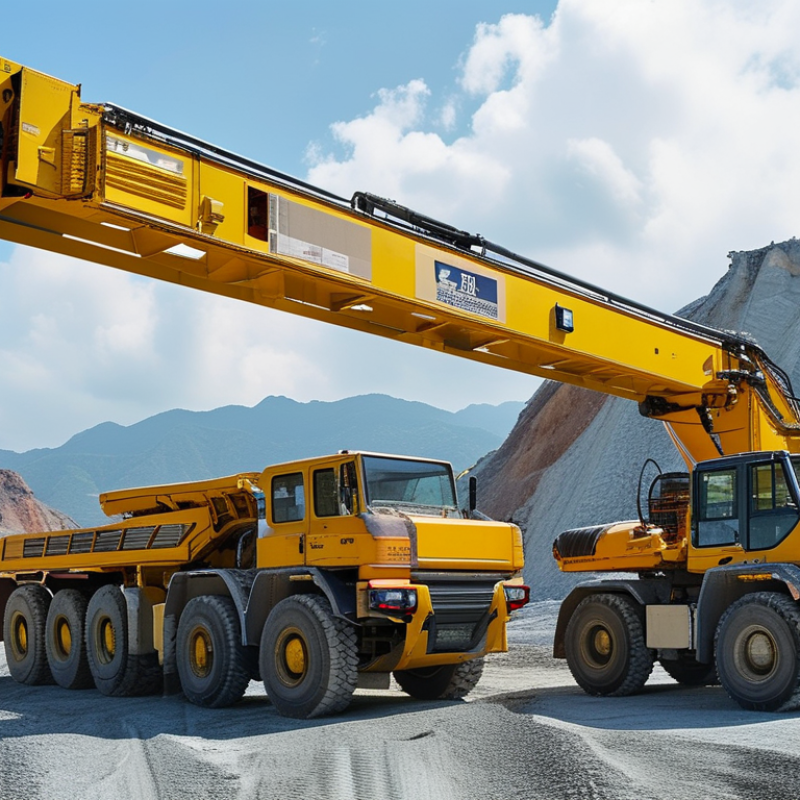
Combines road-going mobility with off-road capability, allowing one crane to serve several work zones. |
Common configurations use 2–9 axles; road speeds can reach approximately 60–80 km/h where permitted by local regulations. |
Less equipment relocation and reduced dependence on separate transport vehicles. |
| Variable lifting capacity |
Global projects may include light industrial lifts, infrastructure work and heavy modular components. |
Available in a broad range of lifting capacities and configurations to match different load charts and operating radii. |
Typical all-terrain crane capacity classes range from about 35 tonnes to more than 1,000 tonnes; capacity depends on configuration, radius and counterweight. |
Supports varied lift plans without selecting a separate crane type for every task. |
| Different working heights |
Wind farms, power facilities, bridges and industrial plants require different hook heights and working radii. |
Telescopic booms can be extended and retracted to suit changing lift conditions. |
Boom lengths commonly vary by model, with many configurations approximately 30–100 m before optional lattice extensions or jibs. |
Flexible reach for installation, maintenance and infrastructure construction. |
| Restricted site access |
Urban sites, plants and bridge corridors may have limited space for assembly and positioning. |
Self-contained telescoping systems reduce the amount of on-site assembly compared with lattice-boom crane systems. |
Many standard lifts can be prepared in roughly 20–60 minutes, depending on crane size, counterweight and site conditions. |
Shorter setup periods and improved suitability for confined work areas. |
| Uneven or changing ground |
Remote sites can include gravel, compacted soil, slopes and partially prepared surfaces. |
All-wheel drive, multiple steering modes, suspension systems and outriggers help the crane travel and stabilize on suitable surfaces. |
Outrigger spread and allowable ground pressure vary by model; engineered ground assessment remains necessary before lifting. |
Greater operational flexibility while maintaining planned lifting stability. |
| Cross-border transport |
Vehicle dimensions, axle loads, permits and escort requirements differ between countries. |
Roadable crane designs can reduce the number of separate transport loads, subject to local approval. |
Permitted dimensions and weights are jurisdiction-specific; route surveys and transport permits are required before mobilization. |
More predictable logistics planning for international projects. |
| Weather variability |
Projects may operate in hot, cold, humid, dusty or high-wind environments. |
Configured systems can be specified for environmental conditions, while load charts and wind limits guide safe operation. |
Operating temperature limits, wind limits and protection levels are model- and configuration-dependent. |
Improved planning across different climates without treating one operating condition as universal. |
| Safety and compliance |
Lifting regulations and inspection requirements vary by country and project owner. |
Load moment indication, rated-capacity charts, outrigger monitoring and documented lift plans support controlled operations. |
Compliance should be verified against applicable local regulations and recognized standards, such as ISO, EN, ASME or regional requirements. |
More consistent risk control and easier integration into formal project safety systems. |
| Schedule pressure |
Delays in mobilization can affect installation sequences, shutdown windows and commissioning dates. |
The crane can often travel to the work area and be configured without the extensive assembly required by larger crawler or lattice-boom systems. |
Mobilization time depends on route distance, permits, counterweight, attachments and site preparation. |
Potentially faster deployment for short-duration or rapidly changing lifting tasks. |
| Lifecycle efficiency |
International contractors must balance utilization, transport cost, labor and equipment availability. |
One versatile crane can perform road travel, site access and multiple lift categories when correctly selected. |
Actual cost efficiency depends on utilization rate, lift frequency, transport distance, site conditions and required attachments. |
Potentially lower total logistics complexity and better asset utilization across project phases. |