How to Choose the Right All Terrain Crane?
Choosing an all terrain crane is not simply a matter of selecting the largest capacity. The right machine must match the lift, the site, and the route between them. A crane may need to travel on public roads, cross uneven ground, then position beside a building with little room to spare. Small details count.
Start with the load’s weight, dimensions, and required lifting radius. A 50-ton load at short reach presents a different challenge from a lighter load placed over a roof. Check the manufacturer’s load chart for the exact boom length, configuration, and working radius. Do not rely on the headline capacity alone. That number can be misleading without the conditions behind it.
Site access matters just as much. Consider ground strength, slopes, overhead obstructions, setup space, and the room needed for outriggers. Measure narrow gates and turning areas before choosing a model; a crane that fits the lift may not fit the approach. Transport limits, counterweight handling, and local service availability can also affect cost and scheduling. These checks are easy to underestimate.
This guide outlines the practical factors that help narrow the options, from lift planning and terrain to operator support and maintenance. Compare specifications with the actual job, and confirm critical details with the crane manufacturer or a qualified dealer. Even a careful shortlist may need revision once site measurements are checked. That is normal. A suitable crane is the one that can perform the planned lifts safely and efficiently, without forcing the project to work around the machine.
Define the Lift Requirements and Jobsite Conditions
Start with the heaviest planned lift, not the crane’s headline capacity.
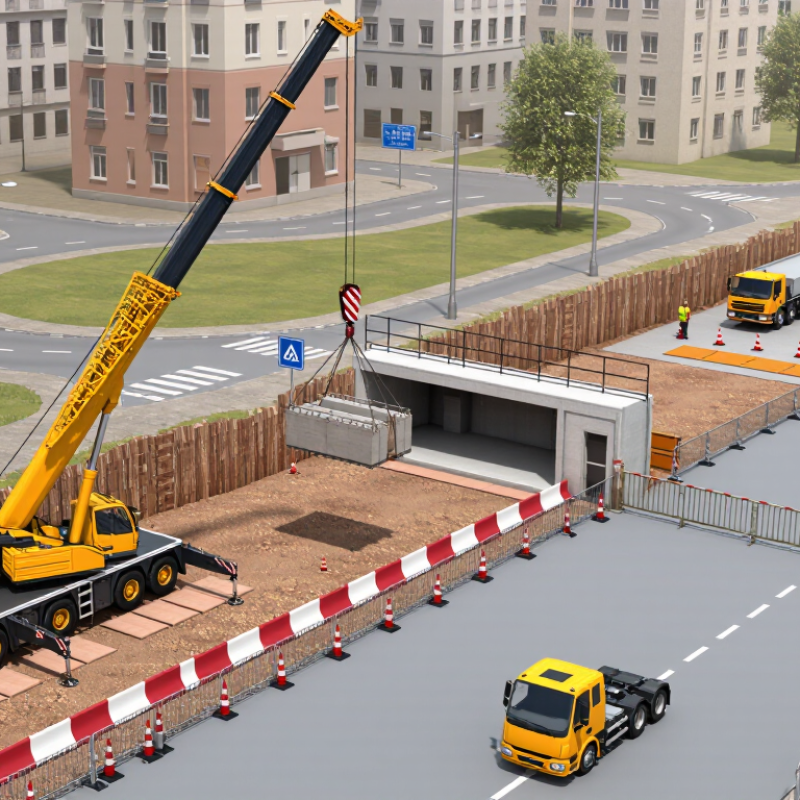
Include the load, hook block, slings, spreader beam, and attachments; these add weight. Then map the lift. Measure the working radius from the crane’s center of rotation to the load. Record the required hook height, boom clearance, and exact landing point. Check the load chart for the selected boom length and outrigger configuration. Capacity can drop quickly as radius grows. Do not treat nominal capacity as usable capacity.
Walk the access route and setup area, noting gates, tight turns, overhead obstructions, and space for outriggers. Confirm the ground can support the crane and its imposed loads; paving, backfilled trenches, and wet soil can hide weak spots. Small details matter. A level pad on a drawing may become uneven beside a curb, so verify conditions on site and allow room for mats. Check nearby power lines, structures, and wind exposure across the lift path. If load weight, center of gravity, or ground strength is uncertain, get verified data before choosing a configuration. A first estimate is only a starting point; revise it after a site walk.
Match Crane Capacity, Reach, and Working Configuration
Choosing capacity starts with the actual suspended load, not the crane’s headline rating. Include the hook block, slings, and any spreader beam in your weight estimate. A crane rated for 100 tons cannot lift that weight at every radius. Check the load chart for the exact boom length, counterweight, and outrigger setup. Leave a practical margin for measurement uncertainty. Small details matter.
Reach means more than boom length. Measure the working radius from the crane’s center of rotation to the load’s landing point. Then check required hook height, obstacles, and clearance along the boom path. A few extra feet of radius can sharply reduce allowable capacity. I’ve seen plans look sound on paper, then change when the delivery truck parks closer than expected.
Match the working configuration to the site. Fully extended outriggers may not fit beside a wall, while a reduced setup can change the chart considerably. Confirm ground conditions and use suitable mats where needed. If the lift involves travel with a suspended load, verify that the crane’s chart permits it and account for the route, slopes, and surface. This part is easy to underestimate. Have a qualified lift planner check the final load, radius, and setup together.
How to Choose the Right All Terrain Crane? - Match Crane Capacity, Reach, and Working Configuration
| Crane Capacity Class |
Typical Maximum Rated Capacity |
Typical Main Boom Length |
Working Configuration to Consider |
Best Suited For |
Key Selection Check |
| Compact |
About 30–40 tonnes |
About 25–35 m |
Short-to-medium boom; outriggers fully extended where site conditions permit; counterweight fitted as specified in the load chart. |
Urban maintenance, smaller commercial projects, and lifts with limited access or setup space. |
Check access width, ground-bearing capacity, outrigger footprint, and the load chart at the planned working radius. |
| Light-duty |
About 50–70 tonnes |
About 35–45 m |
Medium boom configuration; select outrigger extension and counterweight to match the lift plan and available setup area. |
General construction, equipment placement, and routine industrial maintenance. |
Confirm the required hook height and horizontal reach, then verify the load at that radius—not just the crane’s maximum capacity. |
| Medium-duty |
About 80–120 tonnes |
About 45–55 m |
Longer boom; consider a jib if extra height or reach is needed, subject to the applicable load chart and configuration limits. |
Commercial construction, utility work, and heavier equipment installation. |
Allow for rigging, hook block, and lifting accessories when calculating the total suspended load. |
| Heavy-duty |
About 130–180 tonnes |
About 55–65 m |
Long boom with the prescribed counterweight and outrigger setup; a luffing or fixed jib may be required for particular lift paths. |
Large industrial components, infrastructure work, and lifts requiring substantial height or reach. |
Check the complete lift path for obstacles and confirm chart capacity at the greatest working radius during the lift. |
| Very heavy-duty |
About 200–250 tonnes |
About 65–75 m |
Long-boom configuration with carefully planned counterweight, outrigger position, and any required jib equipment. |
Major construction and industrial lifts involving large loads or demanding reach requirements. |
Review site access, transport restrictions, setup time, ground support, and the crane’s configuration-specific load chart. |
Capacity classes and boom lengths are indicative ranges; specifications vary by crane design. Maximum rated capacity is generally available only under specific conditions and at a short working radius. The allowable load decreases as radius or boom length increases. Confirm every lift against the selected crane’s load chart and a site-specific lift plan. Working radius is the horizontal distance from the crane’s center of rotation to the load line.
Assess Terrain, Travel Routes, and Site Access
Ground & Setup
Choosing an all-terrain crane starts with the ground beneath its wheels and outriggers. A firm gravel pad may hide soft shoulders, buried drainage, or a recently filled trench. Walk the setup area and note slopes, standing water, and changes in surface firmness. Small details matter. Check the crane’s required outrigger footprint against available space, then confirm ground capacity with a qualified site professional. Mats may help distribute loads, but they cannot correct every weak or uneven surface.
Travel Route
Trace the travel route from the entrance to the lifting position. Measure gate width, turning space, overhead clearance, and the height of bridges or temporary structures. Look for tight bends where the crane may need to cross a verge or pass close to parked equipment. Record overhead lines and other obstructions, and plan adequate clearance before movement. A route that works on a dry drawing may become unsuitable after rain. Recheck it on site. It is easy to trust an old access plan too much. Compare route limits and setup conditions with the crane’s travel and load data, then revise the plan if actual conditions differ.
Verify Safety Features, Regulations, and Operator Needs
How to Choose the Right All Terrain Crane?
Verify Safety Features, Regulations, and Operator Needs
A suitable crane must match the lift, the site, and the people operating it. Check that its load chart covers the planned boom length, counterweight, and outrigger setup. Confirm safety devices, such as a rated-capacity limiter and anti-two-block system, work and suit the configuration. NIOSH’s report, Preventing Worker Injuries and Deaths from Mobile Crane Tip-Over, Boom Collapse, and Uncontrolled Hoisted Loads, cites 632 crane-related deaths in U.S. fatal-injury records from 2003–2010. The number is sobering. A clean inspection sheet alone cannot guarantee a safe lift.
Verify applicable requirements before selection. In the United States, OSHA construction crane rules appear in 29 CFR 1926 Subpart CC; requirements differ by location and task. Review inspection records, operator qualifications, and the lift plan with the site supervisor. Consider ground bearing capacity, overhead hazards, travel routes, and room to deploy outriggers. An experienced operator can flag practical problems a specification sheet misses. I would still ask for a site walk; plans can be wrong.
Tips: Match the operator’s training and experience to the crane’s controls and lift complexity. Check outrigger mats against ground conditions, not guesswork. Confirm alarms and limiters during pre-use checks. Keep the load chart at the controls, and stop if actual conditions differ from the plan.
How to Choose the Right All Terrain Crane: Verify Safety Features, Regulations, and Operator Needs
Key U.S. OSHA inspection and operator-certification intervals to include in your crane selection and operating plan.
Before choosing a crane, confirm that its load charts, configuration, and safety equipment suit the planned lifts and site conditions, and verify that qualified operators are available. This chart summarizes U.S. federal OSHA construction requirements: monthly crane inspections, annual comprehensive inspections, and operator certification renewal at least every five years. Requirements may vary by jurisdiction and circumstances; check the rules that apply to your project.
Sources: OSHA 29 CFR 1926.1412 and 1926.1427. Intervals shown in months.
Compare Rental or Purchase Costs and Service Support
Choosing the right all-terrain crane means comparing the full cost of renting and owning, not just the headline rate.
A rental quote may cover delivery, setup, and routine maintenance, but confirm each item in writing. Ask how overtime, standby days, fuel, and transport are billed. Small charges add up. For a three-week job, compare rent with financing, insurance, inspections, storage, and likely repairs. Include the time needed to arrange operators and permits; schedule delays can change the calculation. A spreadsheet helps, though its estimates can still be wrong.
Buying may suit frequent, predictable work, while renting can protect cash when demand is irregular. Service support matters either way. Check response hours, technician travel distance, parts availability, and who handles troubleshooting after hours. Ask for a sample service record and clarify what maintenance is included. A crane parked with a warning light can cost more than a modestly higher rental fee. On remote sites, a nearby technician may be worth more than a low price. Be realistic about utilization: one busy season does not guarantee the next. Compare assumptions with actual project records, and leave room for unplanned downtime.