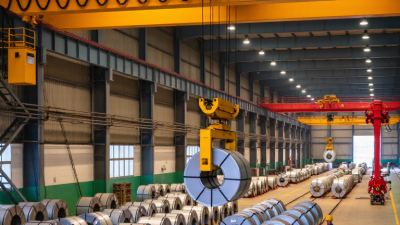

How to Choose a Heavy Lift Crane in 2026?
Choosing a heavy lift crane in 2026 starts with the load, but the load alone does not define the job. Engineers also need the working radius, required hook height, boom configuration, and ground conditions. A 180-ton component lifted close to the crane may demand a different setup from a lighter load placed far across a site. Details matter.
Before comparing models, gather verified load weights, rigging estimates, lift locations, and site drawings. Then check the manufacturer’s load charts for the exact configuration planned. Rated capacity changes with boom length, radius, counterweight, and operating conditions. Never treat a headline capacity as a usable capacity. It is only one data point.
This guide explains how to match crane type and capacity to real project demands. It also considers access routes, outrigger support, wind limits, setup space, transport, and service availability. Digital planning tools can help teams compare scenarios, but their results depend on accurate inputs. A clean screen does not guarantee a safe lift.
Ask suppliers for configuration-specific documentation and clarify who will verify the lift plan. Compare total project costs, not just the rental rate. That includes mobilization, assembly, operator needs, and potential delays. A spreadsheet can miss a muddy access road. Site experience still matters. And sometimes, the first estimate is wrong. Recheck assumptions before committing, especially when the load data or ground conditions remain uncertain.
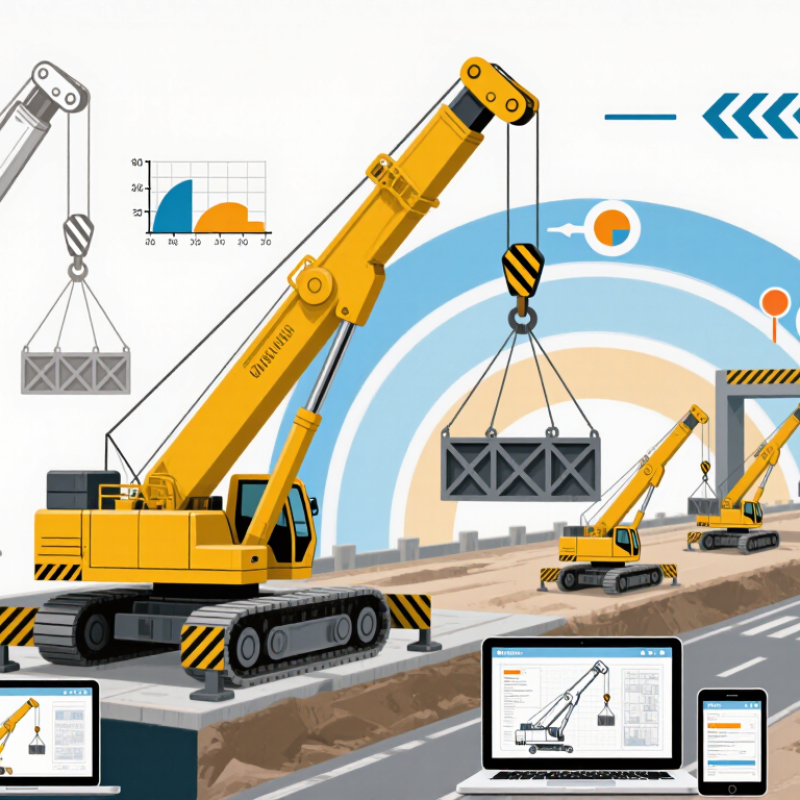
Define the Heavy Lift Requirements and Load Characteristics
Before comparing crane capacities, define the lift precisely. Record the load’s verified weight, dimensions, center of gravity, pick and landing points, and maximum working radius. Include the hook block, slings, shackles, and spreader beam in the gross lifted load. Small items count. Shipping documents can be outdated, so confirm unusual or modified loads against current drawings or a reliable weighing record. Note fragile surfaces, protruding parts, and any restrictions on tilt or rotation.
CPWR’s The Construction Chart Book reports 632 crane-related construction deaths in the United States from 1992 through 2006. That figure is not limited to heavy lifts, but it underscores why assumptions deserve scrutiny. For each lift, check the crane’s capacity chart for the actual boom length, radius, reeving, and outrigger setup—not just its headline capacity. Also assess ground support and access; a suitable crane can still be unsuitable on weak or uneven ground. Measure twice. A vessel listed as 42 tons may require a different configuration once rigging and lift geometry are included. One detail is easy to miss: the load’s center of gravity may shift during handling. If its position is uncertain, flag that uncertainty in the lift plan and get qualified engineering input rather than relying on a neat number.
Assess Site Conditions, Access, and Ground-Bearing Capacity
Before selecting a heavy lift crane, walk the full route from the site entrance to the setup area. Measure gate width, turning space, overhead clearance, and any narrow bridges. A crane may fit on paper but still struggle with a tight turn beside a building. Note soft shoulders, drains, buried services, and overhead lines. Small details matter.
Ground-bearing capacity needs more than a quick visual check. Compare the crane’s outrigger reactions with verified site information, and ask a qualified ground engineer to assess soil conditions where needed. The allowable pressure can change across one work area, especially near trenches or recently filled ground. Check whether mats or engineered pads are required, and confirm their size and placement in the lift plan. Rain can change the picture overnight. I have seen firm-looking ground hide a weak edge; it is easy to miss when schedules are tight. Recheck conditions before setup, not just during the initial survey. Share access limits, ground reports, and planned load positions with the crane planner so equipment selection reflects the actual site, not an idealized drawing.
Compare Crane Types, Configurations, and Reach
How to Choose a Heavy Lift Crane in 2026?
Compare Crane Types, Configurations, and Reach
Crane selection starts with the load, but the working radius can change the answer. A crawler crane travels on tracks and can suit large lifts across a prepared site. A mobile crane offers faster setup and easier movement between locations. For restricted indoor areas, a tower or compact pick-and-carry crane may fit better, depending on the lift plan. Reach changes everything.
Compare the actual configuration, not just the crane’s headline capacity. Boom length, jib angle, counterweight, and outrigger position all affect how much weight can be lifted at a given radius. A load chart should match the planned setup and operating conditions. Measure from the crane’s center of rotation to the load’s center, then account for obstacles such as roof edges, pipe racks, or power lines. Small measurement errors matter.
Ground conditions deserve equal attention. Outriggers need suitable support, while crawler tracks spread weight differently across the site. Check access routes, overhead clearance, setup space, and the full load path before choosing a type. A neat spreadsheet can miss a soft patch near the setup area. That is worth a second look. If the lift is unusual, have a qualified lift planner verify the configuration and chart against the site measurements.
How to Choose a Heavy Lift Crane in 2026?
Compare approximate lifting-capacity ranges by crane type (metric tonnes). Actual capacity depends on the crane model, boom configuration, radius, counterweight, and site conditions.
How to use this comparison: Crawler cranes suit heavy lifts on prepared ground, while all-terrain and truck-mounted cranes offer greater mobility. Rough-terrain cranes are suited to uneven sites, and tower cranes serve construction lifts at height. These broad industry ranges are indicative, not rated capacities for a specific lift. Always verify the manufacturer’s load chart at the required radius and configuration; capacity generally falls as lifting radius increases.
Verify Capacity, Rigging, Safety, and Regulatory Requirements
How to Choose a Heavy Lift Crane in 2026?
Verify Capacity, Rigging, Safety, and Regulatory Requirements
Start with the load, not the crane’s headline capacity. Record the item’s verified weight, dimensions, lift points, and center of gravity. Add the hook block, lifting beam, slings, shackles, and other below-hook equipment to the total suspended load. Then check the manufacturer’s load chart for the planned boom length, working radius, counterweight, and outrigger configuration. A crane rated for 100 tonnes may not safely lift that weight at a long radius. Small setup changes matter.
Rigging deserves its own calculation. Sling tension rises as sling angles flatten; at a 30-degree angle from horizontal, each leg of a balanced two-leg sling carries roughly the full load weight. Confirm sling ratings, connection points, and load stability with a qualified lift planner. Check the ground, too. A crane on soft fill or near an excavation may need engineered mats or a revised setup. I have seen this step treated as routine. That can be a costly assumption.
Safety data reinforces the need for disciplined planning. The U.S. Bureau of Labor Statistics recorded 1,075 fatal work injuries in construction in 2023; this figure covers the sector, not crane incidents alone. In the United States, OSHA’s 29 CFR 1926 Subpart CC sets crane requirements, including capacity limits and inspections. Verify applicable local rules, operator qualifications, permits, and inspection records before mobilization. Keep the lift plan, load chart, rigging details, and exclusion-zone layout available on site. Review them with the crew. Conditions change. A final walk-through can catch what paperwork misses.
Evaluate Costs, Availability, and 2026 Crane Technologies
How to Choose a Heavy Lift Crane in 2026?
Cost, availability, and technology should be assessed together. A low daily rental rate can become expensive when transport, assembly, ground preparation, rigging, and standby time are added. Ask suppliers for a clear breakdown, then compare total lift cost against the project schedule. Check the crane’s load chart at the actual working radius, not just its headline capacity. Small details matter. A narrow access road or soft ground can change the plan.
Availability may tighten around large energy and infrastructure projects. The Global Wind Energy Council’s Global Wind Report 2024 recorded 117 GW of new wind capacity in 2023 and projected 791 GW of additions from 2024 to 2030. The IEA’s Renewables 2024 report forecast nearly 5,500 GW of global renewable capacity additions during 2024–2030. These figures do not predict local crane shortages, but they signal sustained demand for major lifts. Confirm crane configuration, crew, transport, and backup dates early. A spreadsheet can still miss weather delays.
For 2026, evaluate remote diagnostics, digital load monitoring, and lift-planning tools alongside conventional capacity. Sensor data can help teams track wind conditions and equipment status, while digital lift models can expose clearance problems before the crane arrives. Ask what data is recorded, who reviews it, and how faults are handled. Technology helps, but it cannot fix a poor lift plan. I would still verify site measurements on the ground; drawings are not always current.
| Crane Type | Typical Capacity Range | Indicative U.S. Budget Allowance | Booking and Mobilization Planning | Best-Fit Applications | 2026 Technology and Selection Checks |
|---|---|---|---|---|---|
| Hydraulic truck crane | About 50–300 metric tonnes | Approximately US$2,000–8,000 per operating day | Often 1–4 weeks to book, depending on local fleet demand; typically 1–3 days to mobilize locally. | Short-duration lifts, construction sites with road access, and jobs requiring quick setup. | Check axle loads, outrigger reactions, road access, and setup space. Digital load-moment indicators and remote diagnostics are common on modern units. |
| All-terrain crane | About 100–1,200 metric tonnes | Approximately US$4,000–25,000 per operating day | Allow roughly 2–8 weeks to book; transport, permits, counterweight delivery, and site setup can add several days. | Projects needing a balance of road mobility, lifting capacity, and work across paved or prepared surfaces. | Confirm the load chart for the exact boom, jib, counterweight, and outrigger configuration. Review digital lift-planning outputs and real-time load monitoring. |
| Crawler crane | About 300–3,000+ metric tonnes | Approximately US$10,000–100,000+ per operating day | Allow roughly 4–16 weeks for equipment planning and transport; assembly and dismantling may each take several days or longer. | Large industrial lifts, wind-energy components, bridge work, and projects requiring high capacity or travel with a suspended load where permitted. | Assess ground-bearing pressure, track configuration, assembly area, and transport route. Digital lift planning and telematics can help coordinate setup and monitor operating data. |
| Ring crane or other super-heavy-lift system | About 1,000–5,000+ metric tonnes, depending on design | Project-specific; budgets can exceed US$50,000 per operating day and may be quoted as a package. | Plan several months ahead; specialized engineering, transport, site preparation, and assembly can drive the schedule. | Very large refinery, petrochemical, power, and infrastructure modules where conventional cranes cannot meet the required capacity or reach. | Require a project-specific lift study, ground and foundation review, detailed transport plan, and engineered contingency procedures. Verify monitoring, communications, and control-system interfaces. |
| Modular or gantry lifting system | Capacity varies widely by configuration; systems can be combined for very heavy loads. | Usually quoted by project scope rather than a standard daily rate. | Allow several weeks or more for engineering, equipment allocation, assembly planning, and site checks. | Indoor lifts, restricted-access sites, equipment replacement, and precise movement where crane access or headroom is limited. | Check support structure capacity, synchronized lifting controls, travel path, and redundancy. Confirm that the proposed system has suitable monitoring and emergency-stop arrangements. |
Cost and availability note: These are broad 2026 planning allowances, not supplier quotations or guaranteed market rates. Daily allowances generally exclude mobilization, assembly and dismantling, permits, rigging, engineering, taxes, standby time, and extraordinary site preparation. Actual capacity depends on radius, boom configuration, counterweight, wind limits, ground conditions, and the approved load chart. Confirm local fleet availability and obtain a project-specific lift plan before selection.
Related Posts
-
China Top Lift More Crane Manufacturers for Global Buyers
-

7 Best Lifting Cranes for Efficient Heavy Lifting in 2023
-
How to Lift More With a Crane Safely?
-
7 Best Lifting Crane Manufacturers for Global Buyers?
-
China Top 10 Lifter Crane Manufacturers for Global Buyers
-
What Is the Best Lifting Crane Manufacturer in China?