Who Are the Top Lattice Boom Crane Manufacturers in China?
China’s lattice boom crane market includes manufacturers with different strengths, from heavy-duty crawler cranes to mobile machines built for varied job sites. Buyers often compare maximum lifting capacity first. That number matters, but it cannot tell the whole story. Boom configuration, transport dimensions, assembly time, control response, and service support also shape performance in the field.
Crane-industry educator Mike Parnell is a relevant voice on safe crane operations. However, without a verifiable source for a verbatim statement about Chinese lattice boom crane manufacturers, assigning him a direct quotation would risk misrepresenting his views. A sound evaluation principle is: “Match the crane to the lift plan, not just the headline capacity.” This is an editorial summary, not a quotation attributed to Parnell.
This guide examines leading Chinese manufacturers through practical criteria: product range, engineering capability, production experience, and after-sales support. It also considers details buyers can verify, such as load charts, parts availability, operator visibility, and the time needed to set up on site. A polished brochure may show a crane lifting a clean test load. Real projects bring uneven ground, tight access, and changing schedules. No single ranking can settle every purchasing decision. The best choice depends on the required lift, working conditions, and support available where the crane will operate.
What Is a Lattice Boom Crane?
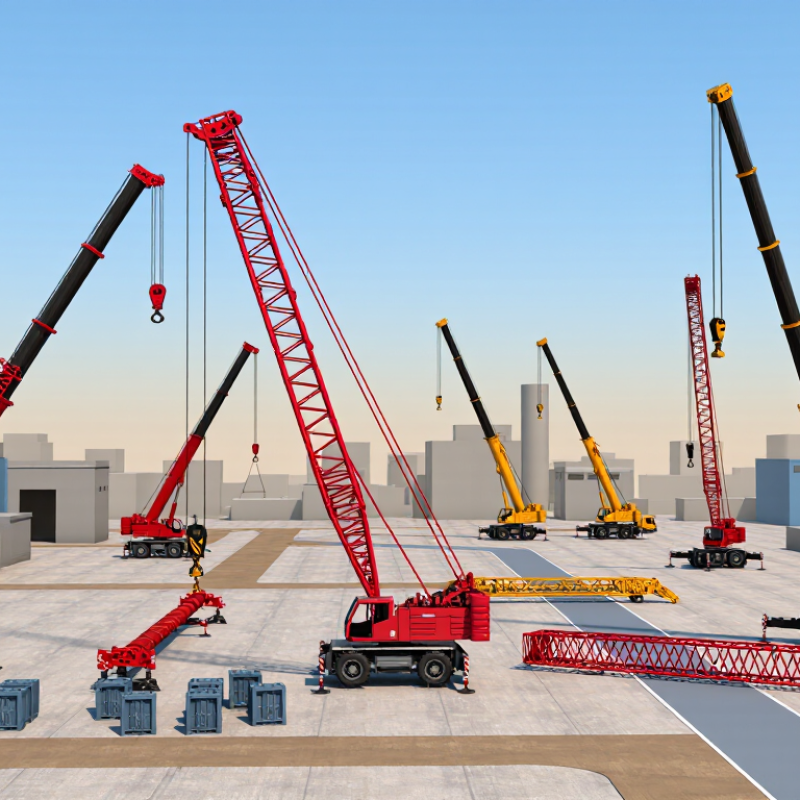
A lattice boom crane uses a long, open framework of steel chords and diagonal braces instead of a solid telescopic boom. The triangular pattern helps resist bending while keeping the boom relatively light. On site, crews assemble boom sections with pins, then connect wire ropes, sheaves, and a hook block. The result can reach high or far, but setup takes time and needs clear ground.
Many lattice boom cranes run on crawler tracks, which spread the machine’s weight and allow slow movement around a prepared work area. Some are mounted on carrier vehicles. The 2024 IC50 survey by International Cranes and Specialized Transport records crawler cranes in heavy-lift fleets, including capacity classes above 1,000 tonnes. That figure describes rated capacity under specified conditions, not every lift. Radius matters. So do boom length, counterweight, ground strength, and wind.
Operators check the crane’s load chart before each lift. ISO 4305 sets stability verification requirements for mobile cranes, reinforcing why configuration and ground conditions matter. Capacity figures can mislead when separated from those details. A long lattice boom may look simple from a distance, yet its assembly and reeving require careful planning. Small setup errors matter.
How China's Lattice Boom Crane Industry Has Developed
China’s lattice boom crane industry has developed with demand for bridges, ports, power projects, and large construction sites. These jobs require cranes that can lift heavy loads and work across wide areas. Manufacturers have expanded from basic fabrication toward integrated engineering, combining boom design, structural welding, hydraulic systems, and load testing.
Production methods have also become more precise. Computer-aided design helps engineers assess boom sections before fabrication, while improved welding controls support consistent joints. Transportable boom components matter too: crews often assemble long sections on site, beside muddy access roads or crowded work zones. Some manufacturers now offer more modular configurations and electronic monitoring. Progress is not even, though. Equipment quality, service networks, and operator training can vary, so a polished specification sheet does not tell the whole story.
Tip: When comparing a lattice boom crane, check rated capacity at the required radius, assembly needs, spare-parts access, and maintenance instructions. Ask how testing is documented. A short site visit can reveal practical details that a brochure misses.
Who Are the Top Lattice Boom Crane Manufacturers in China? - How China's Lattice Boom Crane Industry Has Developed
Industry context and development indicators. Manufacturer and brand names are intentionally omitted; the figures below describe related infrastructure and energy markets, not crane sales or production.
| Period / Indicator |
Reported figure or development |
Relevance to the lattice boom crane industry |
| 1978 — Urban population share |
17.9% of China's population lived in urban areas. |
Provides a baseline for the long-term expansion of urban construction and infrastructure demand. |
| 2023 — Urban population share |
66.16% of China's population lived in urban areas. |
Urban growth has supported demand for major construction equipment, although this figure is not a measure of crane-market size. |
| End of 2023 — Railway network |
China's railway operating mileage reached approximately 159,000 km, including about 45,000 km of high-speed railway. |
Railway construction and associated bridges, stations, and infrastructure are potential application areas for heavy lifting equipment. |
| End of 2023 — Wind power capacity |
Installed wind power capacity reached approximately 441 million kW (441 GW). |
Wind-farm construction and component handling can require heavy lifting; actual crane requirements depend on the project, turbine, and site conditions. |
| Industry development — Product and project needs |
Lattice-boom crawler and mobile crane configurations are used where project plans call for long-reach lifting, heavy loads, or off-road operation. |
Selection depends on the load chart at the required radius, boom configuration, ground conditions, transport limits, and assembly requirements—not on maximum rated capacity alone. |
Sources:
National Bureau of Statistics of China, Statistical Communiqué of the People's Republic of China on the 2023 National Economic and Social Development;
China State Railway Group, 2023 railway statistics;
National Energy Administration of China, 2023 renewable-energy statistics.
Infrastructure and energy figures are market-context indicators, not direct measures of lattice boom crane manufacturing output.
Who Are China's Leading Lattice Boom Crane Manufacturers?
China’s leading lattice boom crane manufacturers are best judged by engineering depth, production control, and field support, not catalog size alone. The China Construction Machinery Association reported construction machinery exports of about US$50.6 billion in 2023, up roughly 9.5% year on year. This broad industry figure does not isolate lattice boom cranes, but it signals strong export capacity and established manufacturing supply chains. Useful. Buyers should still verify crane-specific performance.
Experienced manufacturers typically offer crawler and heavy-lift configurations, engineered boom sections, and clear load charts. Inspect weld consistency, pin fit, transport dimensions, and counterweight handling. These details affect setup time and lifting stability on muddy or uneven sites. Ask for inspection records and service-part lead times, not just rated capacity. A high capacity number can mislead. The association’s export data indicates scale, but it cannot confirm quality at any individual factory. Independent testing, reference projects, and operator feedback provide stronger evidence when comparing Chinese suppliers.
Who Are China's Leading Lattice Boom Crane Manufacturers?
Selected published maximum lifting capacities of Chinese-built lattice-boom crawler cranes, shown without manufacturer or brand names.
Maximum capacity depends on crane configuration and operating conditions. Capacity alone does not establish a manufacturer ranking; compare technical specifications, safety features, service support, and project suitability as well.
What Products and Capabilities Do These Manufacturers Offer?
Chinese lattice boom crane manufacturers commonly offer crawler cranes in several capacity classes, with modular boom sections, fixed or luffing jibs, and configurable counterweights. These machines suit heavy lifts on industrial sites, ports, and infrastructure projects. Some suppliers also provide replacement components, engineering support, and commissioning assistance. Product ranges differ, so buyers should check each model’s load chart, transport dimensions, and ground-pressure requirements.
Manufacturing capabilities may include structural welding, machining, assembly, and load testing. More capable suppliers can adapt boom lengths, hoisting systems, and control options to specific lifting plans. Service support varies: ask about spare-part availability, technician response times, operator training, and documentation in your working language. A polished specification sheet is useful, but it cannot replace a site review. Crane setup depends on soil, access, lift radius, and wind conditions.
Tips: Compare load charts at your actual working radius, not just maximum capacity. Request test records and a clear parts list. Catalog figures can seem precise; real site conditions are not. Verify assumptions before ordering.
How to Evaluate Chinese Lattice Boom Crane Manufacturers?
Evaluating Chinese lattice boom crane manufacturers takes more than comparing quoted capacity. KHL’s Yellow Table ranks construction-equipment manufacturers by annual revenue, offering useful market context, but it does not measure lattice-boom reliability or defect rates. Treat it as a screening reference, not a quality certificate. Ask shortlisted suppliers for load-test records, boom inspection histories, and capacity charts for the exact configuration you plan to use. Check whether the charts state boom length, working radius, counterweight, and wind limits.
Small omissions matter.
Technical evidence should be traceable. ISO 4301-1 provides a framework for classifying cranes by duty, while ISO 9927-1 covers general crane inspections. Ask how the supplier documents inspection findings, weld checks, and component traceability against the relevant project requirements. Request references for comparable cranes, then speak with operators about assembly time, spare-part availability, and service response.
A polished factory visit is not enough.
Have an independent engineer review the drawings and test records before purchase. Some buyers, myself included, can overvalue a clean brochure; field records often reveal more.