
Sanghvi Crane

What Are the Top Telescopic Jib Crane Manufacturers?

Choosing among the top telescopic jib crane manufacturers requires more than comparing lifting capacity or catalogue prices. Buyers should examine reach, rated load charts, hydraulic control, corrosion protection, service coverage, and documented testing. A crane that looks powerful on a specification sheet may perform poorly beside a quay, on uneven ground, or inside a restricted construction site.

Market data shows why this decision deserves closer attention. Grand View Research estimates the global crane market will continue expanding through the decade, supported by infrastructure, ports, energy, and industrial investment. Mordor Intelligence also identifies modernization and replacement demand as major growth drivers. However, these reports generally group several crane types together. Their figures do not isolate the telescopic jib crane segment. That limitation matters.

Dr. Jim Wiethorn, a recognized crane-safety engineer and former Haag Engineering leader, has emphasized the practical principle: “A crane’s capacity is only meaningful when the load, radius, and ground conditions are understood.” This observation should guide manufacturer comparisons. Leading suppliers must demonstrate more than impressive outreach. They should provide transparent load charts, reliable emergency systems, operator training, spare-parts access, and traceable inspection records.

Real experience can expose small weaknesses. A slow extension cycle, unclear control labeling, or delayed service call can affect an entire workday. Not every published ranking reflects those details. Some rankings also favor brand visibility over field performance. This article therefore compares major telescopic jib crane manufacturers through engineering capability, safety evidence, application suitability, and customer support, while acknowledging that no single supplier fits every lifting environment.

What Are the Top Telescopic Jib Crane Manufacturers?

Telescopic Jib Cranes: Definition, Structure, and Operating Principles

What Are the Top Telescopic Jib Crane Manufacturers?

A telescopic jib crane is a lifting machine with a boom that extends and retracts. This sliding action changes the working radius without moving the crane base. It suits loading bays, maintenance areas, and compact workshops. The jib can reach around obstacles. That flexibility matters.

Its main structure includes a fixed mounting column, slewing unit, telescopic boom, hydraulic cylinders, hook block, and control system. The column supports vertical loads and transfers them into the foundation. The slewing unit turns the jib through a controlled angle. Hydraulic pressure extends the boom and raises the load.

Operators should confirm load charts, boom length, and working radius before every lift. A small radius change can significantly alter capacity. Real sites are rarely as tidy as training diagrams.

From practical inspections, reliable manufacturers usually provide traceable testing, clear manuals, service training, and accessible replacement parts. Their designs should match the duty cycle, installation space, and environmental conditions. A low purchase price can hide maintenance difficulties. That deserves attention.

Tips: Keep the load centered beneath the hook. Inspect hoses, pins, welds, and limit devices before operation. Avoid side pulling. Record unusual noise or boom movement, even when the crane still works. Manufacturer selection should include technical support, documented capacity data, and realistic after-sales response. Ask difficult questions early.

Key Criteria for Evaluating Telescopic Jib Crane Manufacturers

Choosing a telescopic jib crane manufacturer requires more than comparing lifting capacity. Check design evidence, not impressive photographs. Ask for load charts, fatigue calculations, weld inspection records, and test certificates. ISO 4301-1 classification should match the crane’s duty cycle. Local regulations and site conditions must also be considered. A crane lifting steel coils daily needs different engineering from one serving a maintenance bay.

Market data supports careful evaluation. MarketsandMarkets valued the global crane market at about USD 44.2 billion in 2024. It forecasts growth to nearly USD 53.3 billion by 2029. This expansion increases supplier choice, but it may also increase inconsistent quality. Evaluate the manufacturer’s field experience, technician response time, spare-parts availability, and training process. The MHI 2024 Annual Industry Report identifies automation and artificial intelligence as growing supply-chain priorities. Therefore, ask whether the crane supports useful monitoring, fault alerts, and service records. Digital features are not automatically valuable.

Tips: Request three comparable project references. Inspect one operating crane when possible. Compare total ownership cost, not only purchase price. Review warranty exclusions carefully. A polished brochure can still hide weak field support. No scorecard is perfect. Leave room for practical judgment, especially when maintenance access is limited or operators report awkward controls. Reliable manufacturers explain limitations clearly, provide traceable documentation, and welcome independent inspection before delivery.

Leading Telescopic Jib Crane Manufacturers and Their Product Strengths

Leading telescopic jib crane manufacturers usually distinguish themselves through practical engineering, not polished catalogs. Their designs extend reach without requiring a large work area. This helps warehouses, workshops, ports, and service vehicles handle lifting tasks near obstacles. Experienced manufacturers test boom movement, hydraulic response, and load stability under changing conditions. Their strongest models often use reinforced steel sections, protected hydraulic lines, and clearly marked capacity charts. Small details matter.

Manufacturers serving demanding industries typically offer several boom lengths and mounting options. Some build compact cranes for maintenance trucks, while others produce heavy-duty units for construction and marine operations. Reliable suppliers explain rated capacity at each extension, rather than presenting one impressive maximum. They also provide installation guidance, inspection schedules, replacement parts, and operator training materials. That support reflects real field experience. It also reduces avoidable downtime.

However, product strength is not always easy to judge from specifications alone. A longer reach may reduce lifting capacity more than buyers expect. I have seen projects focus on maximum boom length while overlooking mounting strength and vehicle balance. That is a costly assumption. Manufacturers with professional engineering teams can review duty cycles, wind exposure, and workspace limits before production. Still, their recommendations deserve careful checking against actual site conditions. Measure twice. Choose equipment that performs steadily, not merely dramatically.

What Are the Top Telescopic Jib Crane Manufacturers?

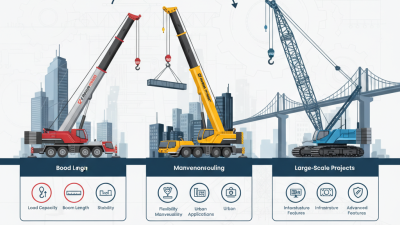
Anonymous product-capability benchmark showing how telescopic jib crane strengths typically vary by application class.

Higher capacity supports heavier lifting, while longer outreach improves access to distant or elevated work areas. The figures represent commonly published reference points for telescopic jib crane configurations and are presented without company or brand identification.

Industry Applications and Performance Comparisons

Top telescopic jib crane manufacturers are judged by more than catalog capacity. Their strongest designs match reach, duty cycle, and installation limits. In workshops, a compact wall-mounted unit may move steel plates across a narrow bay. On construction sites, truck-mounted telescopic cranes handle changing lift points and uneven access. Port maintenance teams often prefer corrosion-resistant systems with precise low-speed control. These applications expose weaknesses quickly. A crane that performs well indoors may struggle outdoors.

Performance comparisons should examine rated load, outreach, rotation, and hydraulic response. A 500-kilogram crane at full extension feels different from one at half reach. Manufacturers with strong engineering records publish load charts, fatigue ratings, and test procedures.

Look for overload protection, emergency lowering, interlocks, and clear inspection points. Cycle time matters in warehouses, while positioning accuracy matters beside sensitive machinery. Noise, energy use, and service access also affect ownership costs. Some brochures make efficiency appear perfect. Field results are rarely so neat.

Experienced buyers should request trials using real load dimensions and lifting paths. Ask whether technicians can inspect pins, hoses, cylinders, and mounting welds without removing the boom. Independent certification and traceable maintenance records strengthen confidence in long-term reliability. Still, specifications cannot replace operator training or a correctly designed foundation. A small error in anchor spacing can cause movement and premature wear. The best manufacturer documents limits honestly and adapts the crane to actual work. Mistakes remain possible.

Safety Standards, Customization Options, and After-Sales Support

When comparing telescopic jib crane manufacturers, safety standards deserve more attention than lifting capacity alone. A dependable manufacturer should provide load charts, emergency stop systems, overload protection, and clearly documented inspection procedures. Ask whether each crane is tested under recognized national or international standards. Certificates should match the exact model, not a similar product shown in a brochure.

Look closely at customization options. Telescopic reach, mounting height, control methods, and working radius may vary by site. A manufacturer should review floor strength, wind exposure, power supply, and duty cycle before suggesting a design. On a busy production floor, a compact pendant control may improve visibility. In another facility, remote operation could reduce exposure to moving loads. Bigger is not always better. An impressive reach can create stability problems.

After-sales support often reveals a manufacturer’s real reliability. Confirm response times, spare-parts availability, operator training, warranty conditions, and scheduled maintenance services. Request sample service records. They show more than polished sales language. During technical reviews, ask who handles faults after installation and whether local technicians are available. Small delays can stop an entire shift.

A careful buyer should also inspect communication quality. Vague answers are warning signs. Even experienced teams can overlook changing site conditions, and no checklist is perfect. That weakness deserves honest discussion before purchase.

What Are the Top Telescopic Jib Crane Manufacturers? - Safety Standards, Customization Options, and After-Sales Support

Evaluation Dimension Industry Benchmark for Leading Manufacturers Typical Evidence to Request Why It Matters
Applicable Safety Standards The design should be matched to the crane type and destination market. Common references include EN 13000 for mobile cranes, ASME B30.22 for articulating boom cranes, and applicable OSHA requirements in the United States. Declaration of conformity where applicable, standards matrix, design calculations, and compliance documentation. A clear standards basis reduces regulatory, operational, and liability risks.
Rated Capacity and Load Charts Load charts should identify rated capacity by boom length, working radius, outrigger or support configuration, and operating condition. Approved load charts, stability calculations, structural calculations, and test-load records. Capacity changes significantly with reach and radius; incorrect charts can create an overturning or structural-failure hazard.
Overload and Safety Protection Common protective functions include rated-capacity indication or limiting, boom-angle and length monitoring, emergency stop, hydraulic relief protection, and limit switches where applicable. Functional test procedure, alarm settings, sensor calibration records, and safety-system inspection checklist. Monitoring systems help operators stay within the approved operating envelope.
Inspection and Factory Testing A robust quality program includes weld inspection, hydraulic testing, functional testing, dimensional checks, and final inspection before shipment. Factory acceptance test report, weld inspection records, material certificates, and serial-number traceability. Documented testing provides objective evidence that the crane was built and checked against its specification.
Telescopic Boom Configuration Available configurations may include manual or hydraulic extension, multiple boom sections, proportional control, and mechanical or hydraulic locking arrangements. Boom-extension diagram, cycle-life information, maintenance intervals, and operating instructions. The configuration affects reach, lifting performance, installation space, service requirements, and total cost.
Customization Options Common options include lifting capacity, maximum reach, mounting arrangement, control location, power supply, hydraulic interface, pendant or radio control, and environmental protection. General arrangement drawing, interface specifications, approved technical proposal, and change-control records. Proper customization ensures compatibility with the host vehicle, vessel, platform, or fixed foundation.
Corrosion and Environmental Protection Outdoor, marine, coastal, dusty, or cold environments should receive a specified coating system, suitable seals, protected electrical enclosures, and compatible hydraulic components. Paint or coating specification, enclosure rating, material selection, and environmental operating limits. Environmental conditions directly influence service life, reliability, and maintenance frequency.
Operator Controls and Ergonomics Controls should be clearly labeled, protected against unintended activation, and arranged so the operator can maintain a safe view of the load and work area. Control schematic, operator manual, emergency-stop test, visibility assessment, and training materials. Good control design supports precise operation and reduces human-factor errors.
Documentation and Training Professional suppliers provide installation instructions, operating manuals, maintenance schedules, spare-parts lists, inspection forms, and operator training guidance. Document index, manuals in the required language, training agenda, and recommended inspection intervals. Complete documentation supports safe commissioning, routine maintenance, and operator competence.
Warranty and After-Sales Support Strong support normally includes defined warranty terms, technical troubleshooting, service procedures, replacement parts, remote assistance, and access to qualified field technicians. Written warranty policy, service response process, parts lead-time information, and regional service coverage. Availability of parts and technical support affects uptime and the long-term cost of ownership.
Lifecycle Maintenance Maintenance planning should cover lubrication, hydraulic hoses and fittings, pins and bushings, wire ropes where used, structural inspection, safety devices, and periodic examination. Preventive-maintenance schedule, lubrication chart, wear limits, inspection checklist, and recommended spare-parts package. Planned maintenance helps detect wear before it affects safety or availability.
Quality Management An ISO 9001-certified quality-management system can indicate controlled processes, but it does not by itself certify a crane’s safety or performance. Current certificate scope, production-control procedures, nonconformance process, and traceability records. Quality-system evidence should be considered together with product-specific design and testing records.

Note: Requirements vary by crane design, installation location, lifting application, and jurisdiction. The applicable standard and certification route should be confirmed during the technical specification and procurement process.

Scroll to Top