
Sanghvi Crane

What Is the Best Used Crane to Buy in 2026?

The best used crane to buy in 2026 is not automatically the newest, largest, or cheapest machine on the lot. The right choice depends on the work ahead: lifting capacity, reach, setup space, transport needs, and expected hours. A compact city crane may suit tight access, while a rough-terrain model may handle uneven ground better. Match the machine to real jobs, not an optimistic wish list. Condition beats age. Details matter.

Before comparing brands, examine service records, inspection reports, load charts, and component history. Look closely for hydraulic leaks, worn tires, cracked welds, damaged wire rope, and signs of inconsistent maintenance. Ask for a hands-on inspection by a qualified crane technician; photographs cannot reveal everything. Crane-safety expert Mike Parnell’s safety-first approach can be paraphrased as: “Trust the inspection record, not the fresh paint.” That is a paraphrase, not a verified verbatim quotation. A shiny boom proves little. A clear maintenance trail is more useful. Still, records can be incomplete, and even a careful inspection has limits.

This guide compares crane types, age, operating hours, support availability, and total ownership costs. It also explains how to assess a used crane without treating asking price as the whole story. A lower purchase price can hide expensive repairs, scarce parts, or costly transport. The best buy is the machine that fits your lifting plan and can be supported after delivery. No model wins for every buyer. Check the details twice.
What Is the Best Used Crane to Buy in 2026?

Identify the Lifting Capacity and Worksite Needs for 2026

For a used crane in 2026, start with the heaviest load and the farthest working radius, not the headline capacity. A crane rated for 50 tons does not lift 50 tons at every boom length and radius. Check the specific load chart for the planned boom, counterweight, outrigger position, and configuration. Include rigging weight and account for the load’s path. A 10-ton unit lifted from 18 metres away may require a much larger crane than the same load placed close to the machine. That gap matters.

Match the machine to the ground and access. Measure gate widths, overhead clearance, setup space, and travel routes before inspecting candidates. Confirm soil conditions and whether outrigger mats are needed; OSHA’s construction crane standard, 29 CFR 1926.1402, requires ground conditions to support the equipment. Not just tonnage. A crane that reaches the load but cannot safely set up is the wrong purchase.

Used condition matters, too. Ask for maintenance records, inspection findings, and the correct load charts; have a qualified crane professional review them against your lift plan. CPWR’s analysis of U.S. crane-related construction fatalities from 2011–2017 counted 297 deaths, underscoring why capacity and setup assumptions deserve careful checking. Paperwork can look tidy. Verify it against the actual machine, and be willing to walk away if key records or configuration details are missing.

Compare Used Crane Types for Different Jobs

What Is the Best Used Crane to Buy in 2026?

Compare Used Crane Types for Different Jobs

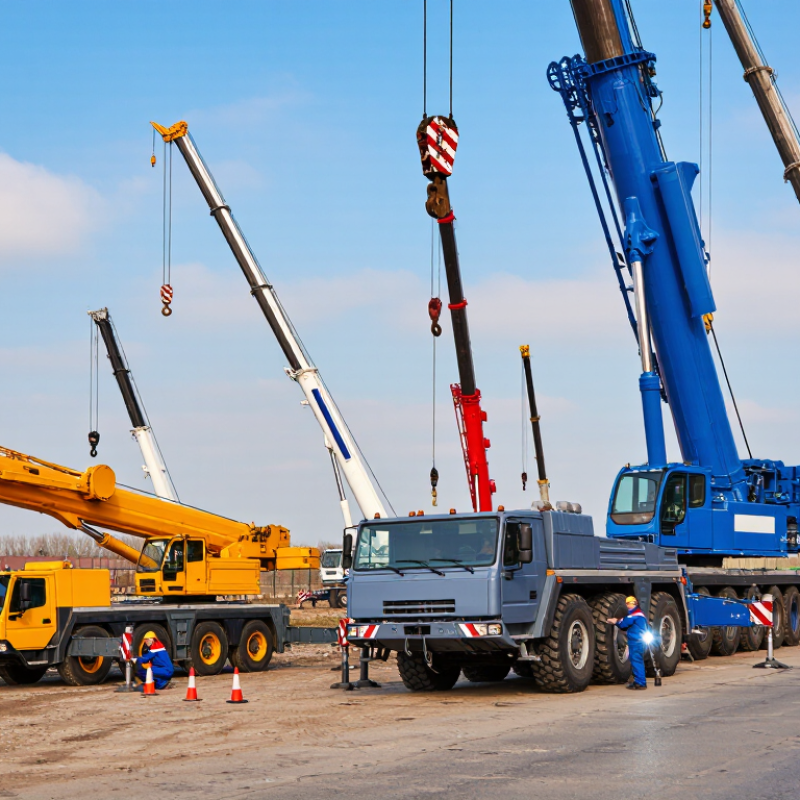
The right used crane depends more on the worksite than the age on its plate. For road projects and jobs spread across several locations, a truck-mounted crane can save setup time. Check tire wear, outrigger condition, and whether the crane’s load chart suits the lifts you actually perform. A strong lift rating means little if the reach is wrong.

For soft ground or heavy lifting on a fixed site, a crawler crane’s tracks can offer useful stability. Transport and setup take more planning, though. Rough-terrain cranes suit compact, uneven worksites and short moves, but they are not a substitute for a machine built for long-distance travel. Building projects with repeated lifts at height may call for a tower crane; inspect its climbing and mast components carefully. Different job, different compromise.

Used machines deserve a close, practical inspection. Look for hydraulic leaks around hoses and cylinders, cracked welds, worn pins, and damage near boom sections. Ask for maintenance records, operating hours, load charts, and a recent inspection report. Then arrange a function test with a qualified technician, including a controlled lift within the machine’s rated capacity. Records can be incomplete. That happens. If a seller cannot explain a repair or demonstrate key functions, pause and investigate before making an offer. A smaller crane in sound condition may serve better than a larger one with uncertain history.

What Is the Best Used Crane to Buy in 2026? - Compare Used Crane Types for Different Jobs
Used crane type Best suited jobs Mobility and setup Main advantages Typical trade-offs Key used-crane checks
Rough-terrain crane Construction and industrial lifts on uneven, unpaved sites. Designed for off-road travel around a worksite; generally requires a separate vehicle for road transport over longer distances. Compact site maneuverability and tires suited to rough ground. Less suitable for frequent public-road travel or long-distance relocation. Inspect tires, steering, axles, outriggers, boom sections, hydraulic systems, and operation on the intended terrain.
Truck-mounted crane Road-accessible construction, utility, maintenance, and general lifting jobs. Travels on roads as a vehicle; setup commonly involves deploying outriggers at the worksite. Convenient relocation between jobs and broad availability of configurations. Road legality, axle limits, and setup space can constrain where it can work. Check chassis service records, mileage or engine hours, brakes, tires, outriggers, boom condition, and required road documentation.
All-terrain crane Large or complex lifts that require road travel and work across varied site conditions. Combines highway mobility with capability on suitable off-road surfaces; transport and setup planning remain important. Versatile between public roads and demanding project sites. Higher operating and maintenance complexity; its size may limit access or require permits and support vehicles. Review maintenance history, steering and suspension systems, tires, boom and telescoping functions, electronics, and configuration-specific load charts.
Crawler crane Heavy construction, infrastructure, and repeated lifting on large sites. Moves on crawler tracks and can travel with a load only when the manufacturer’s instructions and applicable conditions allow; relocation often requires dismantling and transport. Tracks distribute weight across a larger ground area than many wheeled cranes, subject to ground conditions and configuration. Slow relocation and transport logistics can make it impractical for scattered, short-duration jobs. Inspect track links, rollers, sprockets, undercarriage wear, boom structure, assembly components, and transport requirements.
Tower crane Long-duration building projects where lifting coverage at height is needed. Installed on a prepared foundation or support system and assembled for the project; not a drive-to-site machine. Provides elevated lifting coverage over a construction site with a relatively small ground footprint. Requires engineering, foundation planning, assembly, dismantling, and project-specific approvals. Verify component compatibility, inspection records, structural condition, electrical and hoist systems, tie-in requirements, and availability of assembly expertise.
Carry-deck crane Indoor industrial work, plant maintenance, and short lifts in confined areas. Compact and maneuverable on suitable, firm surfaces; generally intended for movement around a site rather than highway travel. Small footprint can help in tight spaces where larger mobile cranes cannot position easily. Limited reach and site mobility compared with larger mobile cranes; floor capacity and overhead clearance matter indoors. Check tires, steering, brakes, counterweights, compact boom sections, controls, and whether floors and access routes can support the machine.

Buying note: There is no single best used crane for every buyer. Compare the required lift, working radius, ground conditions, access, setup area, transport plan, and total ownership costs. Rated capacity varies with the crane’s configuration and operating conditions; use the correct load chart and have the machine inspected by a qualified professional before purchase.

Evaluate Age, Maintenance Records, and Inspection Results

A crane’s age is a clue, not a verdict. A well-maintained machine with steady work may be a better choice than a younger crane with unclear history. Check the hour meter against service invoices and inspection dates. Gaps matter. Ask what caused them.

Maintenance records should show more than oil changes. Look for dated entries covering hydraulic hoses, brake adjustments, wire-rope replacement, and structural repairs. Match serial numbers on the paperwork to the machine. If records mention repeated leaks or unexplained downtime, ask for details before negotiating. I would not treat a neat folder as proof; paperwork can miss real wear.

Inspection results deserve close attention. Have a qualified crane inspector examine welds, boom sections, turntable, tires, controls, and safety devices. Watch for fresh paint around repaired areas, seepage beneath cylinders, or fraying strands on the rope. Ask to see the crane operate, then compare its functions with the inspection report and load chart. A cold start can reveal slow hydraulics that disappear after warming up. Still, one visit cannot expose every problem. If findings are vague, request written measurements and a second opinion before committing.

What Is the Best Used Crane to Buy in 2026?

Compare age, maintenance records, and inspection results—not age alone. Higher scores indicate a more favorable buying profile.

How to read this: The profiles are illustrative examples, not market statistics or real listings. Scores use a 0–100 scale; the overall score weights age suitability at 25%, maintenance documentation at 35%, and inspection results at 40%. Verify service records and arrange an independent inspection before purchase.

Calculate Purchase, Transport, Repair, and Operating Costs

What Is the Best Used Crane to Buy in 2026?

A good used crane is not simply the one with the lowest asking price. Compare capacity, age, recorded hours, maintenance history, and the cost of any overdue repairs. Ask an independent technician to inspect the boom, hydraulics, wire ropes, brakes, and controls. A clean cab can hide worn components. That matters.

Build a full-cost estimate before making an offer. Include purchase price, inspection, permits, transport, repairs, insurance, fuel, and operator time. The American Transportation Research Institute’s 2024 trucking-cost report put average marginal operating costs at $2.26 per mile in 2023. Treat that as a general transport benchmark, not a quote: moving a crane may require specialized equipment and routing. For repairs, price specific findings from the inspection rather than relying on a vague reserve. Estimate yearly operating hours, too; low utilization can make even a cheap crane expensive.

Tips: Get transport quotes using the crane’s actual dimensions and weight. Keep a repair contingency. Small details matter. This estimate is imperfect: local labor rates, haul distance, and machine condition can change the decision quickly.

Choose the Crane That Best Matches Your Budget and Requirements

Choosing the best used crane in 2026 means matching the machine to real lifts, not chasing the lowest asking price. The U.S. Census Bureau’s December 2024 Construction Spending release reported a seasonally adjusted annual rate of $2.192 trillion, up 4.3% from December 2023. That signals active construction spending, but it does not guarantee strong resale values or steady work in your area. Start with typical load weight, lift radius, ground conditions, access, and transport limits. A rough-terrain crane may suit compact sites; crawler cranes need space and transport planning.

Tips: Compare the load chart with your heaviest routine lift at its actual radius. Review inspection records, maintenance invoices, hour-meter consistency, boom sections, wire ropes, tires or tracks, and hydraulic leaks. Price delivery, repairs, parts availability, and required inspections alongside the purchase. A low-hour machine can still hide years of poor storage.

Set a budget that leaves room for repairs and downtime. Ask an independent crane inspector to assess the unit under operating conditions, and verify that controls and safety devices work as intended. Compare several machines with similar capacity and configuration, then judge their condition—not just age. I would not treat any checklist as perfect; one overlooked repair can change the economics. Pay for a load test or specialist review when records are incomplete, especially before relying on the crane for frequent lifts.

Scroll to Top