China Top 10 Telescopic Crane Manufacturers
China’s top telescopic crane manufacturers compete on more than lifting capacity. Buyers also assess reach, stability, control systems, service access, and parts availability. On a busy construction site, these details matter: a boom must extend smoothly, outriggers need firm ground, and operators need clear load information. Small specification differences can change how a crane performs in confined yards or on uneven approaches.
This guide examines ten leading Chinese manufacturers and the strengths that distinguish their equipment. It considers product range, engineering capability, export experience, support networks, and the practical needs of fleet owners. A telescopic crane may look impressive on a specification sheet. Real value appears in daily operation. It also depends on maintenance, training, and whether local dealers can provide timely support. Those factors are not always easy to compare, and published claims should be checked against current product documentation.
“Choose for the lift you actually perform, not the capacity you rarely need.” No verifiable source was provided for a named expert quotation, so this line is an editorial principle, not a statement attributed to a real person. That distinction matters. Reliable comparisons should separate confirmed specifications from marketing language and acknowledge where evidence is limited. The manufacturers featured here offer a starting point for research, not a substitute for reviewing the exact model, working conditions, and service arrangements. One detail can be overlooked: access to parts may matter as much as maximum reach.
Telescopic Crane Basics: Boom Types, Rated Capacity (t), and Working Range (m)
China Top 10 Telescopic Crane Manufacturers
Telescopic Crane Basics: Boom Types, Rated Capacity (t), and Working Range (m)
A telescopic crane uses nested steel boom sections that extend hydraulically. Some models add a jib, such as a lattice or folding extension, to reach higher or work around obstacles. The main boom offers quick setup; extra sections increase reach but may reduce lifting capacity. Exact configurations vary by machine. Reach has limits.
Rated capacity, shown in tonnes (t), is not a fixed load at every position. A crane rated at 50 t may lift far less when the load sits several metres from the crane. Check the load chart for boom length, working radius, counterweight, outrigger setup, and lifting angle. Working range, often listed in metres (m), describes horizontal reach or the permitted operating envelope; confirm which measurement the specification uses. Site slope, wind, and overhead clearance also matter.
Tips: Measure the pick-and-place radius, not just the distance to the load. Compare it with the load chart for the planned boom length and support setup. Allow for rigging weight and load movement. Planning can focus too much on maximum reach; that number may be misleading. Recheck the chart and ground conditions before lifting.
Telescopic Crane Basics: Boom Types, Rated Capacity (t), and Working Range (m)
Representative crane-class examples — not a manufacturer ranking.
Values are approximate reference points for common configurations, not class limits. Actual rated capacity depends on boom length, working radius, counterweight, and setup. Maximum boom length is not the same as horizontal working radius.
How to Assess Manufacturers: Capacity, Lifting Moment (t·m), and Axle Load (t)
When comparing telescopic crane manufacturers, treat capacity as a working range, not one headline figure. A crane rated for 25 tonnes may lift far less at a long radius. Ask for load charts covering boom length, working radius, and outrigger position. Check whether the quoted capacity assumes a fully extended boom on firm, level ground. Small details matter.
Lifting moment, measured in tonne-metres (t·m), helps compare reach and load potential. As a rough example, 10 tonnes at a 3-metre radius equals 30 t·m. But this calculation is not a substitute for the manufacturer’s load chart. Boom angle, extensions, and setup can change safe capacity. A clean table can still mislead. I have seen buyers focus on the largest number and overlook the radius behind it.
Axle load, measured in tonnes per axle, is a separate check. It affects transport planning and whether a crane can access a site, especially on narrow roads, weak ground, or tight entry ramps. Request axle-load figures for the exact crane configuration, including counterweights and accessories. Then compare them with the routes and surfaces the machine will actually use. Paper specifications help. Site conditions decide. If data is missing, ask for written clarification before comparing offers.
China’s Top 10 Telescopic Crane Manufacturers: Products and Specializations
China Top 10 Telescopic Crane Manufacturers
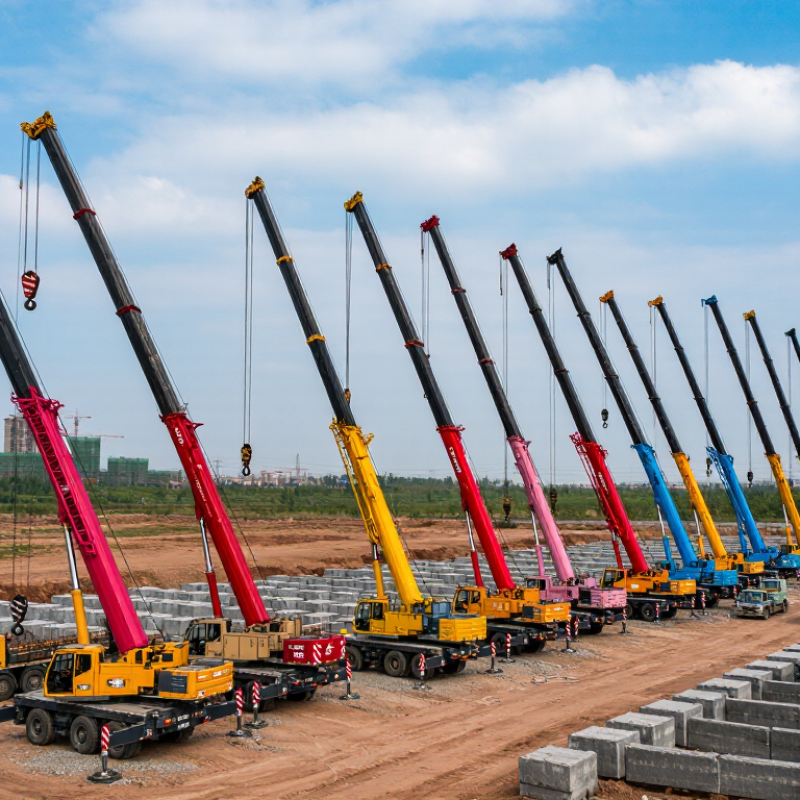
China’s leading telescopic crane manufacturers serve different lifting needs. Some focus on truck cranes that travel between urban construction sites. Others specialize in rough-terrain models, with four-wheel drive and wide tires for uneven ground. All-terrain cranes combine road mobility with equipment suited to demanding worksites. Compact truck-mounted cranes are another option for delivery and material handling.
Product differences go beyond lifting capacity. Buyers can compare boom length, rated load charts, outrigger design, cab visibility, and control systems. A longer boom may help reach over obstacles, but it does not guarantee a heavier lift at full extension. Some suppliers offer customized configurations, while others concentrate on standard models and faster production. Details matter. Published specifications can be hard to compare when test conditions differ, so confirm the actual working radius and setup requirements before choosing.
Tips: Match the crane to the heaviest load and its distance from the machine. Check transport dimensions, ground conditions, and service support, too. A neat brochure is not a lift plan.
Technical Comparison: Boom Length (m), Maximum Load (t), and Crane Configuration
A technical comparison of ten telescopic crane manufacturers should begin with three figures: maximum boom length, rated maximum load, and configuration.
These numbers need context. A crane’s maximum load usually applies at a short working radius, with specified boom position and setup. It does not describe capacity at full reach. A longer boom can access roof edges or distant work areas, but extension reduces lifting capacity. Check the load chart, not just the headline rating.
Configuration changes the comparison. Record the number of telescopic sections, whether a jib is available, and the outrigger setup required for rated lifts. A compact unit may suit tight urban sites, while a larger carrier can offer greater reach and stability but need more room.
Note transport dimensions, too. They affect access through gates and under low structures. Small details matter. Compare figures under equivalent conditions, including boom angle, radius, and counterweight.
If a specification sheet omits these details, mark the value as unverified rather than treating it as directly comparable. A neat ranking can still mislead; real lift planning depends on the load chart and site conditions.
Applications and Compliance: Industry Standards, Site Conditions, and Safety Requirements
Telescopic cranes serve construction, infrastructure, and industrial maintenance sites where reach and mobility matter. A long boom does not guarantee safe lifting. Operators must match the load chart to boom length, working radius, counterweight, and outrigger setup. Ground that looks firm can still shift under load. Check underground utilities, slope, drainage, and bearing capacity before positioning the crane.
Compliance starts with applicable requirements, such as ASME B30.5 for mobile cranes and ISO 12480-1 for safe use. CPWR’s report, Crane-Related Occupational Fatalities in the United States, 2011–2017, recorded 297 worker deaths involving cranes. That figure is a reminder that planning cannot stop at equipment inspection. Confirm lifting accessories, operator qualifications, communication signals, and local wind limits. Keep clearances from overhead power lines in the lift plan, and reassess conditions when wind or ground changes. Paperwork helps, but it does not see a soft patch beneath an outrigger.
Tips: Use outrigger mats sized for the ground and expected load. Walk the route. Mark exclusion zones with visible barriers. Recheck the setup after rain, repositioning, or a change in the lift. A checklist can miss details; a second site review is worth the time.